Skip to content
WAnimals
  • Map
  • Species
  • Parks
  • Diving
Log inCreate account
WAnimals

The guide for travellers and animal lovers: discover, plan and share your wild adventures around the world.

Discover wildlife

  • Species
  • Ecosystems
  • Glossary
  • Tags

Explore places

  • Map
  • Countries
  • Parks
  • Diving

Plan experiences

  • Guides

Learn

  • Blog

Resources

  • About us
  • How we build our profiles
  • Help centre
  • Contact
  • Install the app

Follow us

Account

  • Log in
  • Create account

© 2026 WAnimals. All rights reserved.

Terms of servicePrivacyCookiesLegal notice
MapSpeciesParksDiving
  1. Home
  2. Species
  3. Blue Glaucus
Blue Glaucus (Glaucus atlanticus)

Gastropods · Nudibranchia · Glaucidae

Blue Glaucus

Glaucus atlanticus

Not Evaluated

It has not yet been assessed against the IUCN criteria.

Spotted something wrong?

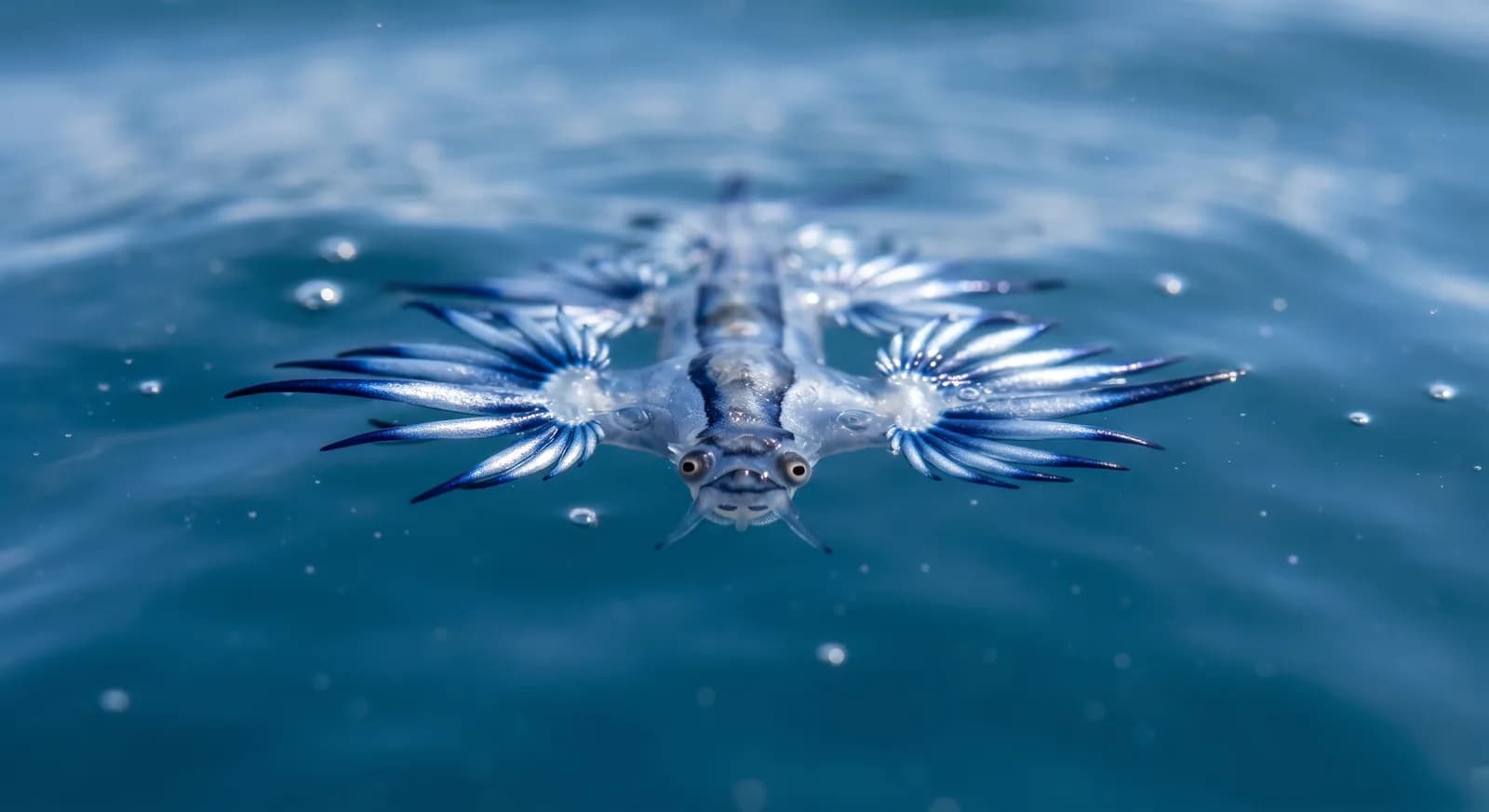
A pelagic nudibranch barely a few centimetres long that floats upside down at the surface of the ocean thanks to a bubble of air it swallows and holds in its stomach. Its underside, turned towards the sky, is silvery blue, and its back, turned towards the depths, is grey: a double camouflage that hides it from above and from below. It feeds on stinging floating organisms such as the Portuguese man o' war.

Size

1 cm – 4 cm

Diet

Carnivore

Feeds mainly on other animals.

Social structure

Solitary
Lives and hunts alone, joining others only to breed.

Ocean
73countries36parks81dive sites

AI-generated images: illustrations, not photographs.

Fun facts

  • defensaIt floats upside down at the ocean surface and stores intact stinging cells from the Portuguese men o' war it eats, reusing them, far more concentrated, as a defence of its own.
  • It floats foot upwards, so that the silvery blue face we see is in fact its underside.
  • It does not swim: it drifts with the wind and the currents, which is why it appears all at once on the beaches after storms.
  • It floats on its back by swallowing air: it keeps a bubble in its stomach that holds it at the surface, and it drifts at the mercy of the wind just like the Portuguese man o' war it feeds on.
  • It eats Portuguese men o' war and other siphonophores, and it does not digest their nematocysts: it keeps them intact and concentrates them at the tips of its cerata, where it can fire them again.
  • And concentrate them it does: the sting of a blue glaucus can be more painful than that of the man o' war itself, because it accumulates the most potent cnidocytes it has been selecting.
  • Its colouring is inverted compared with that of almost every other animal, and with good reason: since it floats on its back, the deep blue faces upwards, camouflaging it against the sea when seen from the air, and the silver faces downwards, camouflaging it against the surface when seen from the water.
  • It is a hermaphrodite, and all individuals can lay eggs after mating.
  • Its mass strandings on beaches are a recurring news story, and it is best not to touch it: it goes on stinging even when dead.

Life cycle and biology

Skeleton type
Invertebrate - no rigid skeleton (mollusc)
Habitat and environment
Surface of the open ocean in temperate and tropical waters

Sources consulted: Thompson y Bennett (1970), Journal of Experimental Biology · Museo Australiano · Valdés y Campillo

Where to find it

Best time: After several days of onshore wind, when it washes up on the beaches

Loading map…

Where to see it

Parks and dive sites where this species has been documented — showing 20 of 117.

Related species

Other species in the catalogue with the most in common with Blue Glaucus — same habitat, park, country, tags or family.

Shares a park
Shares a park
Shares a park
Shares a park
Shares a park
Shares a park

Keep exploring

Based on what we already know about blue glaucus.

Share an experience, a fun fact or a tip for seeing the blue glaucus.
See full glossary
This page in other languages: Español · Deutsch · Français · Português · Italiano

The pins mark the parks and dive sites where its presence is documented.

See its range on the interactive map→
Doñana National ParkSpain
TeideSpain
EvergladesUnited States
Sian Ka'anMexico
Exuma Cays Land and Sea ParkBahamas
Fernando de NoronhaBrazil
TayronaColombia
Los RoquesVenezuela
Great Barrier ReefAustralia
NingalooAustralia
Palancar ReefMexico
Isla Mujeres (whale shark)Mexico
Tiger BeachBahamas
Jardines de la ReinaCuba
Ilha GrandeBrazil
Arraial do CaboBrazil
Fernando de NoronhaBrazil
Molasses ReefUnited States
USS Spiegel GroveUnited States
Julian Rocks (Byron Bay)Australia
See all 36 parks
See all 81 dive sites
Not Evaluated

Purple Dye Murex

Bolinus brandaris

Common OctopusNot Evaluated

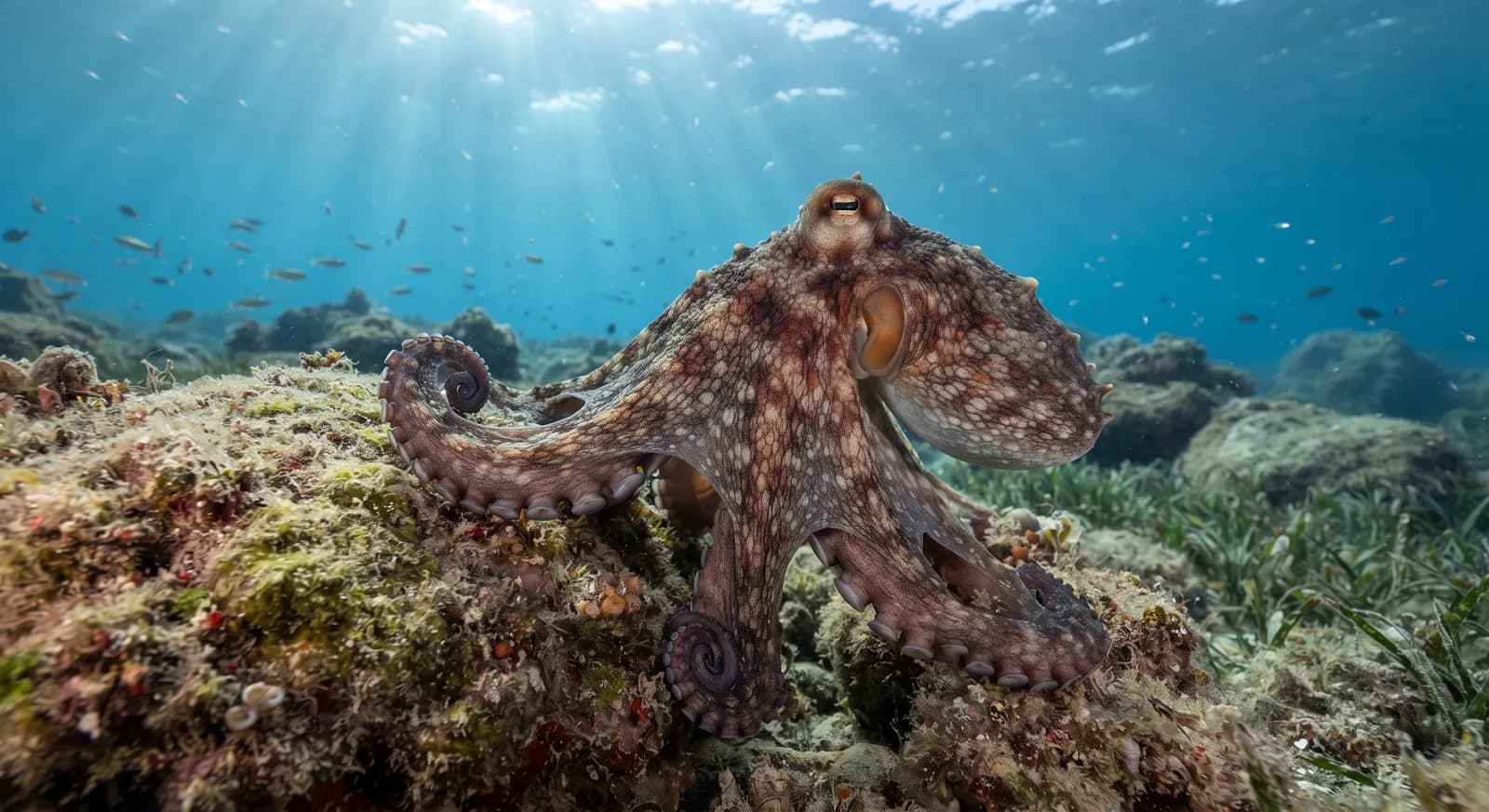
Common Octopus

Octopus vulgaris

Common CuttlefishNot Evaluated

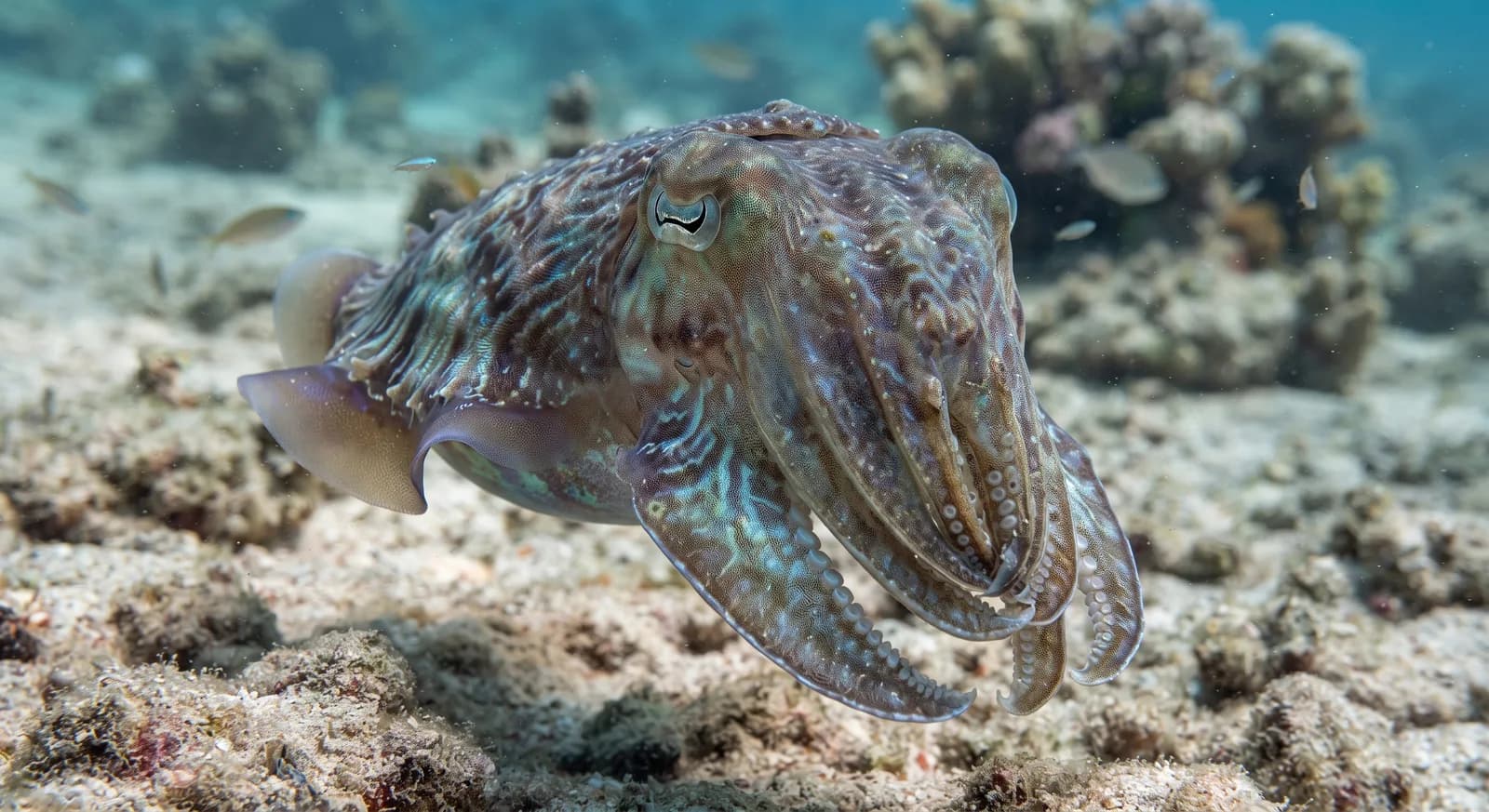
Common Cuttlefish

Sepia officinalis

Greater ArgonautLeast Concern

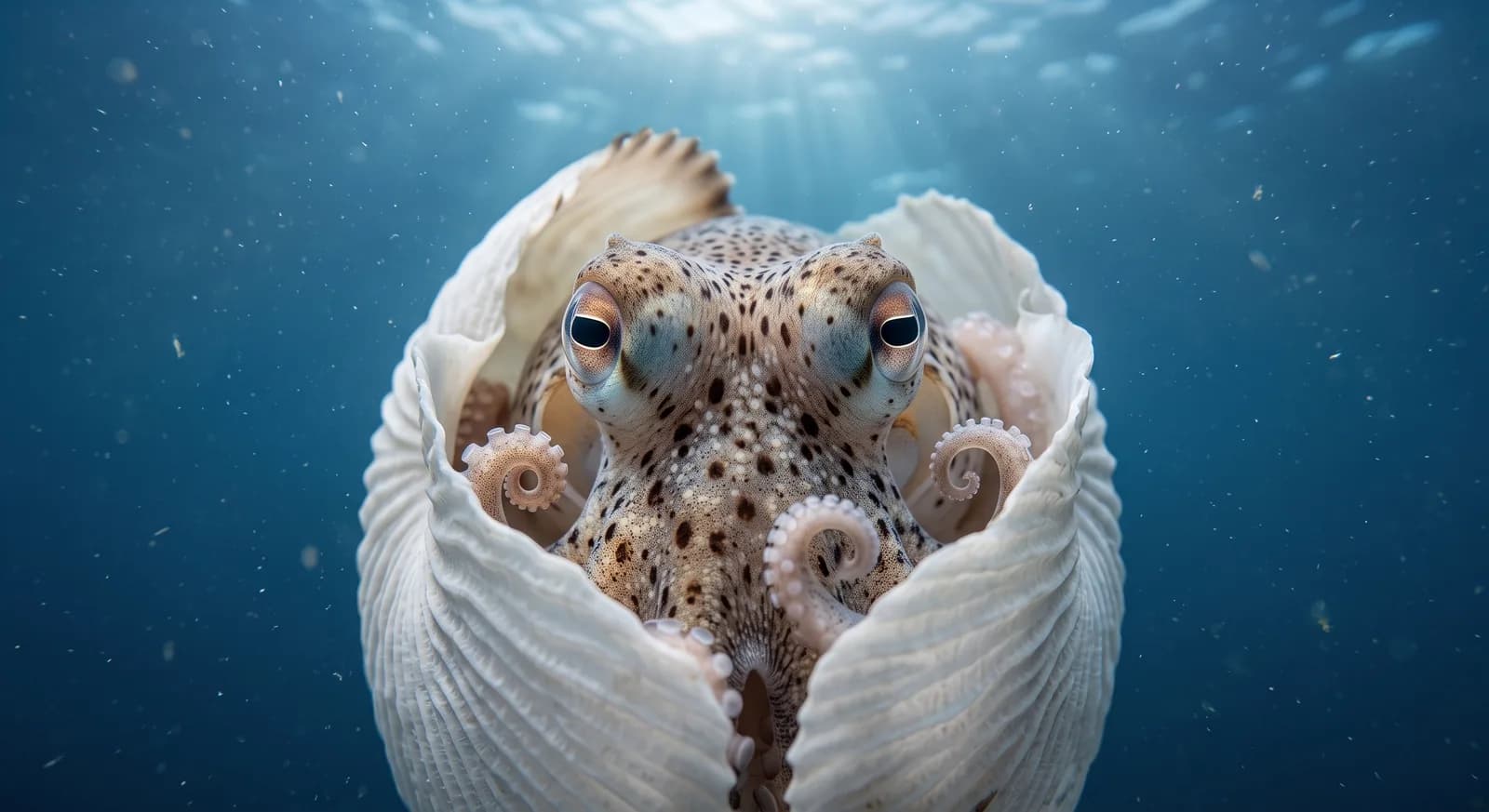
Greater Argonaut

Argonauta argo

Not Evaluated

Horse Conch

Pleuroploca gigantea

Not Evaluated

Common Keyhole Limpet

Diodora graeca

CountriesSpain
ParksDoñana National ParkSpain
TagsCarnivore
Carnivore
Solitary
Ocean
Mollusc

Asia26

Oceania21

Africa17

North America4

South America3

Europe2

Spain
United States
Australia
Mexico
Brazil
Bahamas
Bahrain
Bangladesh
Brunei
Cambodia
China
India
Indonesia
Iran
Japan
Kuwait
Malaysia
Maldives
Myanmar
Oman
Pakistan
Philippines
Qatar
Saudi Arabia
Singapore
Sri Lanka
Taiwan
Thailand
Timor-Leste
United Arab Emirates
Vietnam
Yemen
American Samoa
Australia
Cook Islands
Fiji
French Polynesia
Guam
Kiribati
Marshall Islands
Micronesia
Nauru
New Caledonia
New Zealand
Niue
Northern Mariana Islands
Palau
Papua New Guinea
Samoa
Solomon Islands
Tonga
Tuvalu
Vanuatu
Cabo Verde
Comoros
Djibouti
Egypt
Eritrea
Kenya
Madagascar
Mauritius
Mayotte
Morocco
Mozambique
Réunion
Seychelles
Somalia
South Africa
Sudan
Tanzania
Bahamas
Cuba
Mexico
United States
Brazil
Colombia
Venezuela
Portugal
Spain