Amphibians · Caudata · Amphiumidae
Two-toed Amphiuma
Amphiuma means
The species is abundant and widely distributed; it faces no significant short-term risk. See full glossary
The two-toed amphiuma is an elongated amphibian of more than a metre with four vestigial legs of two toes each, practically useless. It is entirely aquatic, nocturnal, and bites hard if handled. The female stays coiled around her clutch for five months without eating, guarding it until it hatches.
Weight
201 g on average
Size
45 cm – 1.2 m
Lifespan
27 years
Diet
Carnivore
Feeds mainly on other animals.
Activity
Nocturnal
Active mainly at night.
Social structure
Solitary
Lives and hunts alone, joining others only to breed.
Sighting difficulty
Easy
Fun facts
- Its four legs are vestigial and have only two toes each: they are so tiny as to be invisible at a distance, and the animal moves by wriggling like an eel.
- The female coils around her clutch and stays with it for five months without feeding, protecting it from predators until it hatches.
- It has the largest red blood cells of any known vertebrate, a feature that has made it standard material in cytology laboratories and microscopy classes.
Life cycle & biology
- Skeleton type
- Vertebrate - internal bony skeleton (amphibian)
- Habitat & environment
- Pools, ditches, marshes and slow streams with muddy bottoms in the south-eastern United States
- Sexual maturity
- 4 years
- Gestation / incubation
- 4.9 months
- Litter / clutch size
- 200
Sources consulted: https://www.iucnredlist.org/ | https://animaldiversity.org/ | https://es.wikipedia.org/
Where to watch it
Parks and dive sites where this species has been documented.
Related species
Other species in the catalogue with the most in common with Two-toed Amphiuma — same habitat, park, country, tags or family.
American Bullfrog
Lithobates catesbeianus
Greater Siren
Siren lacertina
Longnose Gar
Lepisosteus osseus
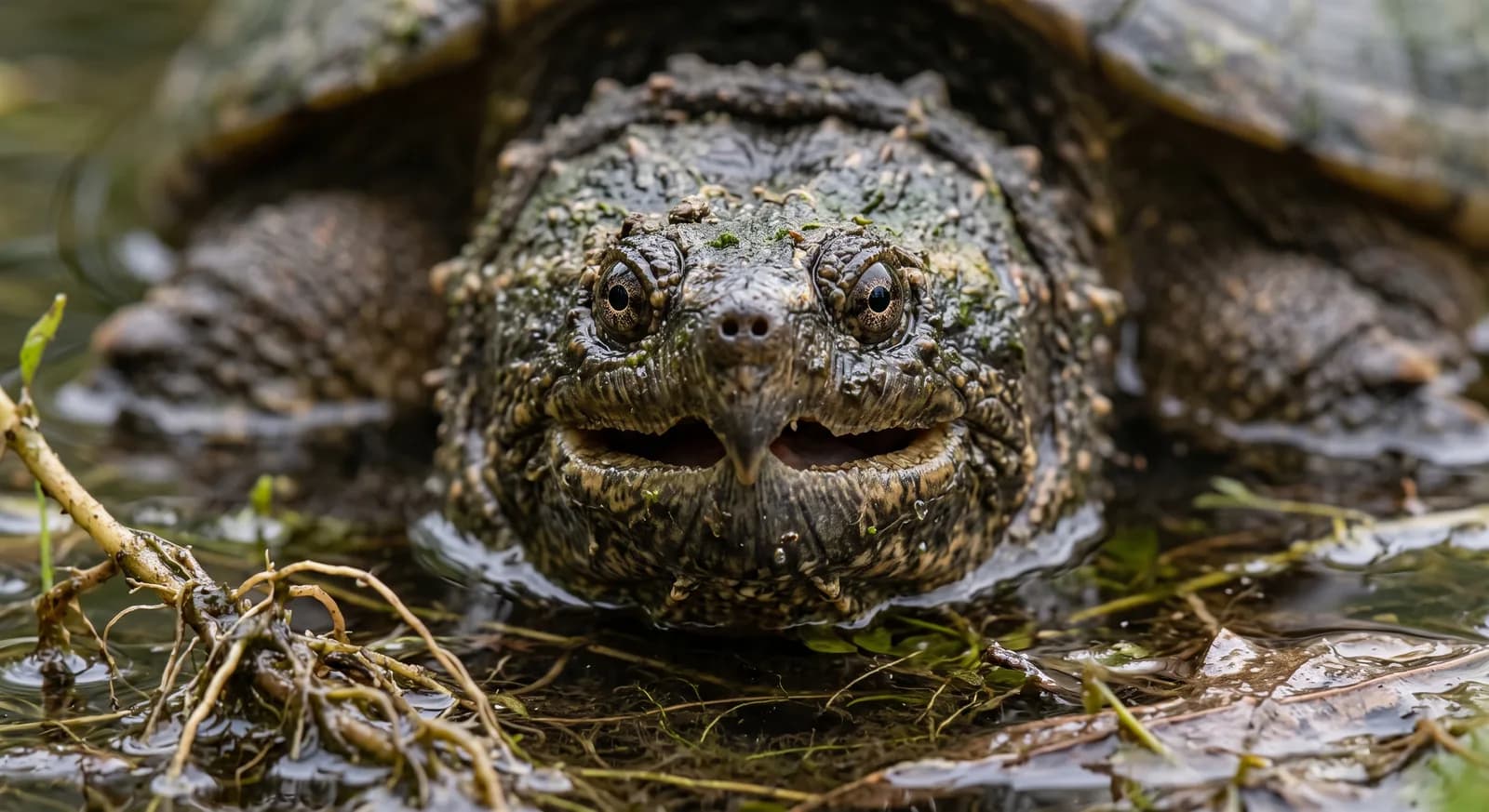 Least Concern
Common Snapping Turtle
Chelydra serpentina
Alligator Snapping Turtle
Macrochelys temminckii
Spiny Softshell Turtle
Apalone spinifera
Keep exploring
Based on what we already know about two-toed amphiuma.
Comments
Share an experience, a fun fact or a tip for seeing the two-toed amphiuma.
Be the first to comment.