One of the 41 turtles and tortoises on WAnimals
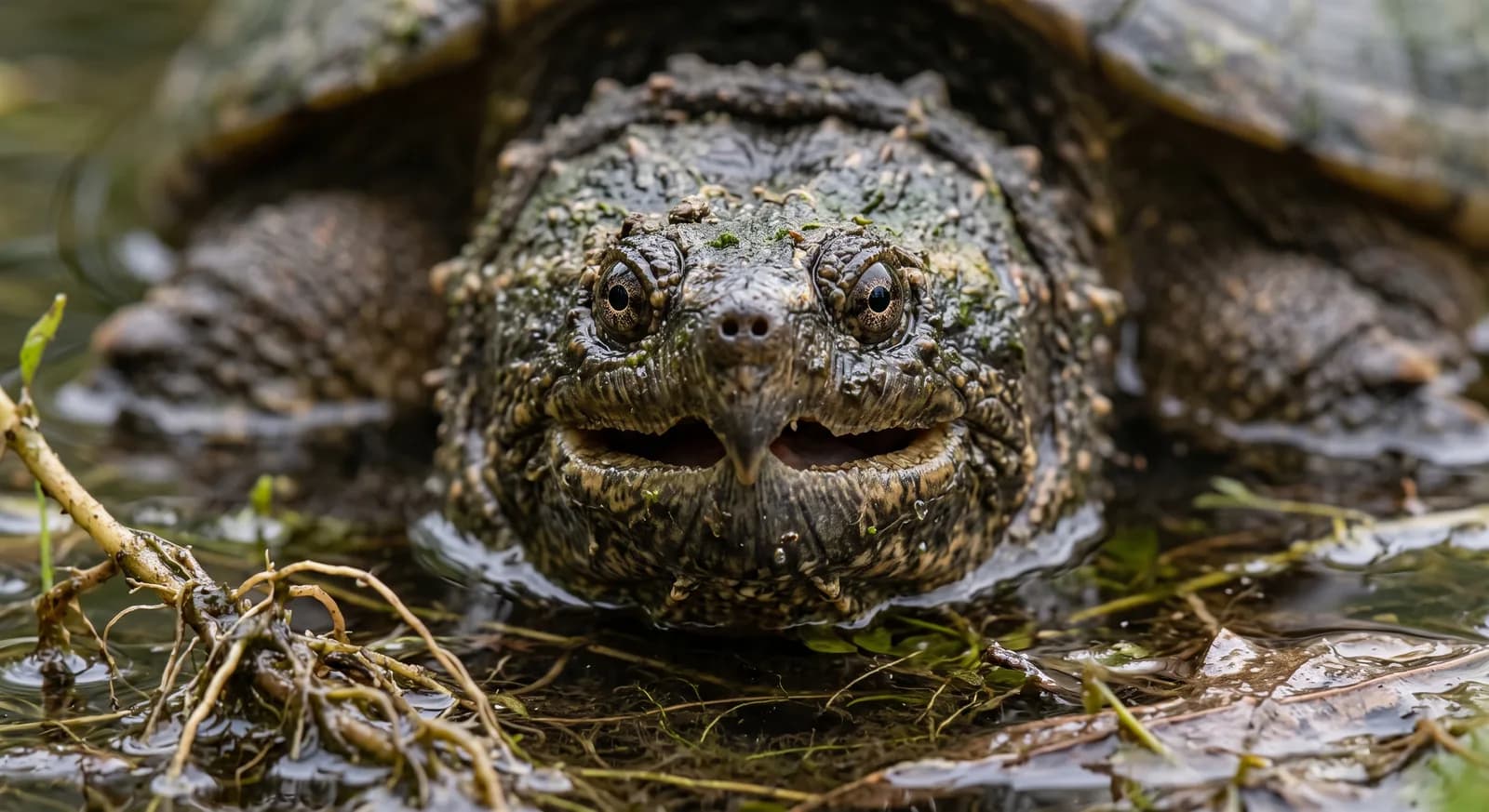
Reptiles · Testudines · Chelydridae
Common Snapping Turtle
Chelydra serpentina
The species is abundant and widely distributed; it faces no significant short-term risk. See full glossary
Females can store viable sperm for up to three years, which lets them choose when and where to lay without needing a male on hand.
Weight
4.5 kg – 16 kg
Size
20 cm – 36 cm
Lifespan
37 years
Diet
Omnivore
Combines animal and plant food depending on availability.
Activity
Nocturnal
Active mainly at night.
Social structure
Solitary
Lives and hunts alone, joining others only to breed.
Sighting difficulty
Easy
Fun facts
- Females can store viable sperm for up to three years.
- The incubation temperature decides the sex of the hatchlings.
- Mark-recapture studies in Canada suggest possible maximum lifespans of over 100 years.
- comportamientoIts neck is very long for its size and it can strike quickly even when it appears motionless, which is why handling it directly is not advised.
Life cycle & biology
- Skeleton type
- Vertebrate - bony skeleton with a fused shell (reptile)
- Habitat & environment
- Fresh-water rivers, lakes, swamps and ponds of North America and parts of Central and South America
- Birth weight
- Shell 2.5-3.2 cm long on hatching; egg 9-12 grams
- Size at birth
- 2.5 - 3.2 cm of carapace length at hatching
- Sexual maturity
- 8-20 years depending on the region (northern populations mature later than southern ones)
- Gestation / incubation
- 74-81 days of egg development (varying with temperature)
- Litter / clutch size
- 6 to 109 eggs per clutch (most commonly 20-40)
- Lifespan in captivity
- Documented record of up to 47-70 years in captivity
Sources consulted: Ontario Turtle Conservation Centre; Animalia.bio; Dimensions.com; Montana Field Guide; Animal Diversity Web; Virginia Herpetological Society; Study.com; Britannica; University of Minnesota Bell Atlas
Where to find it
See its range on the interactive mapWhere to watch it
Parques y spots de buceo donde se ha documentado esta especie — se muestran 17 de 35 documentados.
Related species
Other species in the catalogue with the most in common with Common Snapping Turtle — same habitat, park, country, tags or family.
Alligator Snapping Turtle
Macrochelys temminckii
Pond Slider
Trachemys scripta
Channel Catfish
Ictalurus punctatus
Eastern Mud Turtle
Kinosternon subrubrum
Northern Map Turtle
Graptemys geographica
Common Musk Turtle
Sternotherus odoratus
Keep exploring
Based on what we already know about common snapping turtle.
Comments
Share an experience, a fun fact or a tip for seeing the common snapping turtle.
Be the first to comment.