One of the 10 boas on WAnimals
Reptiles · Squamata · Boidae
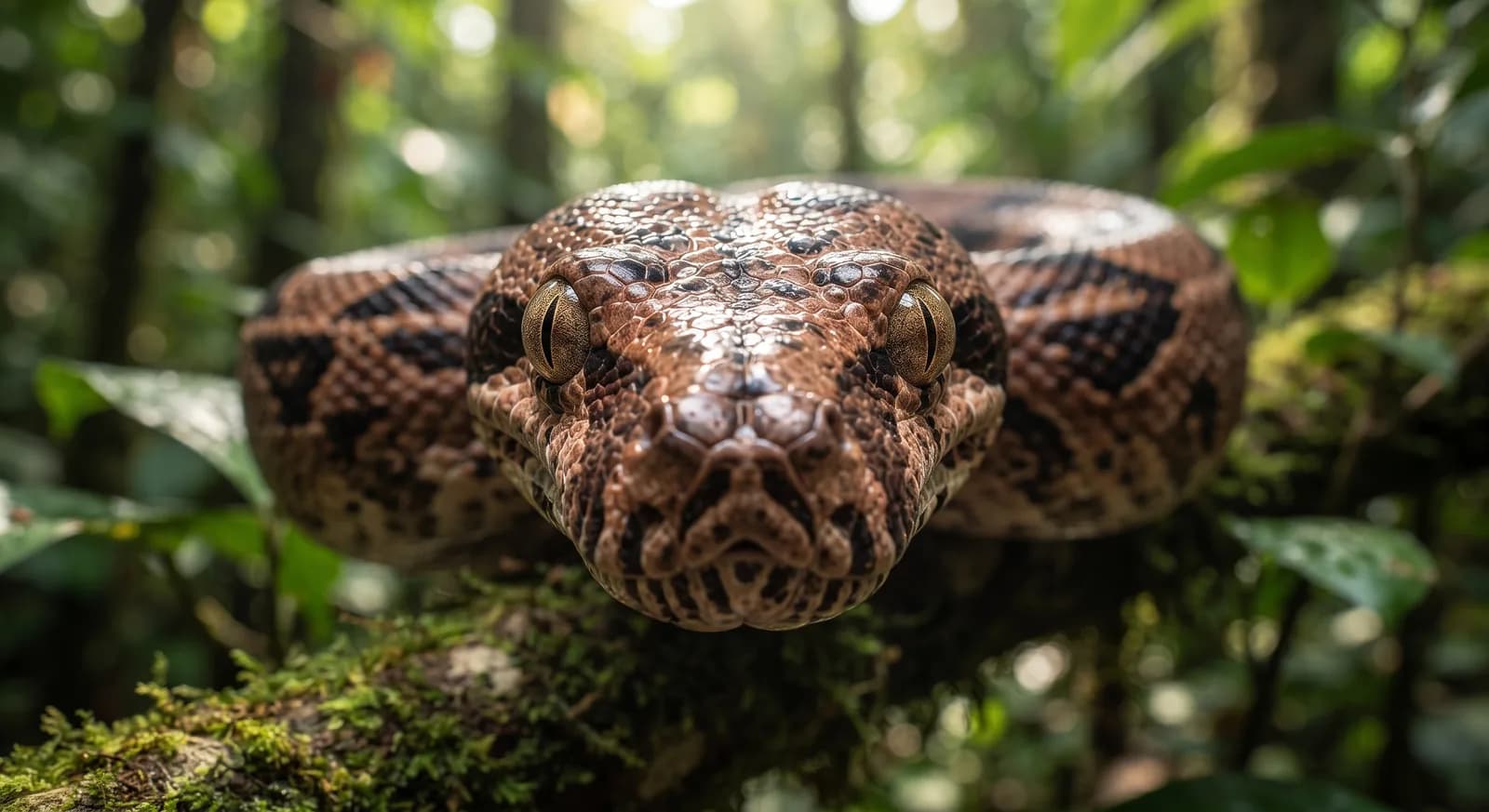
Dominica Boa
Boa nebulosa
The species is abundant and widely distributed; it faces no significant short-term risk. See full glossary
The Dominica boa is a boa endemic to that Caribbean island, separated as a species of its own from the mainland boa constrictor in 2016. It is the largest snake on Dominica and a key predator of introduced rodents. Hurricane Maria, which devastated the island in 2017, seriously affected its habitat and its only known population.
Weight
4 kg – 15 kg
Size
2 m – 3.5 m
Lifespan
25 years
Diet
Carnivore
Feeds mainly on other animals.
Activity
Nocturnal
Active mainly at night.
Social structure
Solitary
Lives and hunts alone, joining others only to breed.
Sighting difficulty
Easy
Fun facts
- It was recognised as a species of its own in 2016, when it was split from the mainland boa constrictor along with the Saint Lucia boa: until then they were regarded as island populations of a single widespread species.
- Hurricane Maria in 2017 destroyed much of Dominica's forest and seriously affected the species' only population, whose subsequent monitoring is still under way.
- It is the island's largest land predator and controls the introduced rat populations, though direct persecution by local people remains a problem.
Life cycle & biology
- Skeleton type
- Vertebrate - internal bony skeleton (reptile)
- Habitat & environment
- Montane rainforest, dry forest and plantations on the island of Dominica, in the Lesser Antilles
- Sexual maturity
- 4 years
- Gestation / incubation
- 6 months of gestation
- Litter / clutch size
- 25 live young
Sources consulted: https://www.iucnredlist.org/ | https://animaldiversity.org/ | https://es.wikipedia.org/
Where to watch it
Parks and dive sites where this species has been documented.
Related species
Other species in the catalogue with the most in common with Dominica Boa — same habitat, park, country, tags or family.
Cuban Brown Anole
Anolis sagrei
 Not Evaluated
Red-tailed Boa
Boa constrictor
Pacific Boa
Candoia carinata
Emerald Tree Boa
Corallus caninus
Rainbow Boa
Epicrates cenchria
Hispaniola Boa
Chilabothrus striatus
Keep exploring
Based on what we already know about dominica boa.
Comments
Share an experience, a fun fact or a tip for seeing the dominica boa.
Be the first to comment.