One of the 10 boas on WAnimals
Reptiles · Squamata · Boidae
Hispaniola Boa
Chilabothrus striatus
The species is abundant and widely distributed; it faces no significant short-term risk. See full glossary
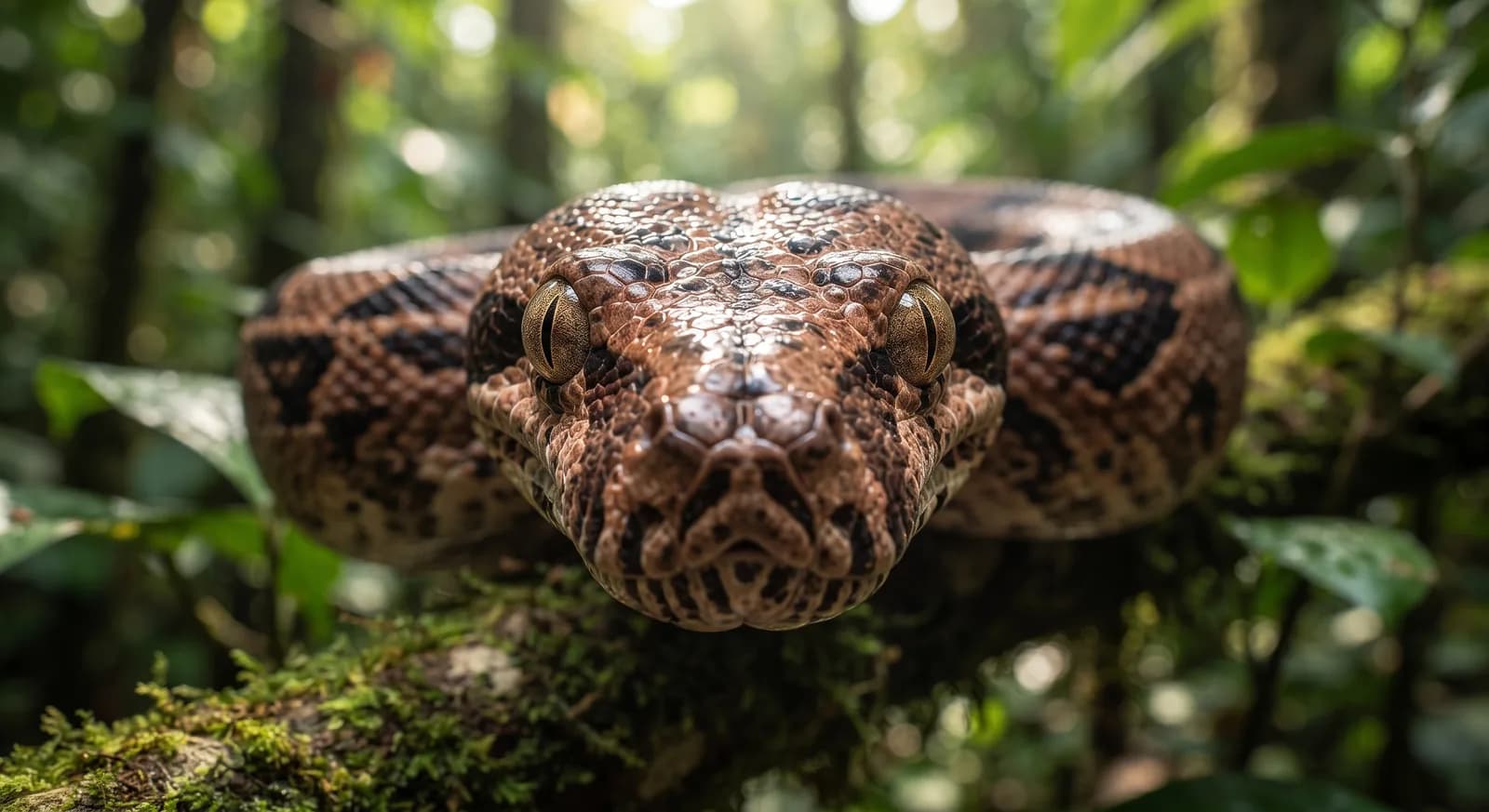
The Hispaniolan boa is a boa endemic to the island of Hispaniola. It belongs to the genus Chilabothrus of the subfamily Boinae. The records of this species from the Bahamas represent the former subspecies Chilabothrus striatus strigilatus, raised to species rank by Reynolds et al. (2013) and to be assessed separately.
Weight
2 kg – 5 kg
Size
1.8 m – 2.5 m
Lifespan
20 years
Diet
Carnivore
Feeds mainly on other animals.
Activity
Nocturnal
Active mainly at night.
Social structure
Solitary
Lives and hunts alone, joining others only to breed.
Sighting difficulty
Easy
Fun facts
- It is an unwitting ally against rats: much of its diet today consists of introduced rodents, and in the rural areas of the Dominican Republic where it is left alone it plays a considerable part in pest control.
- Direct persecution is its greatest threat: it is killed out of superstition and fear despite being completely harmless to people.
- Like all Caribbean boas it is viviparous and gives birth to fully formed young after six months of gestation.
Life cycle & biology
- Skeleton type
- Vertebrate - internal bony skeleton (reptile)
- Habitat & environment
- Dry and moist forest, karst scrub, caves and rural areas of Hispaniola
- Sexual maturity
- 3 years
- Gestation / incubation
- 6 months of gestation
- Litter / clutch size
- 20 live young
Sources consulted: https://es.wikipedia.org/wiki/Chilabothrus_striatus
Where to watch it
Parks and dive sites where this species has been documented.
Related species
Other species in the catalogue with the most in common with Hispaniola Boa — same habitat, park, country, tags or family.
Cuban Brown Anole
Anolis sagrei
Cuban Treefrog
Osteopilus septentrionalis
 Not Evaluated
Red-tailed Boa
Boa constrictor
Hispaniolan Solenodon
Solenodon paradoxus
Jamaican Fruit-eating Bat
Artibeus jamaicensis
Giant Ameiva
Ameiva ameiva
Keep exploring
Based on what we already know about hispaniola boa.
Comments
Share an experience, a fun fact or a tip for seeing the hispaniola boa.
Be the first to comment.