Mammals · Artiodactyla · Bovidae
Yak
Bos grunniens
It has not yet been assessed against the IUCN criteria. See full glossary
Adapted to the Tibetan Plateau, it has a far greater lung capacity and red blood cell count than cattle, both key to thriving above 4,000 metres.
Weight
225 kg – 1 t
Size
2 m – 3.3 m
Lifespan
25 years
Diet
Herbivore
Feeds mainly on plants.
Activity
Diurnal
Active mainly during the day.
Social structure
Herd
Lives in large groups as a strategy against predators.
Sighting difficulty
Unknown
Fun facts
- It can live and work above 4,000 metres, where ordinary cattle barely cope.
- It was domesticated on the Tibetan Plateau between 7,300 and 10,000 years ago.
- Wild bulls can reach 1,000 kg.
- fisiologíaIt has more red blood cells than lowland cattle, and each carries more oxygen — a key adaptation to living above 4,000 metres.
Life cycle & biology
- Skeleton type
- Vertebrate - internal bony skeleton (mammal)
- Habitat & environment
- Alpine grassland, cold steppe and high-altitude desert of the Tibetan Plateau and surrounding regions, between 3,000 and 5,500 metres
- Birth weight
- 18 kg
- Size at birth
- Precocial, able to stand and walk hours after birth
- Sexual maturity
- 2-3 years (though full adult size is not reached until 6-8 years)
- Gestation / incubation
- 257-274 days (~8.5-9 months)
- Litter / clutch size
- 1 young, with 2 years between births in wild populations
- Lifespan in captivity
- Documented record of up to 26.3-28 years in captivity
Sources consulted: AnAge; Animal Diversity Web; North American Yak Association; A-Z Animals; Animal Corner; Know Your Mammals; Idaho Falls; PMC
Where to find it
See its range on the interactive mapBest time: All year round on the plateaus of the Himalaya and Tibet, above 3,000 m, almost always tied to herding communities.
Where to watch it
Parks and dive sites where this species has been documented.
Related species
Other species in the catalogue with the most in common with Yak — same habitat, park, country, tags or family.
Chiru
Pantholops hodgsonii
 Least Concern
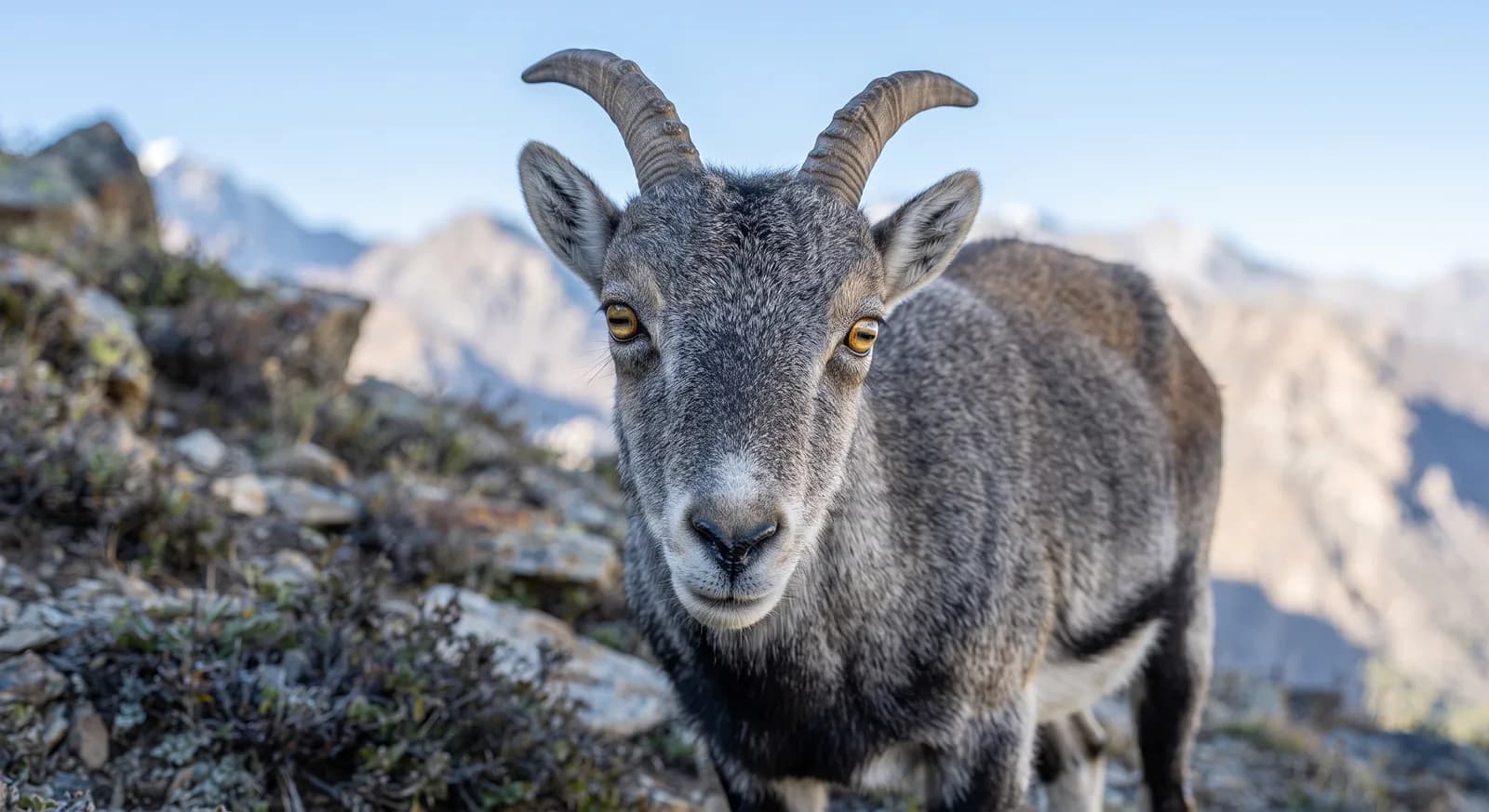
Blue Sheep
Pseudois nayaur
Himalayan Tahr
Hemitragus jemlahicus
Japanese Serow
Capricornis crispus
Himalayan Goral
Naemorhedus goral
Long-tailed Goral
Naemorhedus caudatus
Keep exploring
Based on what we already know about yak.
Comments
Share an experience, a fun fact or a tip for seeing the yak.
Be the first to comment.