One of the 6 squid on WAnimals
Cephalopods · Oegopsida · Cranchiidae
Colossal Squid
Mesonychoteuthis hamiltoni
The species is abundant and widely distributed; it faces no significant short-term risk. See full glossary
The colossal squid — known in Spanish as calamar colosal or cranquiluria antártica — is regarded as the largest squid species and the only member of the genus Mesonychoteuthis. It is sometimes called, in Spanish, calamar antártico or calamar gigante, and it is believed to be the largest squid species in terms of mass. On current calculations it is estimated to reach a maximum size of between 12 and 15 m, based on analysis of small, not fully grown specimens; the longest individual ever caught is about 4.2 m. The maximum estimated weight is around 750 kg, based on partial remains found in 1925 in the stomach of a sperm whale. It should be borne in mind that its two long prehensile tentacles contribute to that length.
Weight
up to 495 kg
Size
up to 7 m
Diet
Carnivore
Feeds mainly on other animals.
Social structure
Solitary
Lives and hunts alone, joining others only to breed.
Sighting difficulty
Easy
Fun facts
- GeneralIt has the largest eyes in the animal kingdom, at 27 cm across.
- récordIt is the largest invertebrate known, and its eyes can be up to 30 centimetres across, the largest recorded anywhere in the animal kingdom.
- It is the heaviest invertebrate on the planet: the largest individual ever weighed was an adult female of 495 kg caught in the Ross Sea in 2007.
- It has the largest eyes in the animal kingdom, some 25 to 27 cm across, adapted to the gloom of deep Antarctic water.
- Unlike the giant squid, which has suckers with toothed rings, its tentacles carry swivelling hooks, twenty-five in two rows on each tentacular club.
- It was identified in 1925 from two arms recovered from a sperm whale's stomach. For a century almost everything known about it came from remains in the stomachs of whales and birds, and from individuals tangled in fishing gear.
- In March 2025, exactly a century after it was described, one was filmed alive in its own environment for the first time: a transparent 30 cm juvenile, at 600 m depth, near the South Sandwich Islands.
- It floats effortlessly thanks to low-density ammonium-rich tissues, typical of the glass squids.
Life cycle & biology
- Habitat & environment
- Deep Antarctic water (1,000-2,200 m)
Sources consulted: https://es.wikipedia.org/wiki/Mesonychoteuthis_hamiltoni
Where to find it
See its range on the interactive mapWhere to watch it
Parks and dive sites where this species has been documented.
Related species
Other species in the catalogue with the most in common with Colossal Squid — same habitat, park, country, tags or family.
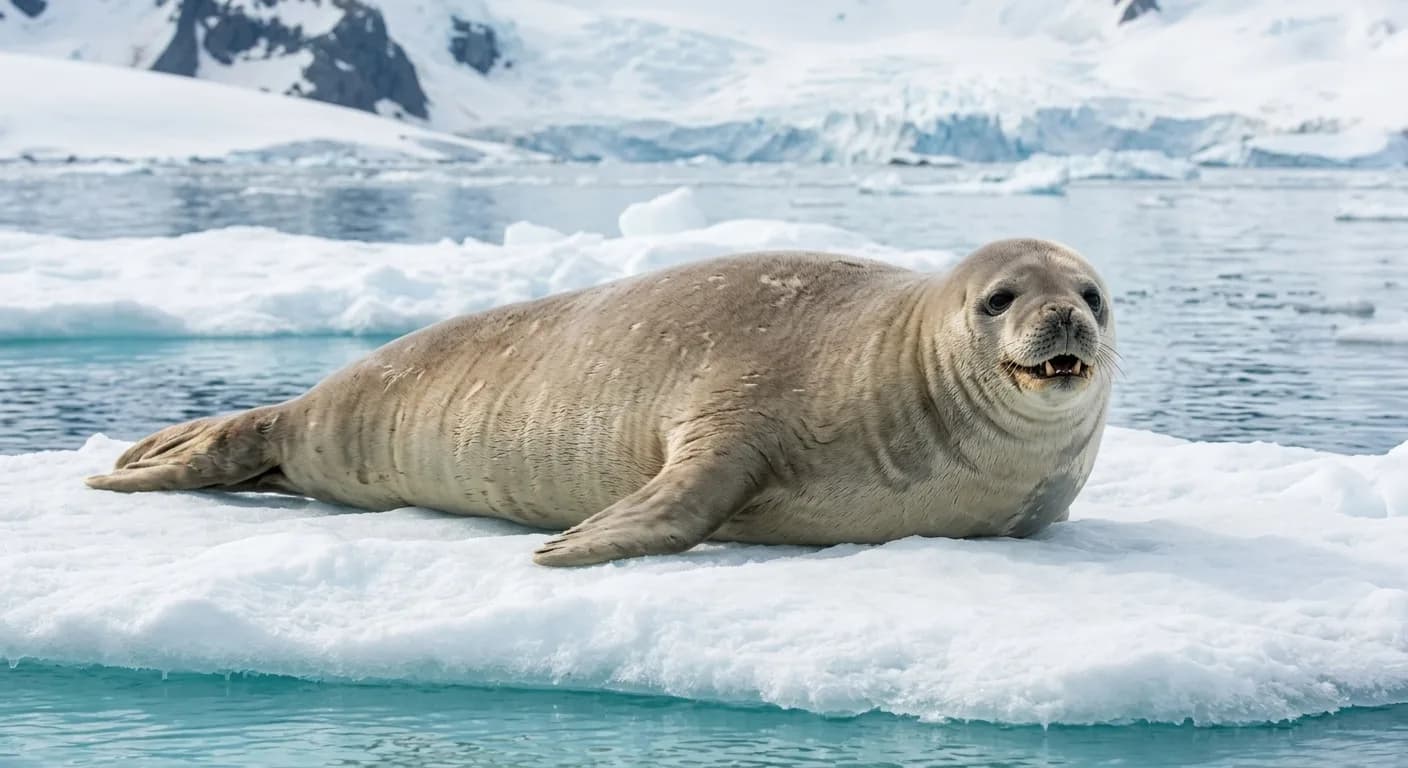 Least Concern
Crabeater Seal
Lobodon carcinophaga
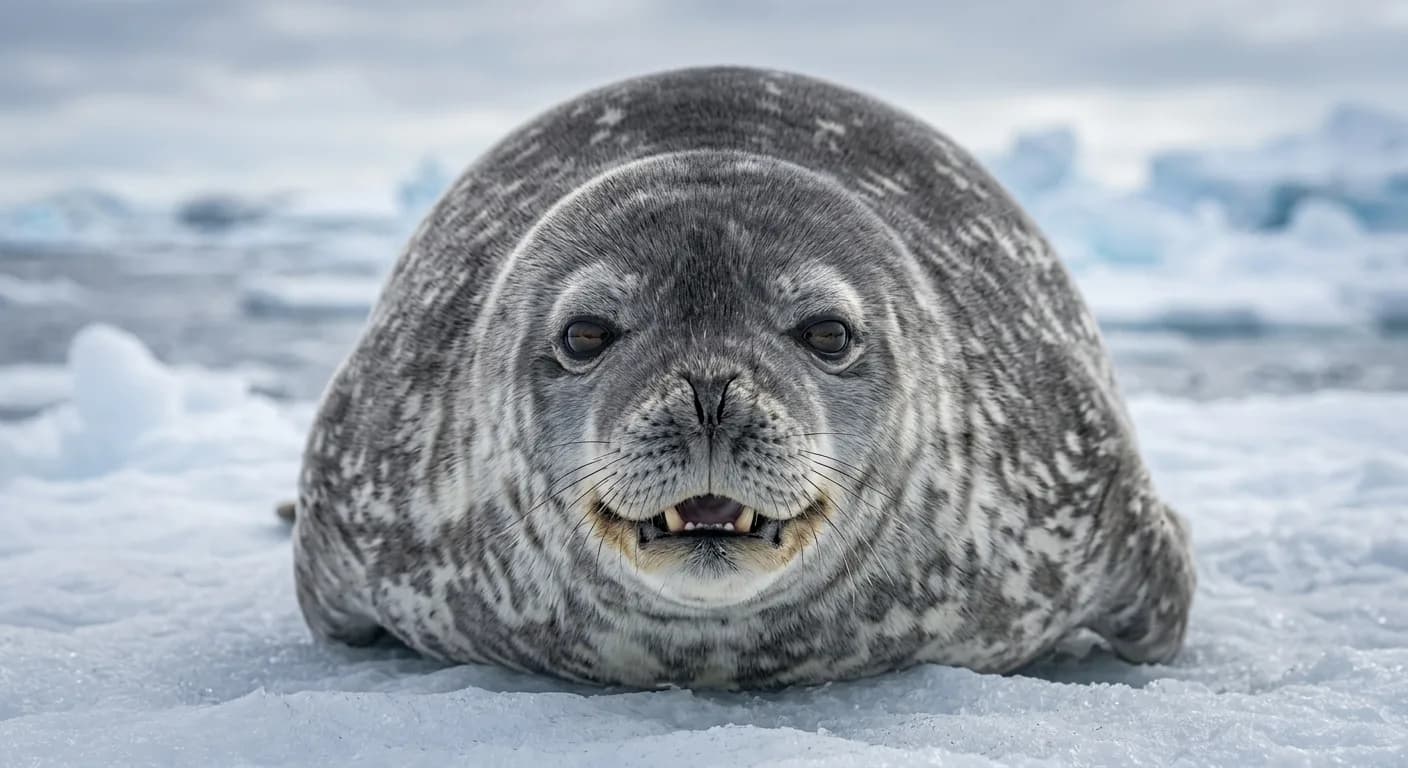 Least Concern
Weddell Seal
Leptonychotes weddellii
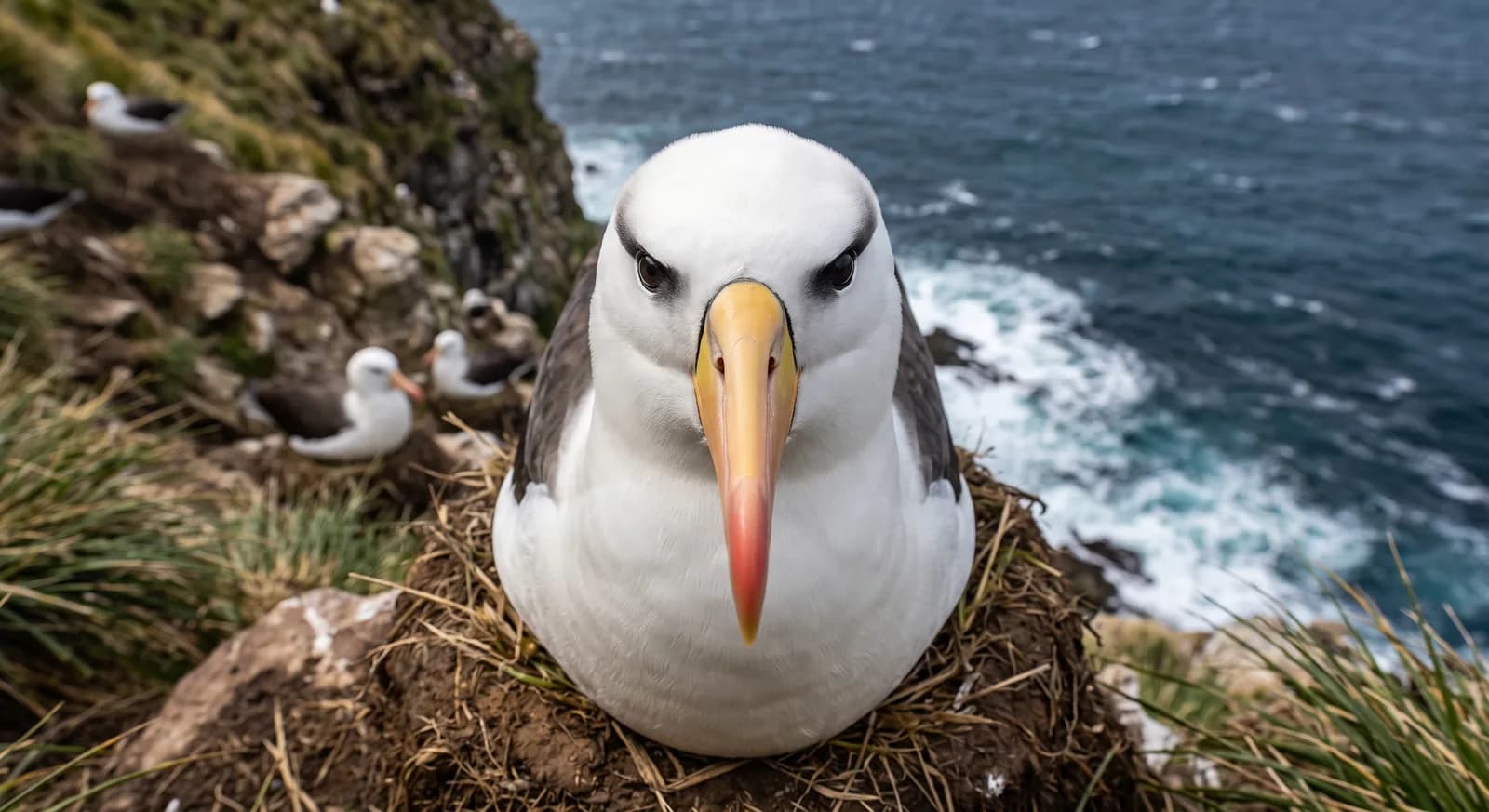 Least Concern
Black-browed Albatross
Thalassarche melanophris
Porbeagle
Lamna nasus
Minke Whale
Balaenoptera acutorostrata
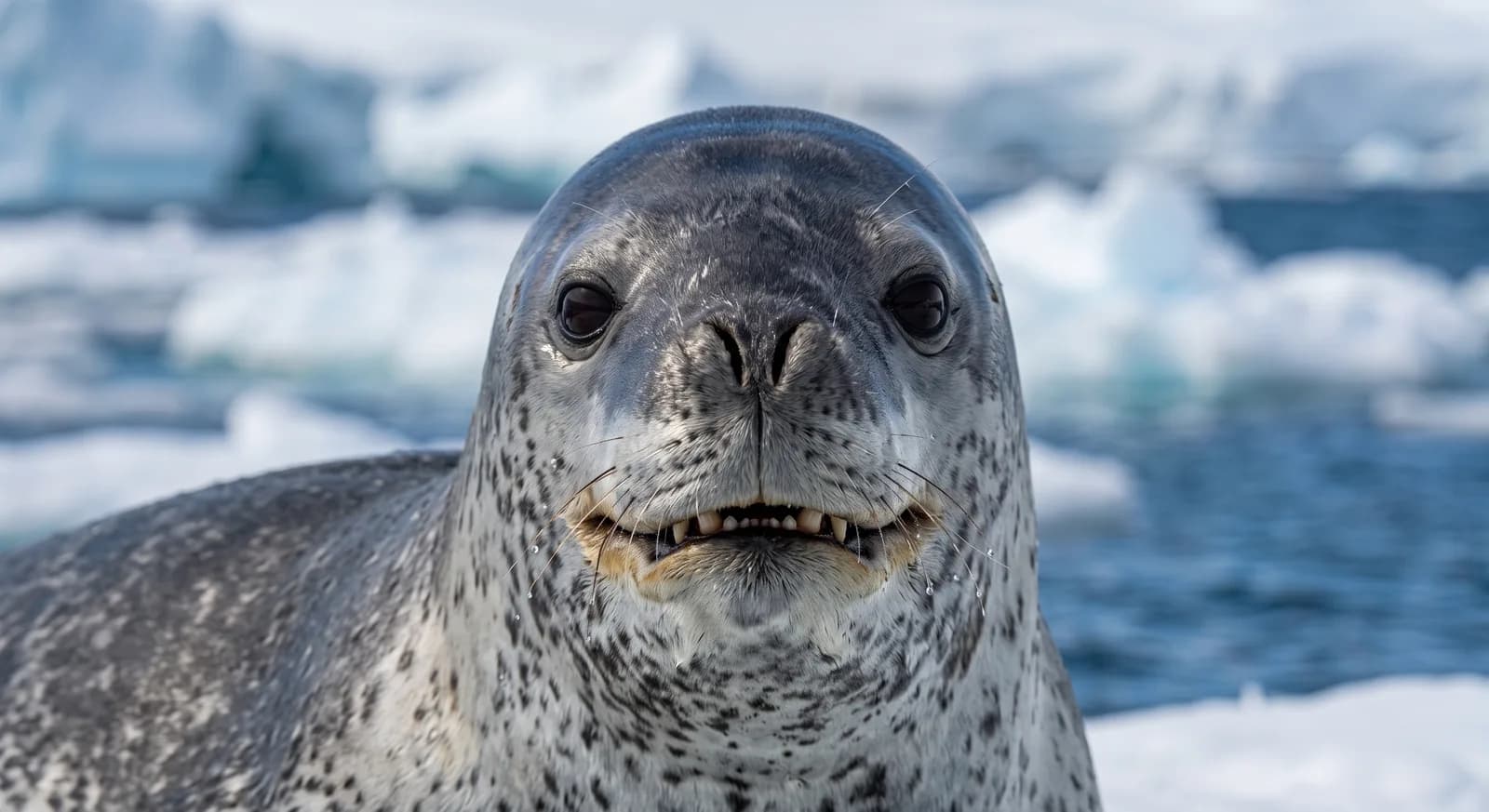 Least Concern
Leopard Seal
Hydrurga leptonyx
Keep exploring
Based on what we already know about colossal squid.
Comments
Share an experience, a fun fact or a tip for seeing the colossal squid.
Be the first to comment.