One of the 2 croakers on WAnimals
Bony fish · Perciformes · Sciaenidae
Common Weakfish
Cynoscion regalis
It faces a very high risk of extinction in the wild in the near future. See full glossary
A drum of the Atlantic coast of North America, with a dark back showing greenish sheen and speckled silvery flanks. It enters the estuaries in spring to spawn and to feed on small fish, shrimp and crabs, and returns to deeper water in autumn. Its populations collapsed in the late 1990s and have not recovered.
Size
30 cm – 1 m
Lifespan
17 years
Diet
Carnivore
Feeds mainly on other animals.
Social structure
Colony
Lives in large concentrations, often for breeding reasons.
Sighting difficulty
Hard
Fun facts
- The name weakfish refers not to its strength but to the fragility of the muscles of its mouth, which tear easily and let the fish shake off the hook.
- The males vibrate their swim bladder with specialised muscles and produce a drumming audible from a boat during the spawning season.
- It has been listed as Endangered by the IUCN since 2019, an unusual case for a fish in an inshore fishery that is well managed on paper.
- It is a fish that sings. Males vibrate the swim bladder with specialised muscles and produce a drumming audible from the surface, which they use to attract females in the spawning aggregations.
- That sound makes it possible to locate their spawning grounds with hydrophones, and today it is a routine monitoring tool in the estuaries of the east coast of the United States.
- It is called weakfish in English not for any weakness but for the fragility of its mouth: the hook tears out easily and the fish slips free.
- Its population has collapsed since the 1980s. The diagnosis points to very high natural mortality rather than to direct fishing, which is why catch restrictions have not been enough to bring it back.
- It is an estuary predator that eats mainly forage fish and shrimp.
Life cycle & biology
- Skeleton type
- Vertebrate - internal bony skeleton (fish)
- Habitat & environment
- Estuaries and coastal waters of the north-western Atlantic
Sources consulted: https://es.wikipedia.org/wiki/Cynoscion_regalis
Related species
Other species in the catalogue with the most in common with Common Weakfish — same habitat, park, country, tags or family.
Meagre
Argyrosomus regius
Shortfin Mako
Isurus oxyrinchus
Spotted Eagle Ray
Aetobatus narinari
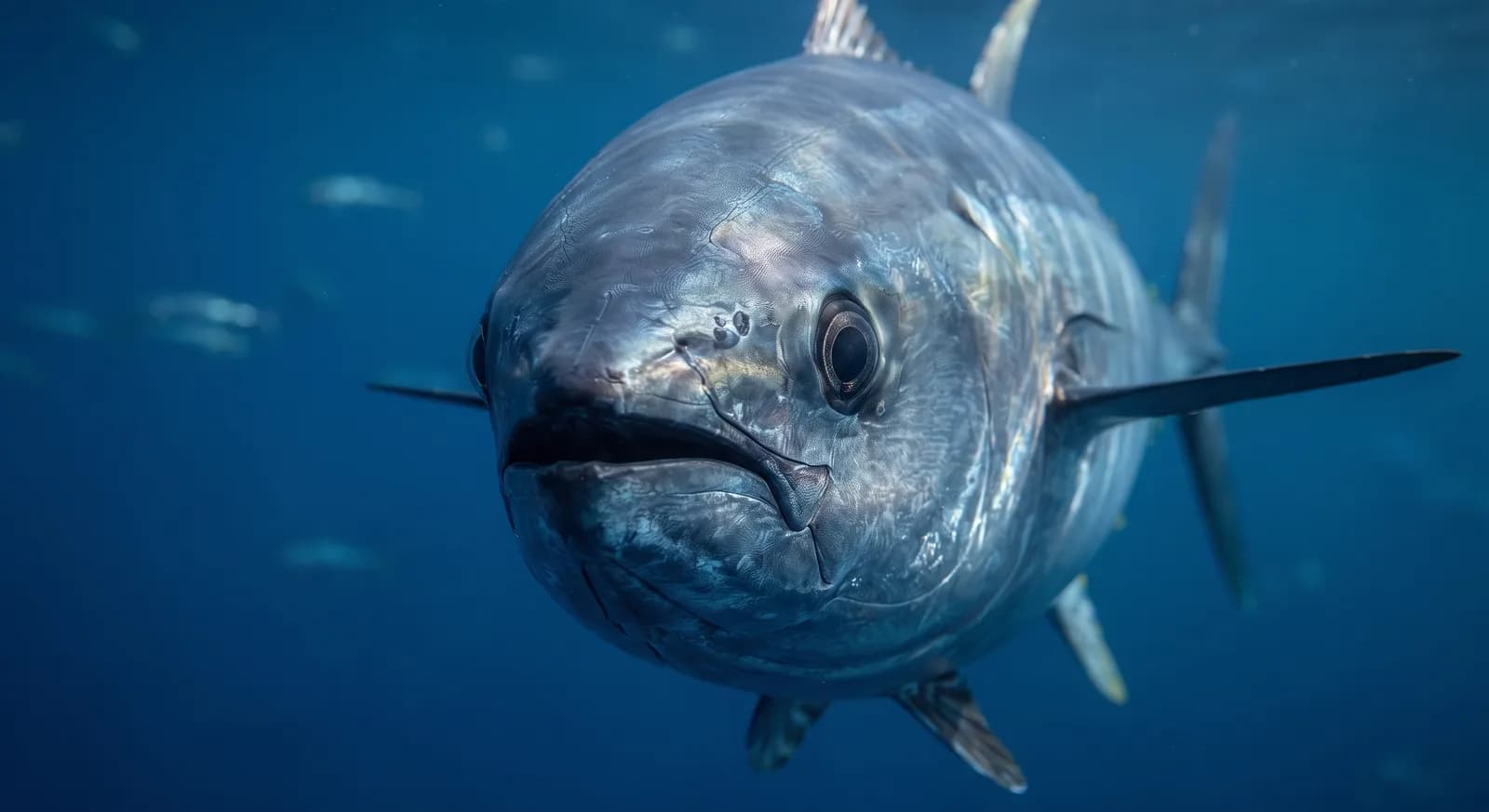 Endangered
Atlantic Bluefin Tuna
Thunnus thynnus
Gulper Shark
Centrophorus granulosus
Spiny Butterfly Ray
Gymnura altavela
How to help
The common weakfish is classified as endangered. Organizations such as UICN, WWF y Wildlife Conservation Society work specifically on its conservation and that of its habitat; looking into their programs is a good starting point if you want to get involved.
Keep exploring
Based on what we already know about common weakfish.
Comments
Share an experience, a fun fact or a tip for seeing the common weakfish.
Be the first to comment.