One of the 2 tunas on WAnimals
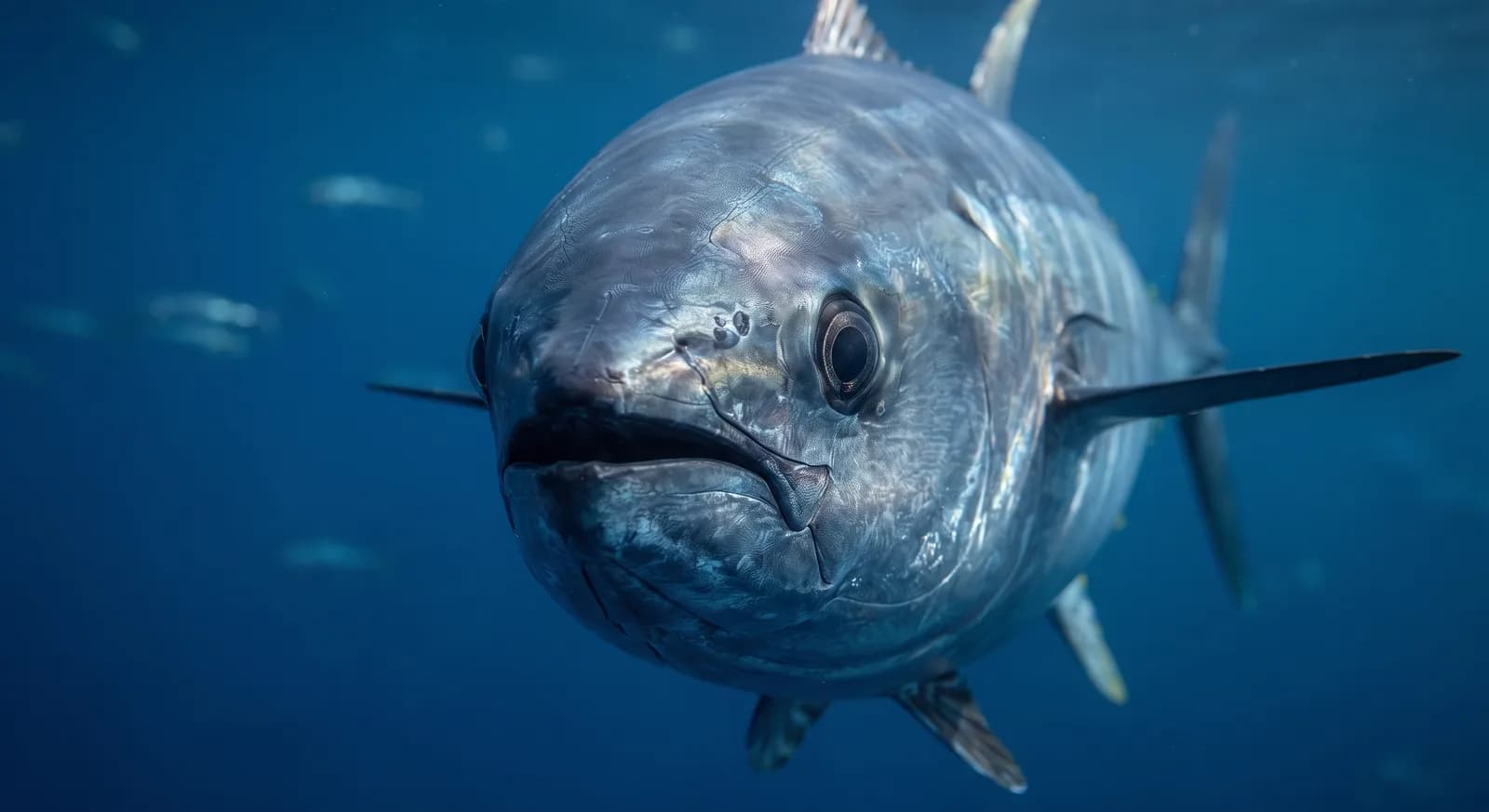
Bony fish · Scombriformes · Scombridae
Atlantic Bluefin Tuna
Thunnus thynnus
It faces a very high risk of extinction in the wild in the near future. See full glossary
It can hold its core muscle several degrees warmer than the surrounding water through a counter-current heat exchange system, an adaptation unusual among fish.
Weight
up to 900 kg
Size
3 m – 4.6 m
Lifespan
15 years
Diet
Carnivore
Feeds mainly on other animals.
Activity
Diurnal
Active mainly during the day.
Social structure
School
Gathers in coordinated schools, typical of fish.
Sighting difficulty
Hard
Fun facts
- It can cross the whole Atlantic, covering more than 8,000 km on migration.
- It eats small shoaling fish, squid and crustaceans.
- It lives in temperate and subtropical oceanic waters of the Atlantic and the Mediterranean.
- locomociónIt can swim at over 70 km/h in short bursts thanks to a streamlined body and heavily vascularised muscle.
- comportamientoIt makes long annual migrations between feeding grounds in the Atlantic and particular spawning grounds in the Mediterranean, returning to them faithfully year after year.
Life cycle & biology
- Skeleton type
- Vertebrate - bony skeleton (fish)
- Habitat & environment
- Temperate and subtropical oceanic waters of the Atlantic and the Mediterranean, with transoceanic migrations
- Birth weight
- Egg ~1 mm; larva 2.8 mm long on hatching
- Size at birth
- 2.8 mm long at hatching
- Sexual maturity
- 3-8 years depending on the source and the population (eastern or western)
- Gestation / incubation
- ~2 days of egg development after external fertilisation
- Litter / clutch size
- Up to 10-30 million eggs per female per season
Sources consulted: American Oceans; FishBase; PMC (spawning duration study, reproductive performance study); ICES Factsheet; NOAA Fisheries; Tom's Catch Blog; Animal Diversity Web
Where to find it
See its range on the interactive mapWhere to watch it
Parques y spots de buceo donde se ha documentado esta especie — se muestran 20 de 133 documentados.
Related species
Other species in the catalogue with the most in common with Atlantic Bluefin Tuna — same habitat, park, country, tags or family.
Atlantic Bonito
Sarda sarda
Bullet Tuna
Auxis rochei
Mackerel
Scomber scombrus
Atlantic Chub Mackerel
Scomber colias
Little Tunny
Euthynnus alletteratus
Shortfin Mako
Isurus oxyrinchus
How to help
The atlantic bluefin tuna is classified as endangered. Organizations such as UICN, WWF y Wildlife Conservation Society work specifically on its conservation and that of its habitat; looking into their programs is a good starting point if you want to get involved.
It's documented in 17 real protected areas — part of why protecting these places matters for its conservation.
Keep exploring
Based on what we already know about atlantic bluefin tuna.
Comments
Share an experience, a fun fact or a tip for seeing the atlantic bluefin tuna.
Be the first to comment.