One of the 2 bonitos on WAnimals
Bony fish · Scombriformes · Scombridae
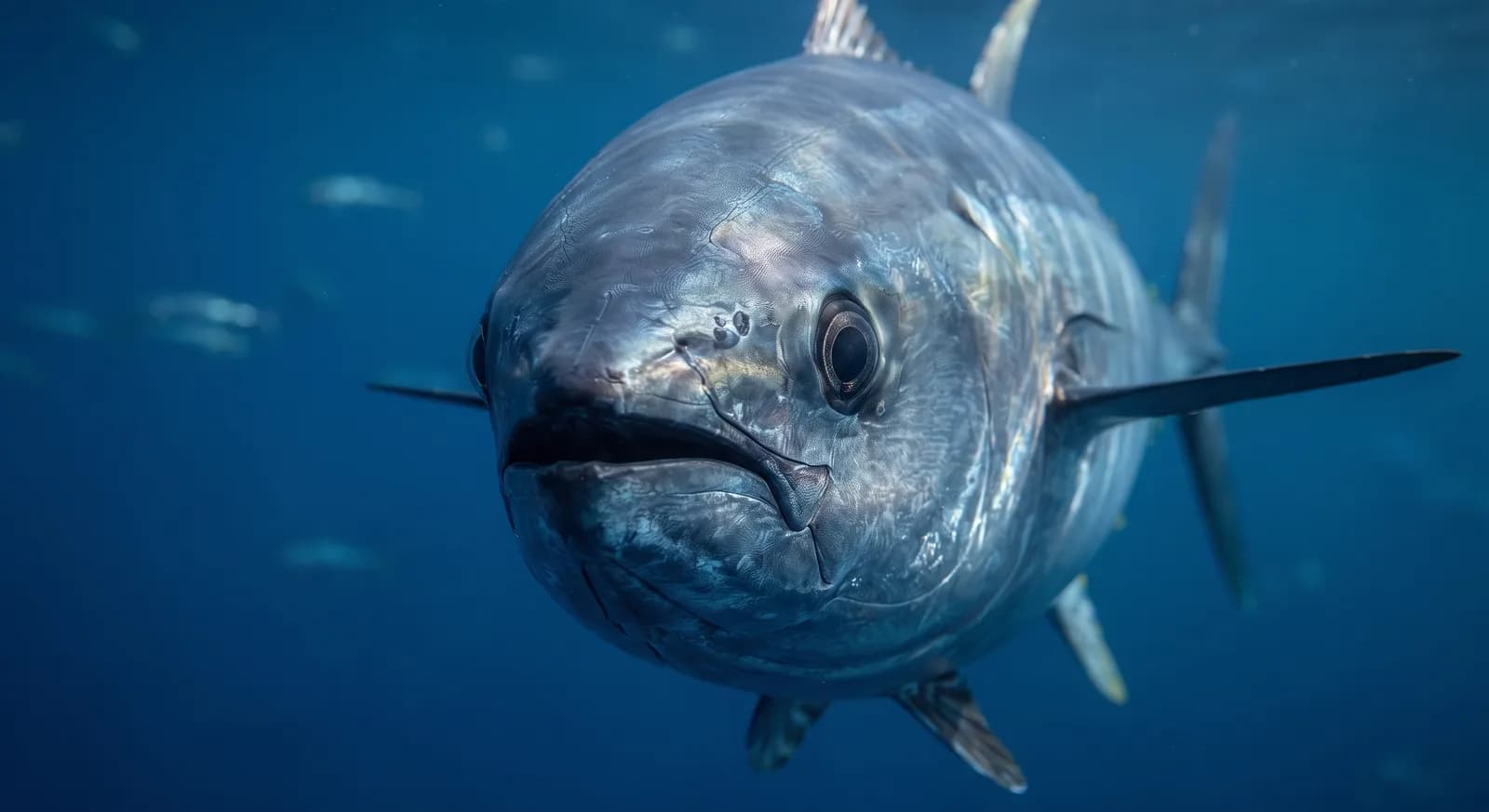
Atlantic Bonito
Sarda sarda
The species is abundant and widely distributed; it faces no significant short-term risk. See full glossary
It makes mass seasonal migrations from the Atlantic into the Mediterranean specifically to breed.
Weight
up to 11 kg
Size
up to 91.4 cm
Lifespan
5 years
Diet
Carnivore
Feeds mainly on other animals.
Activity
Diurnal
Active mainly during the day.
Social structure
School
Gathers in coordinated schools, typical of fish.
Sighting difficulty
Easy
Fun facts
- It eats shoaling pelagic fish such as mackerel, sardine and anchovy, along with squid.
- It lives in temperate and subtropical epipelagic coastal waters of the Atlantic, the Mediterranean and the Black Sea.
- It releases between 400,000 and 500,000 eggs in open water over the summer.
Life cycle & biology
- Skeleton type
- Vertebrate - internal bony skeleton (fish)
- Habitat & environment
- Temperate and subtropical epipelagic coastal waters of the eastern and western Atlantic, the Mediterranean and the Black Sea
- Birth weight
- Pelagic larva after hatching from the egg
- Size at birth
- Pelagic larva at hatching
- Sexual maturity
- ~2 years
- Litter / clutch size
- 400,000 to 500,000 eggs released in open water over the summer
Sources consulted: ResearchGate; Institute of Marine Research Norway; A-Z Animals; California Sea Grant; Fishipedia; Allfishes.org; Grokipedia; FishBase
Where to find it
See its range on the interactive mapWhere to watch it
Parques y spots de buceo donde se ha documentado esta especie — se muestran 20 de 113 documentados.
Related species
Other species in the catalogue with the most in common with Atlantic Bonito — same habitat, park, country, tags or family.
Skipjack
Katsuwonus pelamis
Bullet Tuna
Auxis rochei
Mackerel
Scomber scombrus
Atlantic Chub Mackerel
Scomber colias
Little Tunny
Euthynnus alletteratus
 Endangered
Atlantic Bluefin Tuna
Thunnus thynnus
Ecological relationships
How Atlantic Bonito relates to other species in the catalogue.
Keep exploring
Based on what we already know about atlantic bonito.
Comments
Share an experience, a fun fact or a tip for seeing the atlantic bonito.
Be the first to comment.