One of the 2 weevils on WAnimals
Insects · Coleoptera · Attelabidae
Giraffe-necked Weevil
Trachelophorus giraffa
It could become endangered in the near future if current threats go unchecked. See full glossary
The giraffe weevil, a small beetle endemic to Madagascar, with deep red elytra and a black body, in which the male's neck is extraordinarily elongated — two or three times longer than the female's. It lives on a handful of specific shrubs of the rainforest.
Size
up to 2.5 cm
Diet
Herbivore
Feeds mainly on plants.
Activity
Diurnal
Active mainly during the day.
Social structure
Solitary
Lives and hunts alone, joining others only to breed.
Sighting difficulty
Moderate
Fun facts
- GeneralThe male's neck is three times the length of the female's, and he fights with it.
- anatomíaThe males have a neck several times the length of their body, which they use to roll leaves into a protective nest for a single egg.
- The male's disproportionate neck, two or three times longer than the female's, is a weapon: males shove one another with it for access to her.
- It is the shorter-necked female that rolls a leaf into a perfect cylinder, lays a single egg inside and cuts the leaf so that it falls to the ground.
- It was described in 1860, and its dependence on a handful of plants in a badly threatened forest makes it vulnerable.
- The male's neck is disproportionately long, up to two or three times longer than the female's, and he uses it in ritual fights over access to females: they push neck against neck.
- The female uses hers, which is shorter, as a tool: she rolls a leaf of the shrub into a perfect cylinder, lays a single egg inside and cuts the roll free; it falls to the ground and serves as both nest and first meal for the larva.
- That folding work is precise and stereotyped, and it is the reason these beetles are called leaf-rollers.
- It is endemic to Madagascar and depends on a single genus of host plant, which makes it vulnerable to the island's deforestation.
- It was described in 1860, and its appearance has made it one of Madagascar's most photographed insects.
Life cycle & biology
- Skeleton type
- Invertebrate - chitin exoskeleton (insect)
- Habitat & environment
- Rainforest; on shrubs of the genus Dichaetanthera
Sources consulted: https://es.wikipedia.org/wiki/Trachelophorus_giraffa
Where to watch it
Parks and dive sites where this species has been documented.
Related species
Other species in the catalogue with the most in common with Giraffe-necked Weevil — same habitat, park, country, tags or family.
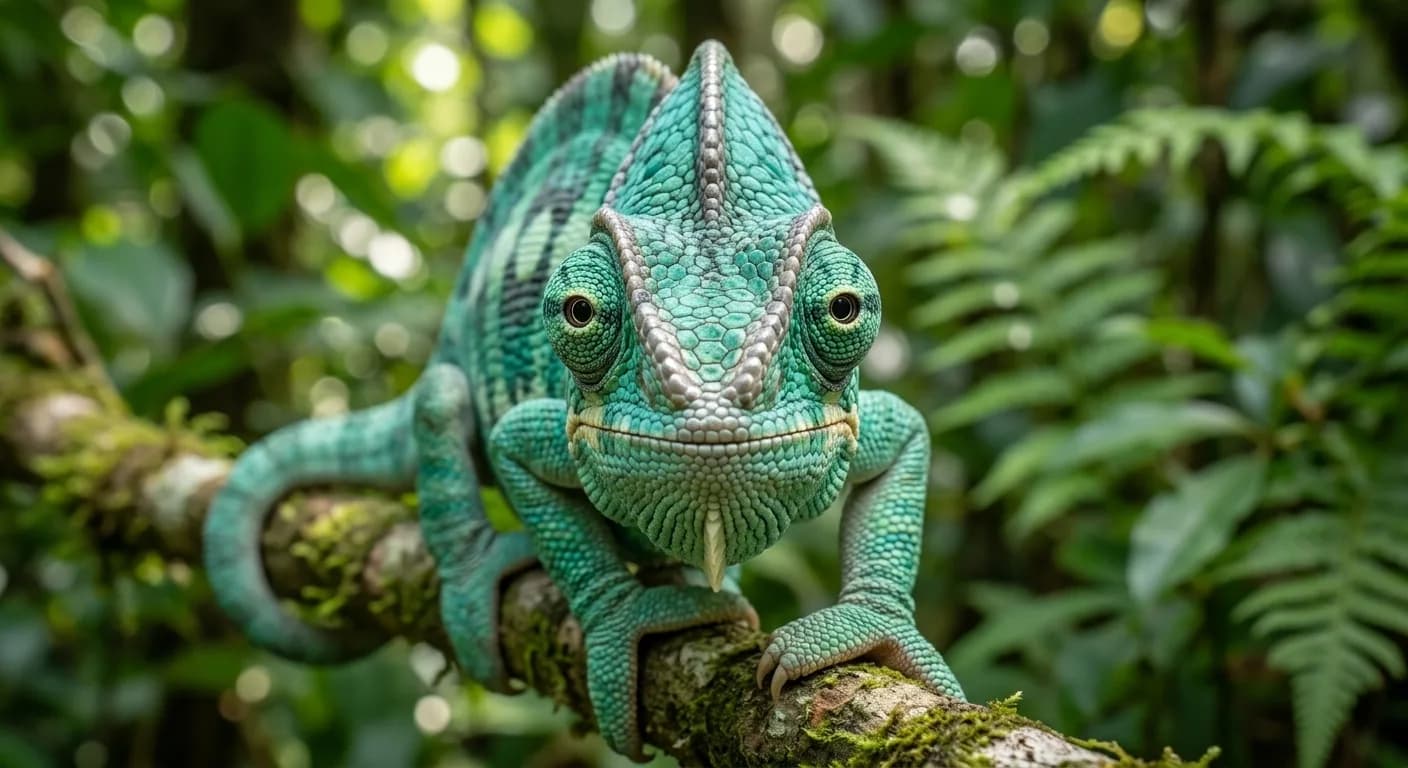 Near Threatened
Parson's Chameleon
Calumma parsonii
Brown Lemur
Eulemur fulvus
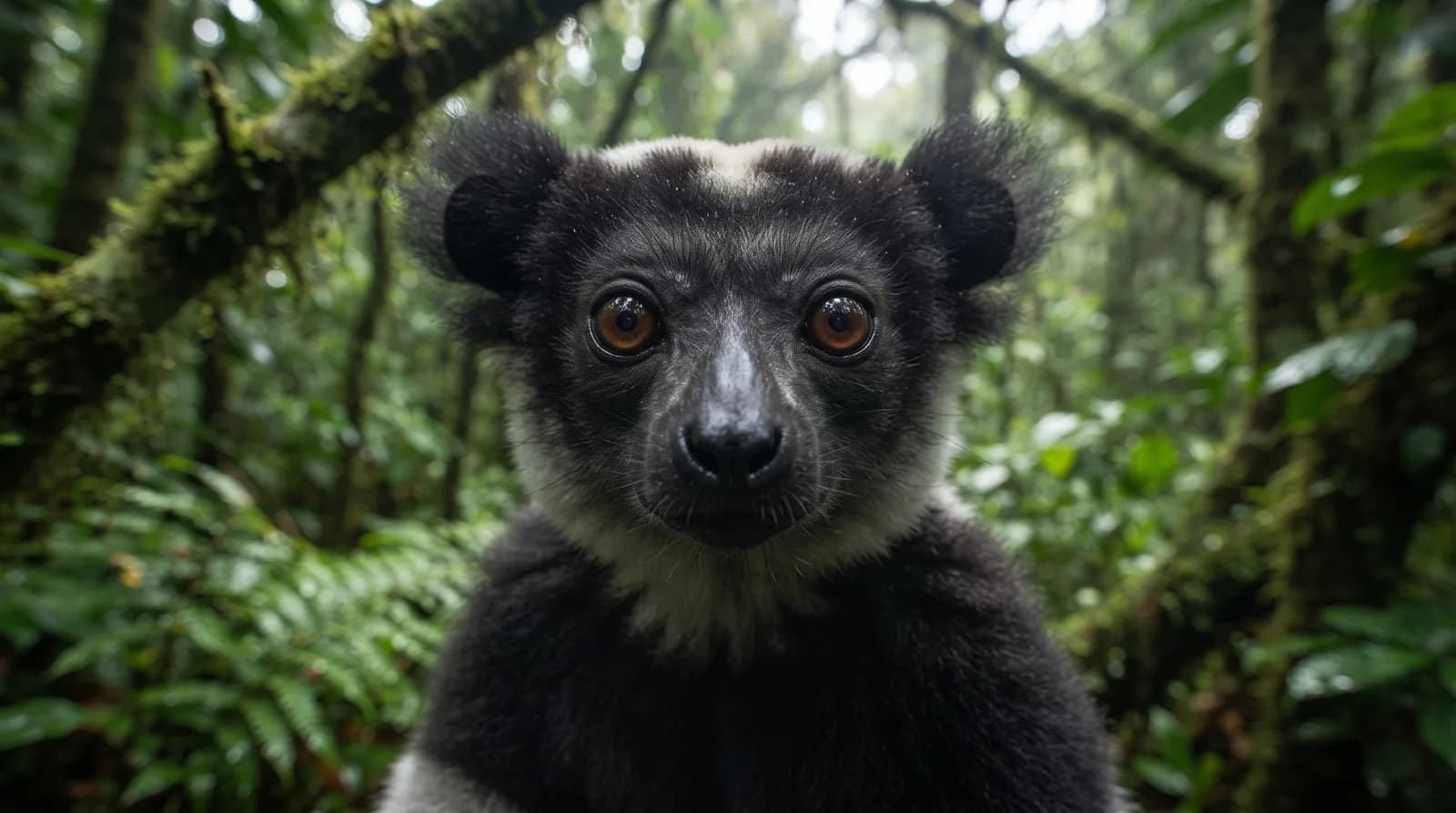 Critically Endangered
Indri
Indri indri
Madagascar Day Gecko
Phelsuma madagascariensis
Panther Chameleon
Furcifer pardalis
Leaf Chameleon
Brookesia micra
Keep exploring
Based on what we already know about giraffe-necked weevil.
Comments
Share an experience, a fun fact or a tip for seeing the giraffe-necked weevil.
Be the first to comment.