One of the 3 orangutans on WAnimals
Mammals · Primates · Hominidae
Sumatran Orangutan
Pongo abelii
It faces an extremely high risk of imminent extinction in the wild. See full glossary
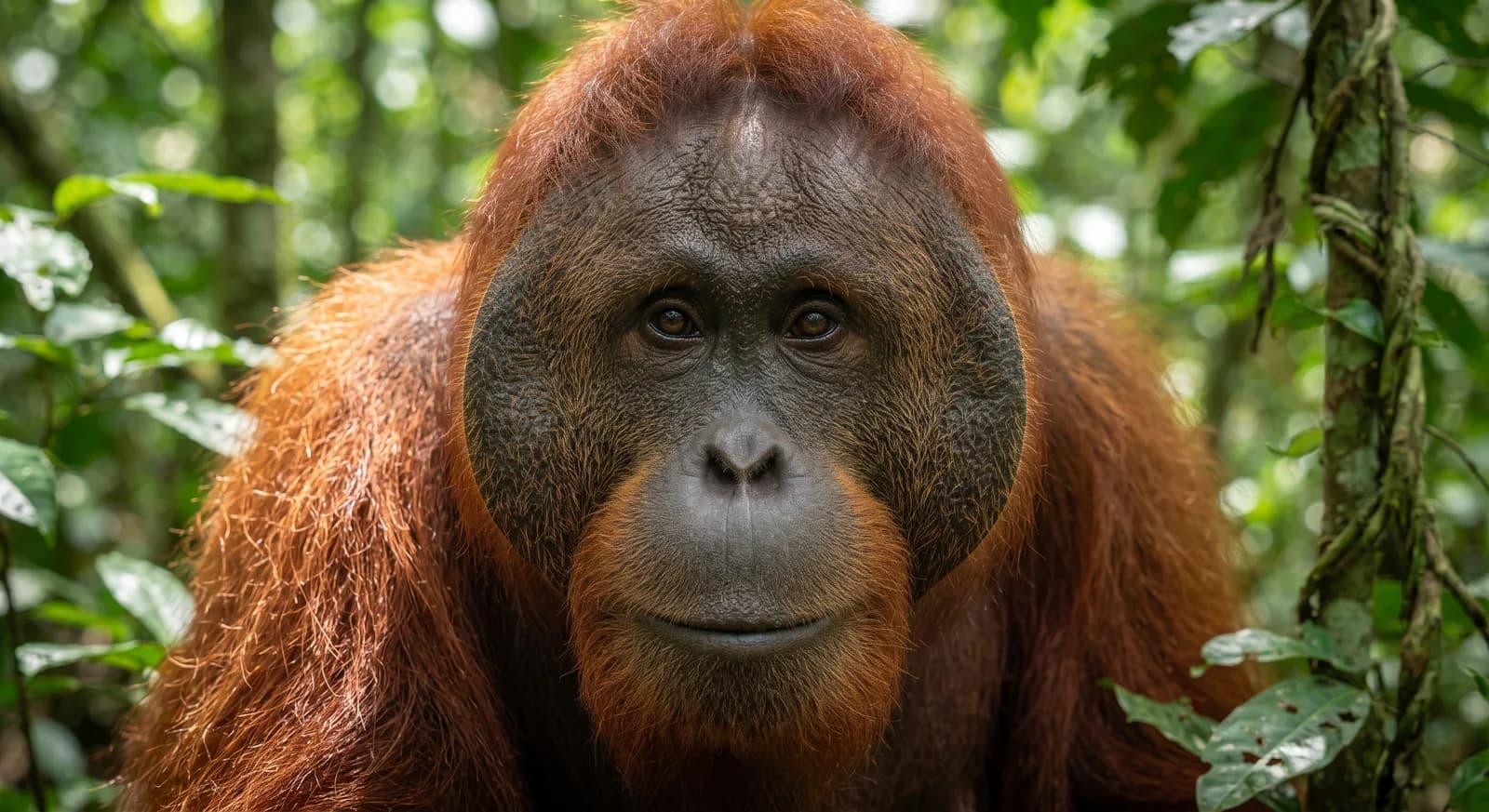
The Sumatran orangutan is slimmer and more social than its Bornean relative, with a narrower face and a long, pale beard in the males. It is the most arboreal of the great apes: it comes down to the ground far less often than the Bornean orangutan, partly because it shares its range with the tiger. It spends the day searching for ripe fruit and builds a fresh nest in the crowns every night. Its population is concentrated today in the Leuser Ecosystem, at the northern tip of the island.
Weight
30 kg – 90 kg
Size
1.2 m – 1.5 m
Lifespan
45 years
Diet
Herbivore
Feeds mainly on plants.
Activity
Diurnal
Active mainly during the day.
Social structure
Solitary
Lives and hunts alone, joining others only to breed.
Sighting difficulty
Very hard
Estimated population
Some 14,000 individuals
Fun facts
- It has the longest interval between births of any mammal: a female gives birth to a single infant every eight or nine years, which makes the species recover extremely slowly from any loss.
- It makes tools: it prepares sticks to extract the seeds from the spiny fruits of Neesia and to winkle termites and insects out of tree hollows.
Life cycle & biology
- Skeleton type
- Vertebrate - internal bony skeleton (mammal)
- Habitat & environment
- Lowland and montane rainforest of northern Sumatra, above all in Aceh
- Sexual maturity
- 15 years
- Gestation / incubation
- 8.5 months
- Litter / clutch size
- 1
Sources consulted: https://es.wikipedia.org/wiki/Pongo_abelii
Where to watch it
Parks and dive sites where this species has been documented.
Related species
Other species in the catalogue with the most in common with Sumatran Orangutan — same habitat, park, country, tags or family.
 Critically Endangered
Bornean Orangutan
Pongo pygmaeus
Tapanuli Orangutan
Pongo tapanuliensis
Sunda Pangolin
Manis javanica
Sumatran Tiger
Panthera tigris sumatrae
 Critically Endangered
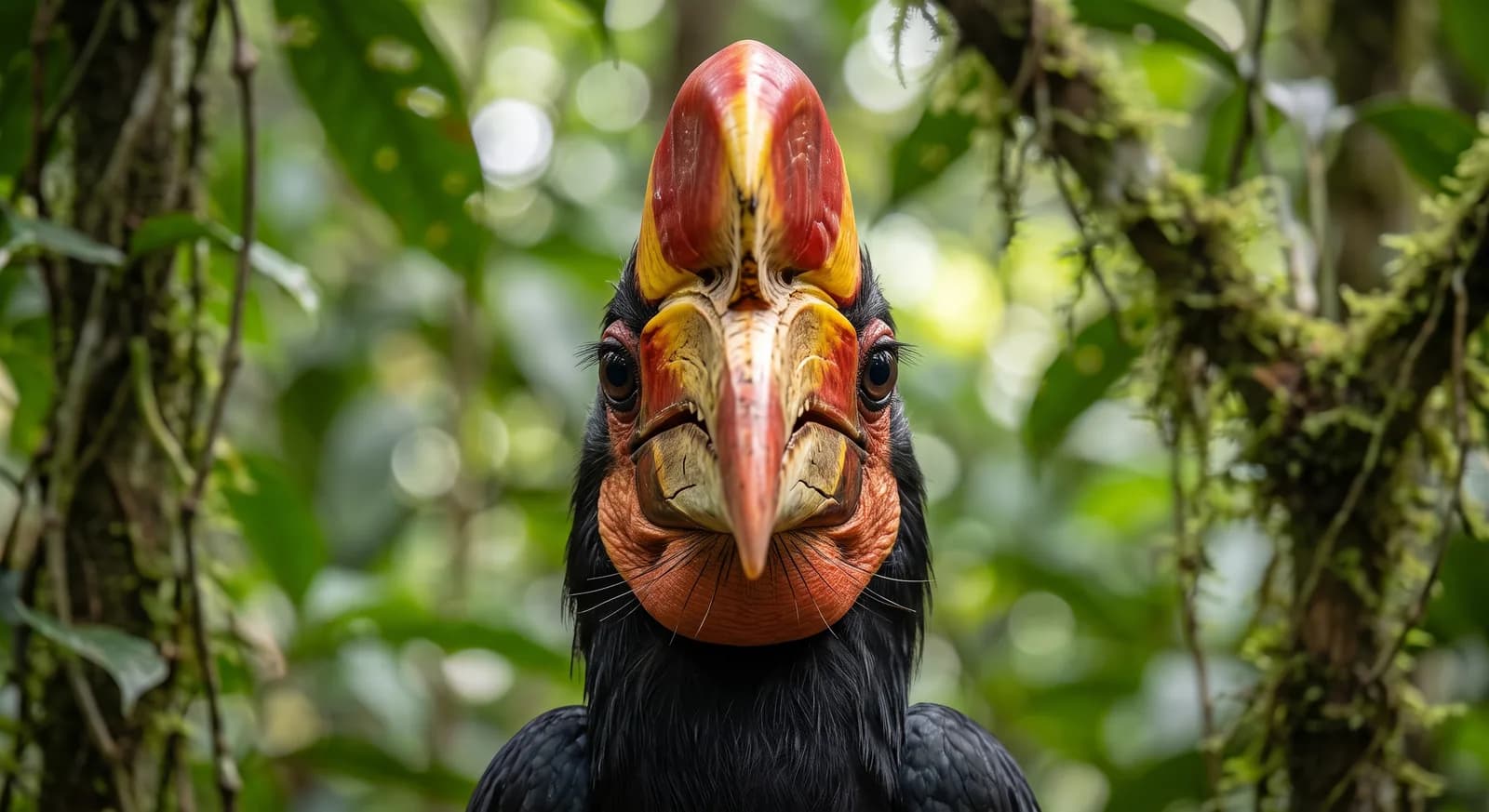
Helmeted Hornbill
Rhinoplax vigil
How to help
The sumatran orangutan is classified as critically endangered. Organizations such as UICN, WWF y Wildlife Conservation Society work specifically on its conservation and that of its habitat; looking into their programs is a good starting point if you want to get involved.
It's documented in 2 real protected areas — part of why protecting these places matters for its conservation.
Keep exploring
Based on what we already know about sumatran orangutan.
Comments
Share an experience, a fun fact or a tip for seeing the sumatran orangutan.
Be the first to comment.