One of the 6 pangolins on WAnimals
Mammals · Pholidota · Manidae
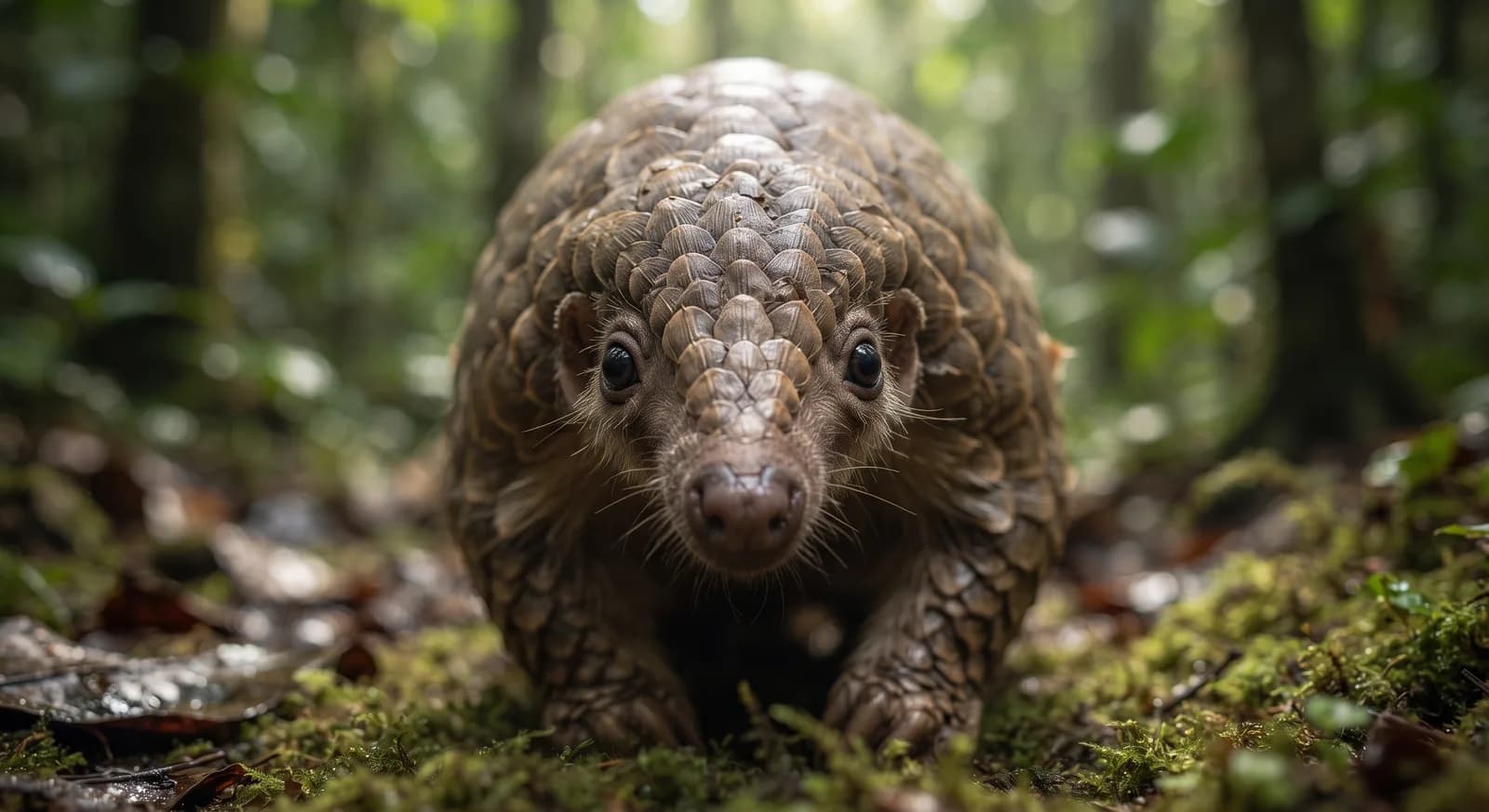
Sunda Pangolin
Manis javanica
It faces an extremely high risk of imminent extinction in the wild. See full glossary
It is the most illegally trafficked mammal in the world, hunted for its scales and its meat. When threatened it rolls into a tight ball armoured by its keratin scales.
Weight
up to 10 kg
Size
up to 1.2 m
Lifespan
20 years
Diet
Insectivore
Feeds mainly on insects and other invertebrates.
Activity
Nocturnal
Active mainly at night.
Social structure
Solitary
Lives and hunts alone, joining others only to breed.
Sighting difficulty
Very hard
Fun facts
- It is the most illegally trafficked mammal in the world.
- When threatened it rolls into a tight ball armoured by its scales.
- It eats almost nothing but ants and termites, caught on its long sticky tongue.
- comportamientoIt can wrap its scaled body right around its young to shield them when a predator is near.
- Its scales are made of keratin, the same protein as our nails and hair. They have no medicinal properties whatsoever, despite what is claimed by the traditional medicine that fuels its trafficking.
- Its population is estimated to have fallen by 80% between 1998 and 2019, and some 200,000 individuals are estimated to have been trafficked illegally over the last decade.
- Since 2016 all eight pangolin species have been listed in Appendix I of CITES, which bans all international trade.
- The mother carries her young on the base of her tail for the three or four months she cares for it.
- It does not dig burrows of its own: it sleeps in tree hollows or at the bases of trees, and climbs with its claws and prehensile tail.
- Captive breeding has failed almost every time because of dietary problems and infections, which greatly complicates recovery programmes.
Life cycle & biology
- Skeleton type
- Vertebrate - internal bony skeleton covered in keratin scales (mammal)
- Habitat & environment
- Primary and secondary forest, open savannah and farmland of South East Asia
- Birth weight
- 100 - 500 grams at birth
- Size at birth
- Soft scales at birth, hardening steadily afterwards
- Sexual maturity
- Roughly 1 year old (some studies suggest maturity is possible from 6-7 months)
- Gestation / incubation
- ~130-180 days (estimates vary between studies: ~130 days according to ADW, up to 6 months by other sources)
- Litter / clutch size
- 1 young (rarely 2)
Sources consulted: PLOS One (weaning study); Animal Diversity Web; ResearchGate (reproductive parameters); World Land Trust; Interesting Animals; BioOne (Journal of Vertebrate Biology)
Where to find it
See its range on the interactive mapWhere to watch it
Parques y spots de buceo donde se ha documentado esta especie — se muestran 10 de 34 documentados.
Related species
Other species in the catalogue with the most in common with Sunda Pangolin — same habitat, park, country, tags or family.
Philippine Pangolin
Manis culionensis
 Critically Endangered
Chinese Pangolin
Manis pentadactyla
 Critically Endangered
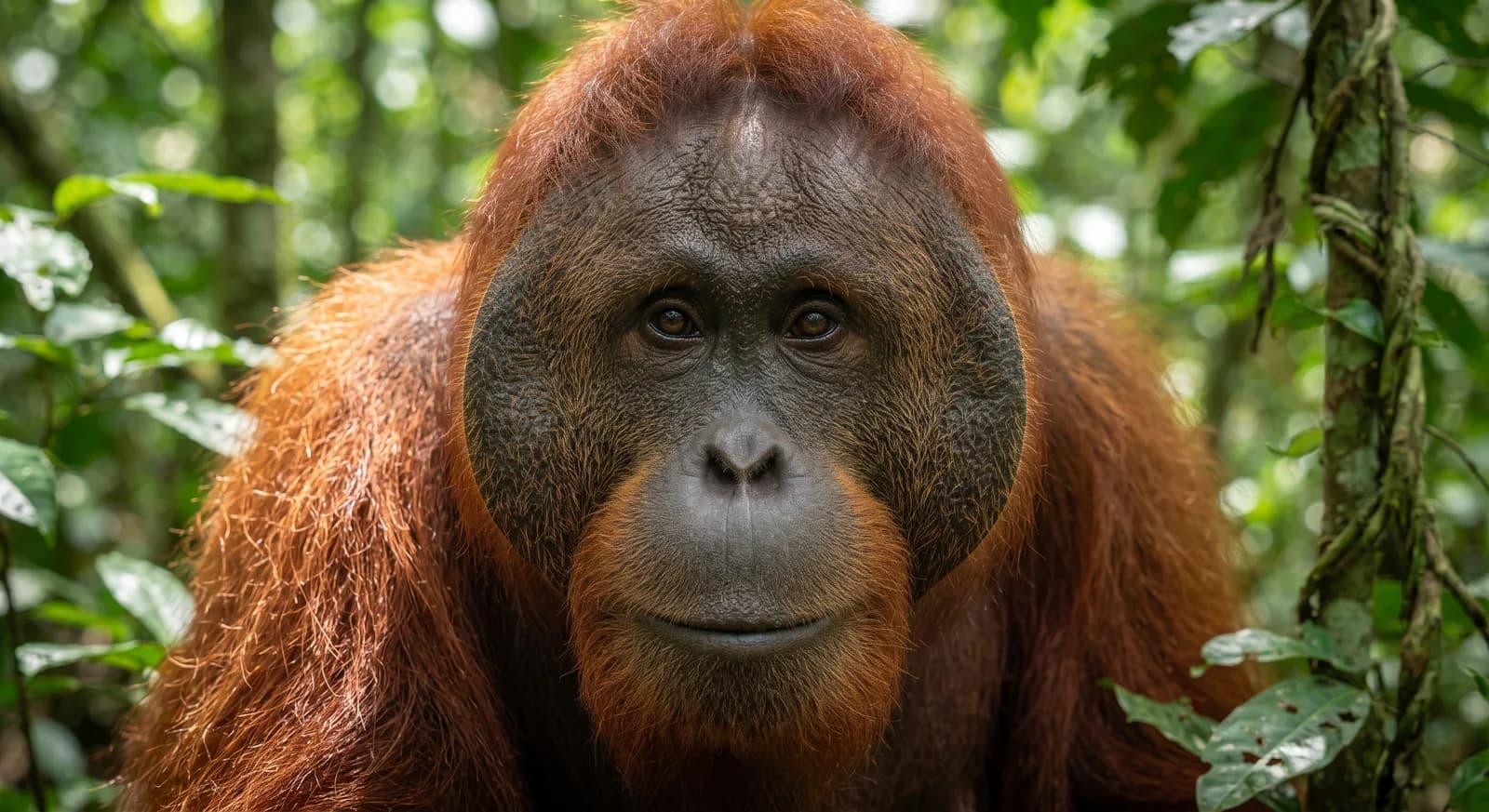
Bornean Orangutan
Pongo pygmaeus
Sumatran Orangutan
Pongo abelii
Javan Rhinoceros
Rhinoceros sondaicus
How to help
The sunda pangolin is classified as critically endangered. Organizations such as UICN, WWF y Wildlife Conservation Society work specifically on its conservation and that of its habitat; looking into their programs is a good starting point if you want to get involved.
It's documented in 9 real protected areas — part of why protecting these places matters for its conservation.
Keep exploring
Based on what we already know about sunda pangolin.
Comments
Share an experience, a fun fact or a tip for seeing the sunda pangolin.
Be the first to comment.