One of the 8 hornbills on WAnimals
Birds · Bucerotiformes · Bucerotidae
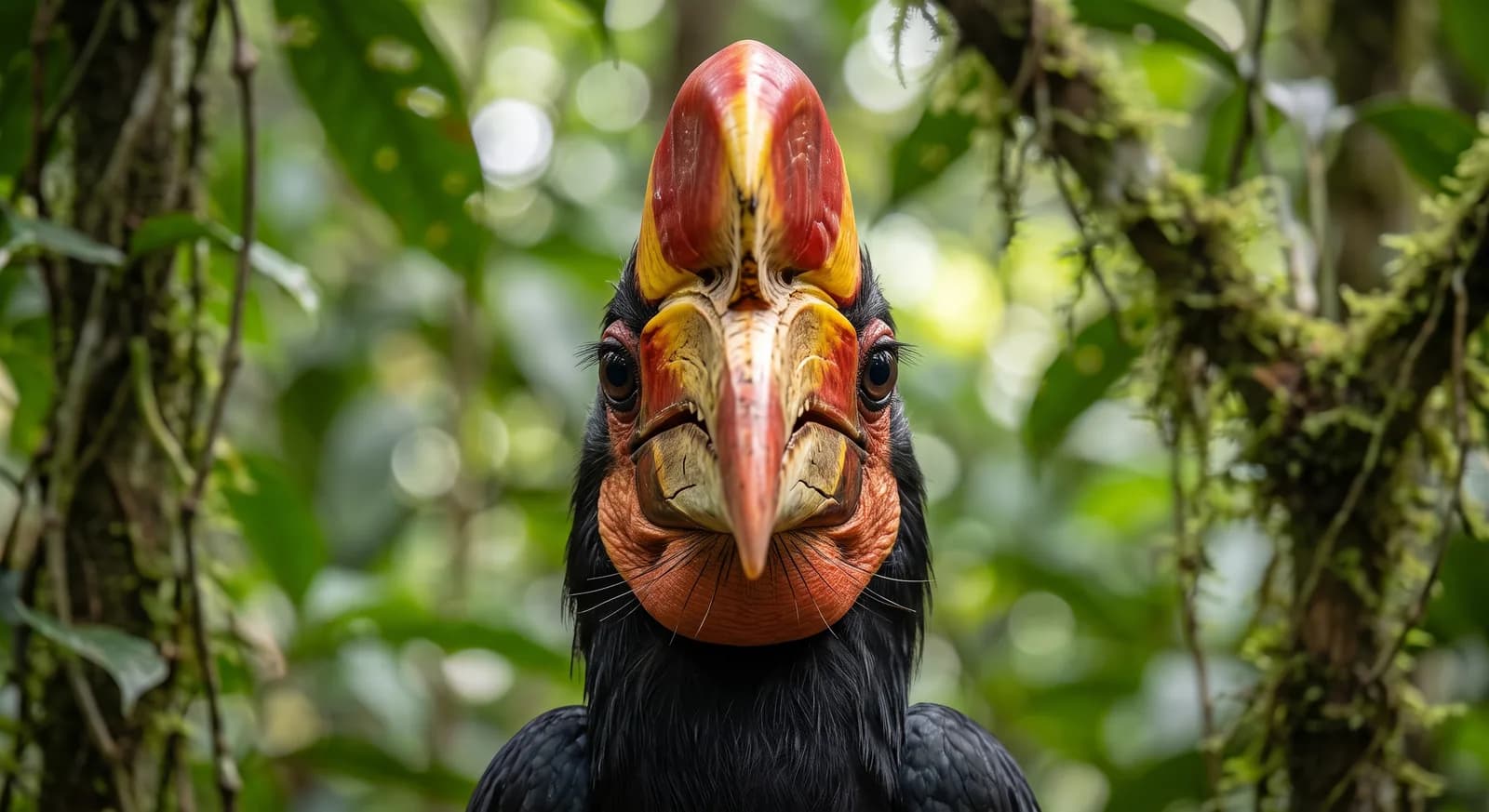
Helmeted Hornbill
Rhinoplax vigil
It faces an extremely high risk of imminent extinction in the wild. See full glossary
The helmeted hornbill is the only hornbill in the world with a solid rather than hollow casque: a block of keratin that makes up as much as 11% of its body weight. The males use it in aerial jousts, colliding head-on in mid-flight. That density has been its undoing: so-called hornbill ivory is carved and traded illegally, and over the past decade the species has suffered a brutal collapse that has taken it from near threatened to critically endangered.
Weight
2.6 kg – 3.1 kg
Size
1.1 m – 1.2 m
Lifespan
35 years
Diet
Omnivore
Combines animal and plant food depending on availability.
Activity
Diurnal
Active mainly during the day.
Social structure
In pairs
Usually lives in pairs, sometimes for life.
Sighting difficulty
Very hard
Fun facts
- comportamientoUnlike other hornbills, its casque is solid keratin, and males use it to butt heads in mid-air during territorial disputes.
- Its solid casque is what is known as hornbill ivory, and on the Asian black market it fetches more than elephant ivory: that demand has caused a collapse so rapid that in 2015 the species jumped straight from Near Threatened to Critically Endangered.
- The males fight by colliding casque-first in mid-flight, an impact that carries a long way through the forest and that no other bird in the world performs.
Life cycle & biology
- Skeleton type
- Vertebrate - internal bony skeleton (bird)
- Habitat & environment
- Primary lowland rainforest of the Malay Peninsula, Sumatra and Borneo
- Sexual maturity
- 5 years
- Gestation / incubation
- 40 days of incubation
- Litter / clutch size
- 1 egg
Sources consulted: https://es.wikipedia.org/wiki/Rhinoplax_vigil
Where to find it
See its range on the interactive mapWhere to watch it
Parks and dive sites where this species has been documented.
Related species
Other species in the catalogue with the most in common with Helmeted Hornbill — same habitat, park, country, tags or family.
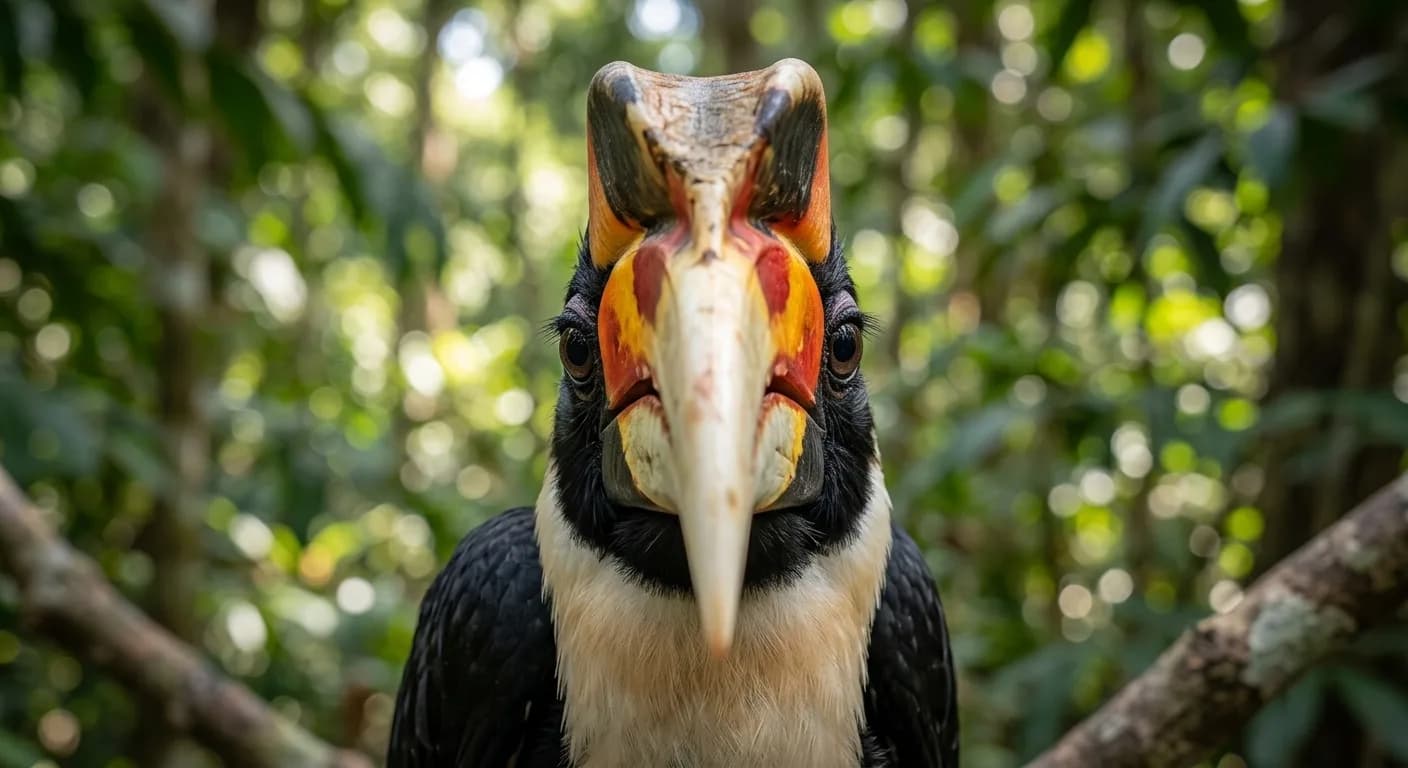 Vulnerable
Rhinoceros Hornbill
Buceros rhinoceros
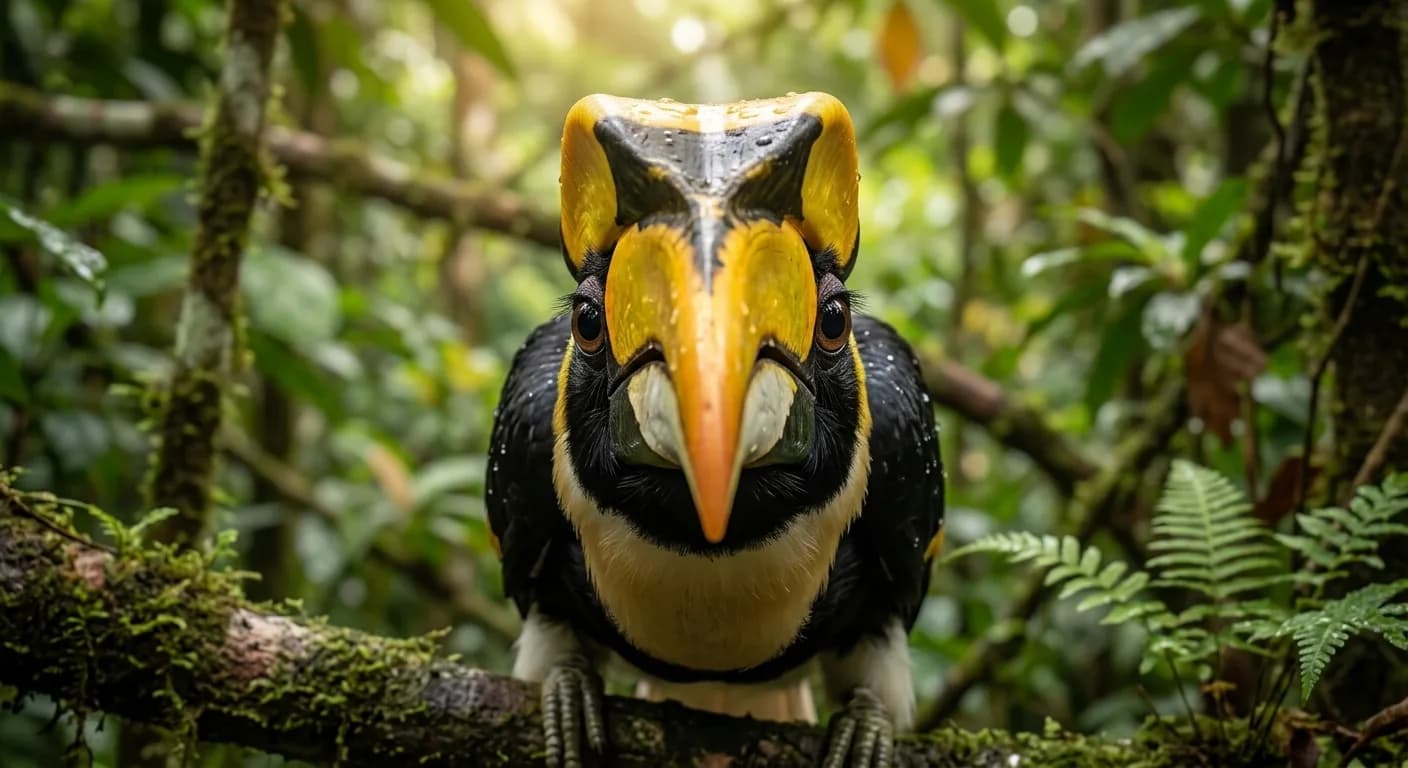 Vulnerable
Great Hornbill
Buceros bicornis
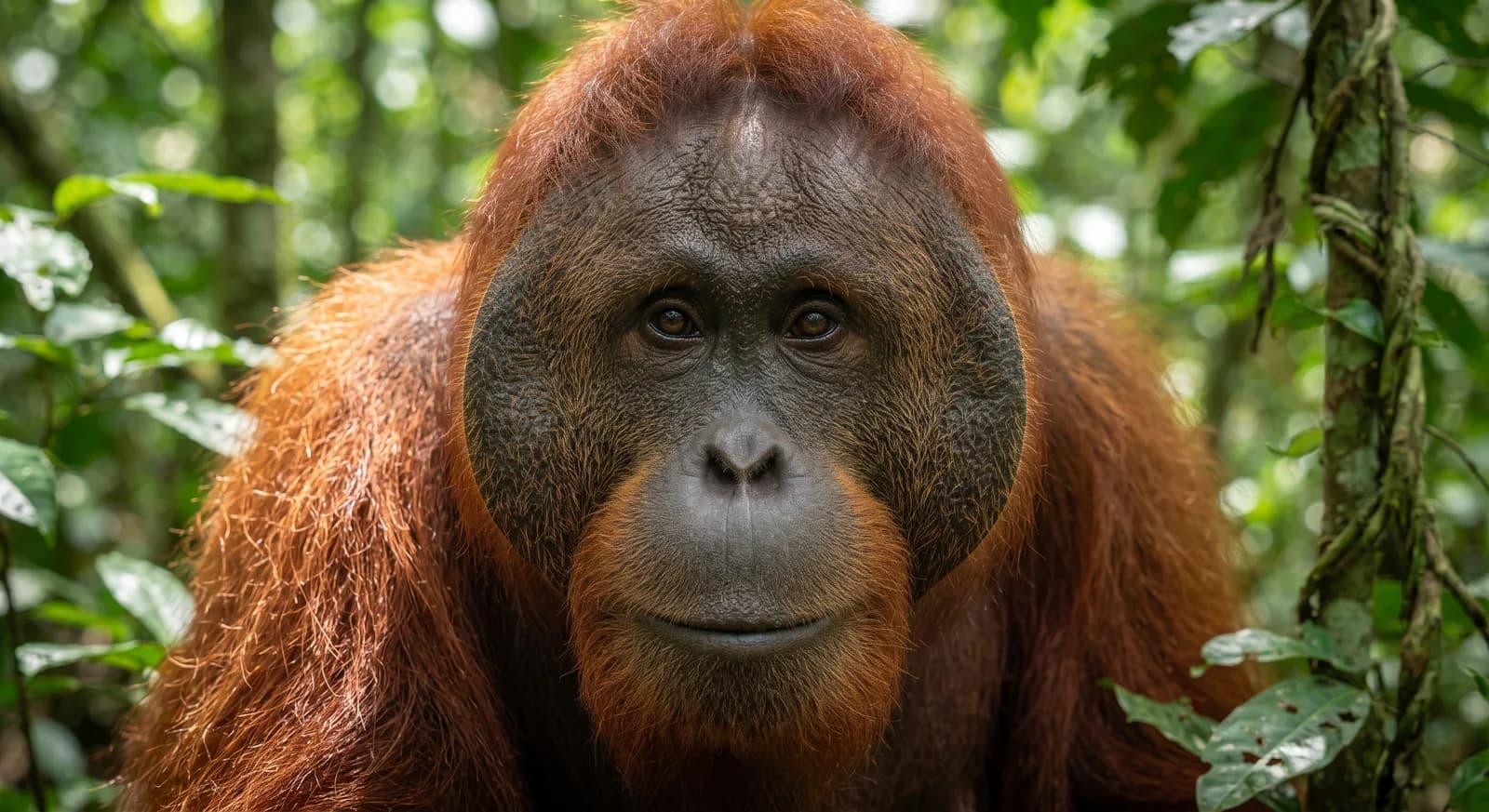 Critically Endangered
Bornean Orangutan
Pongo pygmaeus
Sumatran Orangutan
Pongo abelii
Palawan Hornbill
Anthracoceros marchei
Lesser Treeshrew
Tupaia minor
How to help
The helmeted hornbill is classified as critically endangered. Organizations such as UICN, WWF y Wildlife Conservation Society work specifically on its conservation and that of its habitat; looking into their programs is a good starting point if you want to get involved.
It's documented in 4 real protected areas — part of why protecting these places matters for its conservation.
Keep exploring
Based on what we already know about helmeted hornbill.
Comments
Share an experience, a fun fact or a tip for seeing the helmeted hornbill.
Be the first to comment.