One of the 8 hornbills on WAnimals
Birds · Bucerotiformes · Bucerotidae
Rhinoceros Hornbill
Buceros rhinoceros
It faces a high risk of extinction in the wild over the medium term. See full glossary
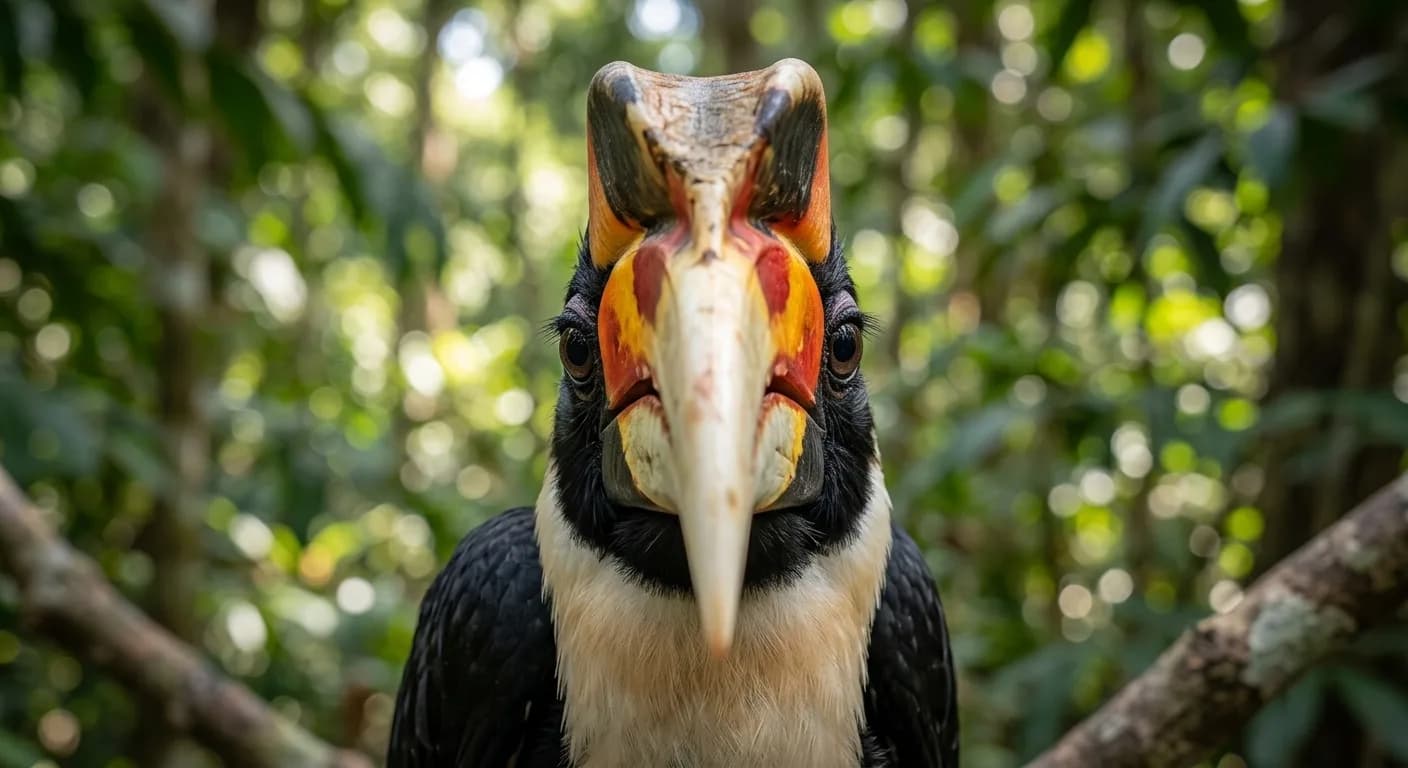
The rhinoceros hornbill is an imposing bird with black plumage and a white tail crossed by a black band, and an enormous hollow casque curving upwards at the tip, in intense orange and red that the bird itself applies by rubbing it against its preen gland. It is the state bird of Sarawak in Malaysia and a cultural symbol for the Dayak peoples of Borneo.
Weight
2.2 kg – 2.6 kg
Size
80 cm – 90 cm
Lifespan
35 years
Diet
Omnivore
Combines animal and plant food depending on availability.
Activity
Diurnal
Active mainly during the day.
Social structure
In pairs
Usually lives in pairs, sometimes for life.
Sighting difficulty
Moderate
Fun facts
- reproducciónThe female seals herself into the nest cavity with mud and droppings, leaving only a narrow slit through which the male passes her food while she incubates.
- It paints its own casque: the orange and red is not its own pigment but the secretion of the preen gland, which the bird rubs against the casque until it is stained, and a poorly preserved museum specimen loses that colour.
- Like all Asian hornbills, the female walls herself into the nest hole for months, sealing the entrance and depending entirely on the male.
- For the Dayak of Borneo it is the bird that guides the souls of the dead, and its feathers and casque play a central part in several traditional ceremonies.
Life cycle & biology
- Skeleton type
- Vertebrate - internal bony skeleton (bird)
- Habitat & environment
- Primary lowland and montane rainforest of the Malay Peninsula, Sumatra, Borneo and Java
- Sexual maturity
- 4 years
- Gestation / incubation
- 40 days of incubation
- Litter / clutch size
- 2 eggs
Sources consulted: https://es.wikipedia.org/wiki/Buceros_rhinoceros
Where to find it
See its range on the interactive mapWhere to watch it
Parks and dive sites where this species has been documented.
Related species
Other species in the catalogue with the most in common with Rhinoceros Hornbill — same habitat, park, country, tags or family.
 Vulnerable
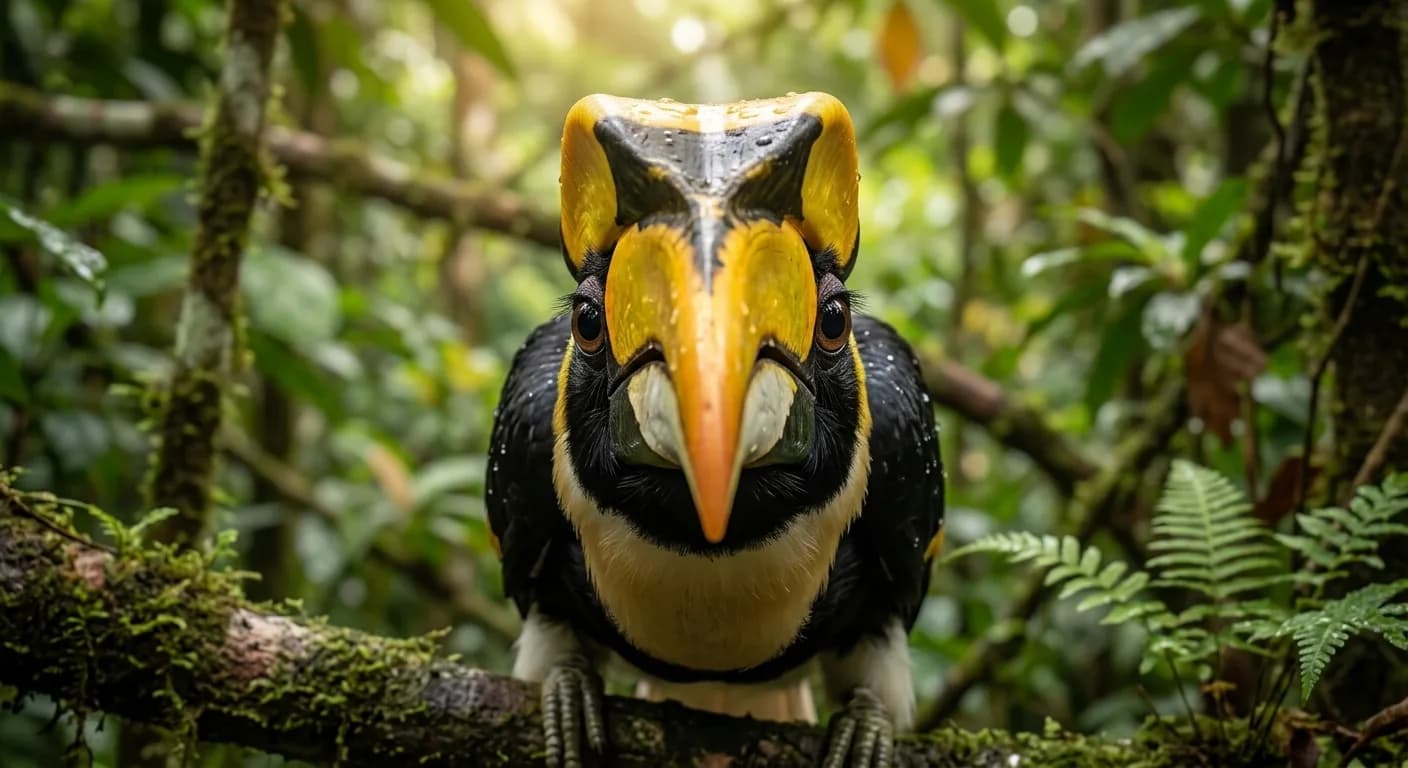
Great Hornbill
Buceros bicornis
 Critically Endangered
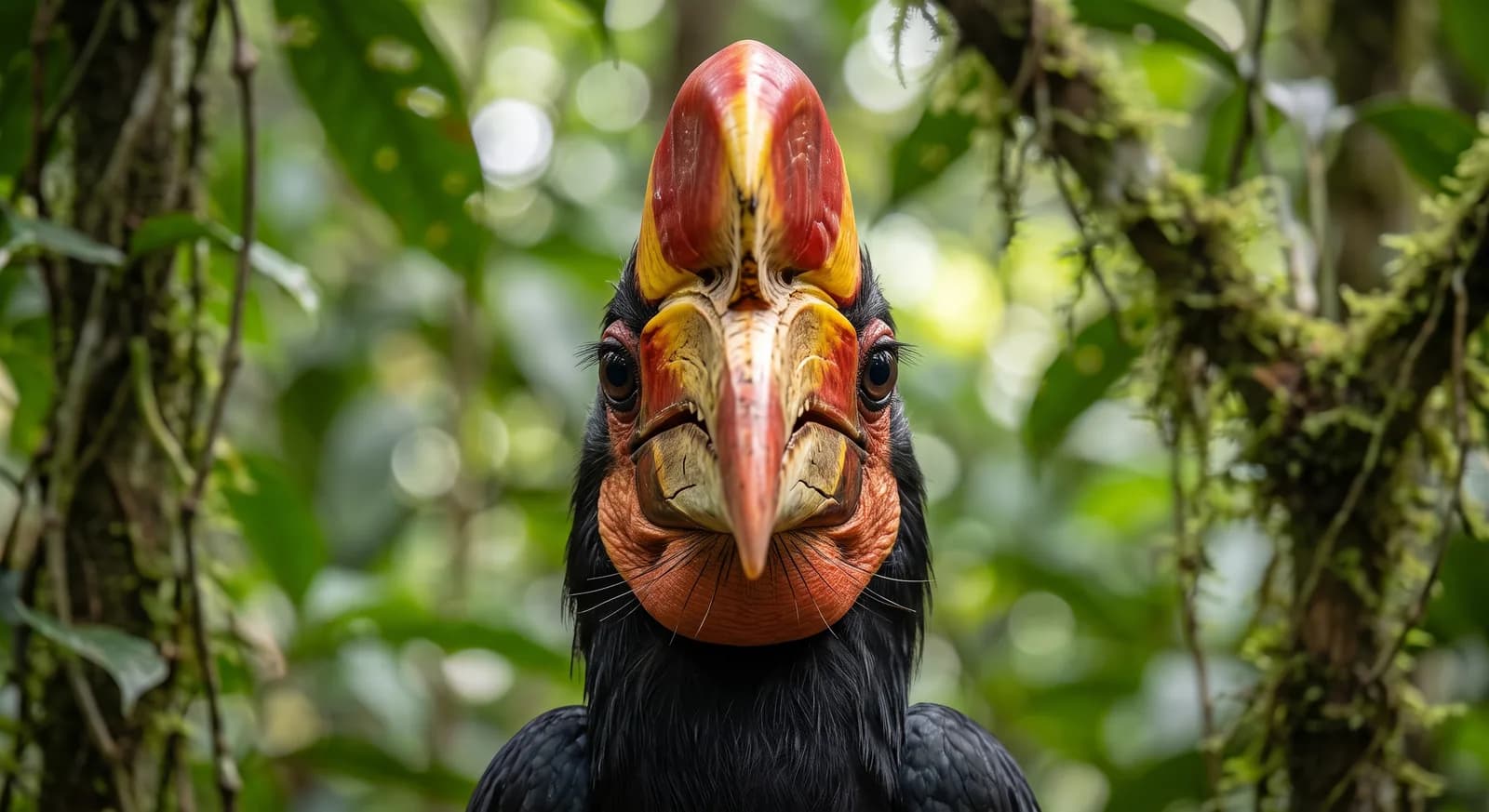
Helmeted Hornbill
Rhinoplax vigil
Palawan Hornbill
Anthracoceros marchei
Great Argus
Argusianus argus
Lesser Treeshrew
Tupaia minor
 Vulnerable
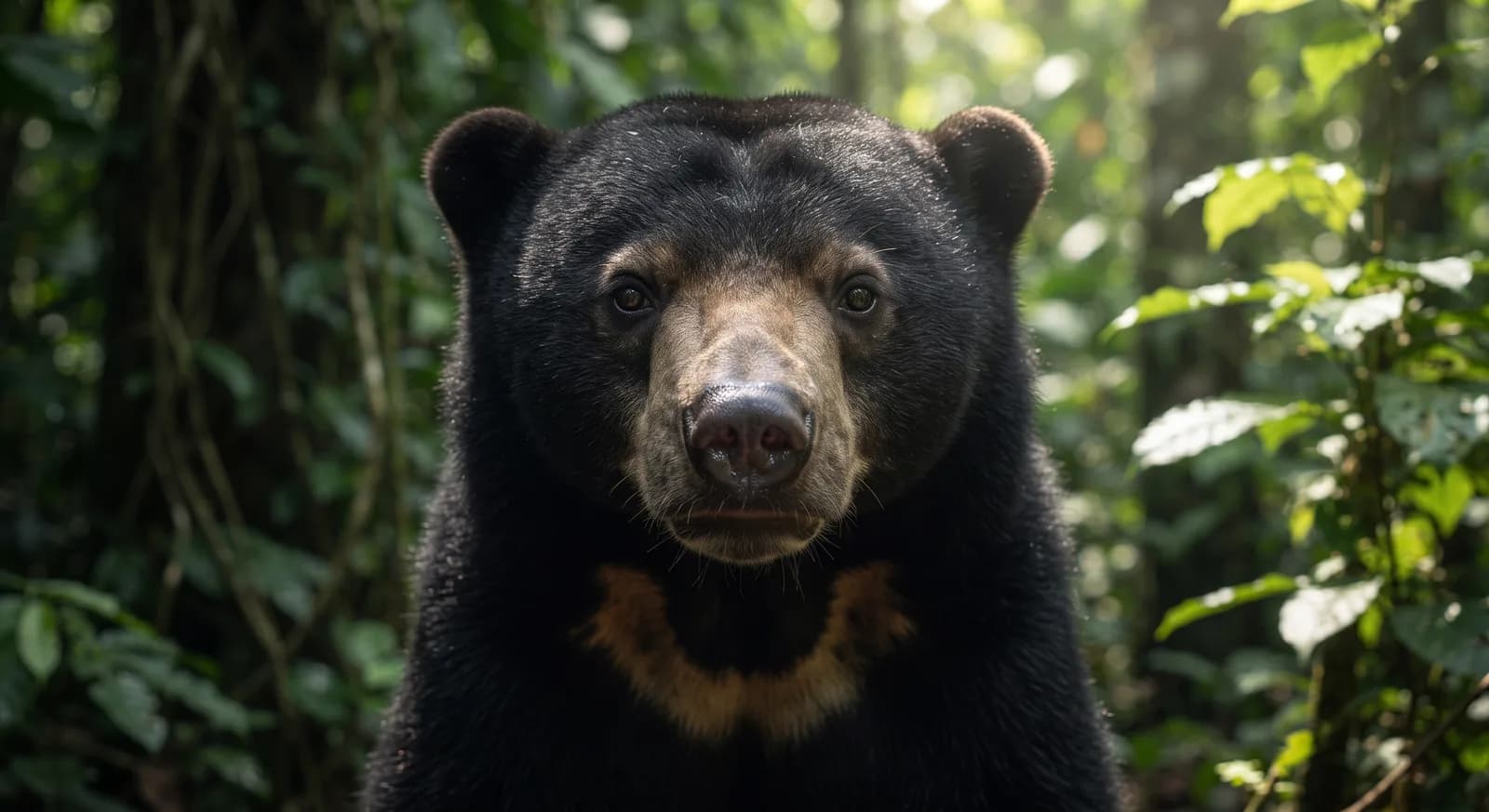
Sun Bear
Helarctos malayanus
How to help
The rhinoceros hornbill is classified as vulnerable. Organizations such as UICN, WWF y Wildlife Conservation Society work specifically on its conservation and that of its habitat; looking into their programs is a good starting point if you want to get involved.
It's documented in 9 real protected areas — part of why protecting these places matters for its conservation.
Keep exploring
Based on what we already know about rhinoceros hornbill.
Comments
Share an experience, a fun fact or a tip for seeing the rhinoceros hornbill.
Be the first to comment.