One of the 8 hornbills on WAnimals
Birds · Bucerotiformes · Bucerotidae
Palawan Hornbill
Anthracoceros marchei
It faces a high risk of extinction in the wild over the medium term. See full glossary
The Palawan hornbill is a black bird with a white tail and a relatively small casque, endemic to the Philippine archipelago of Palawan. It feeds mainly on fruit and is an important disperser of large seeds. Like all Asian hornbills it practises an extraordinary nesting system: the female shuts herself inside a tree hole, walling up the entrance, and depends entirely on the male throughout incubation and the rearing of the young.
Weight
550 g – 750 g
Size
65 cm – 70 cm
Lifespan
20 years
Diet
Omnivore
Combines animal and plant food depending on availability.
Activity
Diurnal
Active mainly during the day.
Social structure
In pairs
Usually lives in pairs, sometimes for life.
Sighting difficulty
Moderate
Fun facts
- The female walls herself in: she seals the entrance of the nest hole with mud, droppings and fruit remains until only a slit is left, and stays shut in for weeks while the male feeds her through that slot.
- If the male dies during that period, the female and the chicks die shut inside: it is one of the riskiest breeding systems of any bird.
Life cycle & biology
- Skeleton type
- Vertebrate - internal bony skeleton (bird)
- Habitat & environment
- Primary and secondary lowland rainforest of the Palawan archipelago, in the Philippines
- Sexual maturity
- 3 years
- Gestation / incubation
- 30 days of incubation
- Litter / clutch size
- 2 eggs
Sources consulted: https://es.wikipedia.org/wiki/Anthracoceros_marchei
Where to watch it
Parks and dive sites where this species has been documented.
Related species
Other species in the catalogue with the most in common with Palawan Hornbill — same habitat, park, country, tags or family.
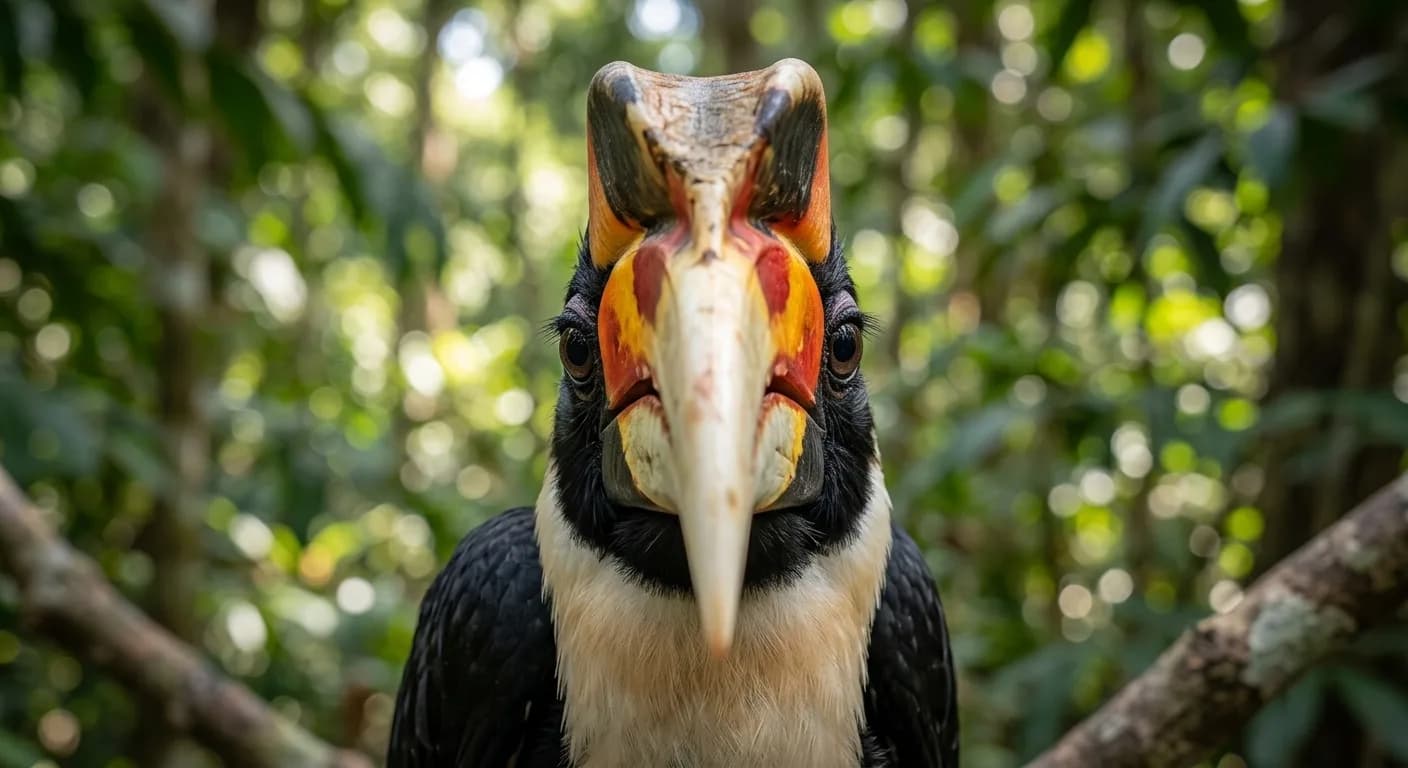 Vulnerable
Rhinoceros Hornbill
Buceros rhinoceros
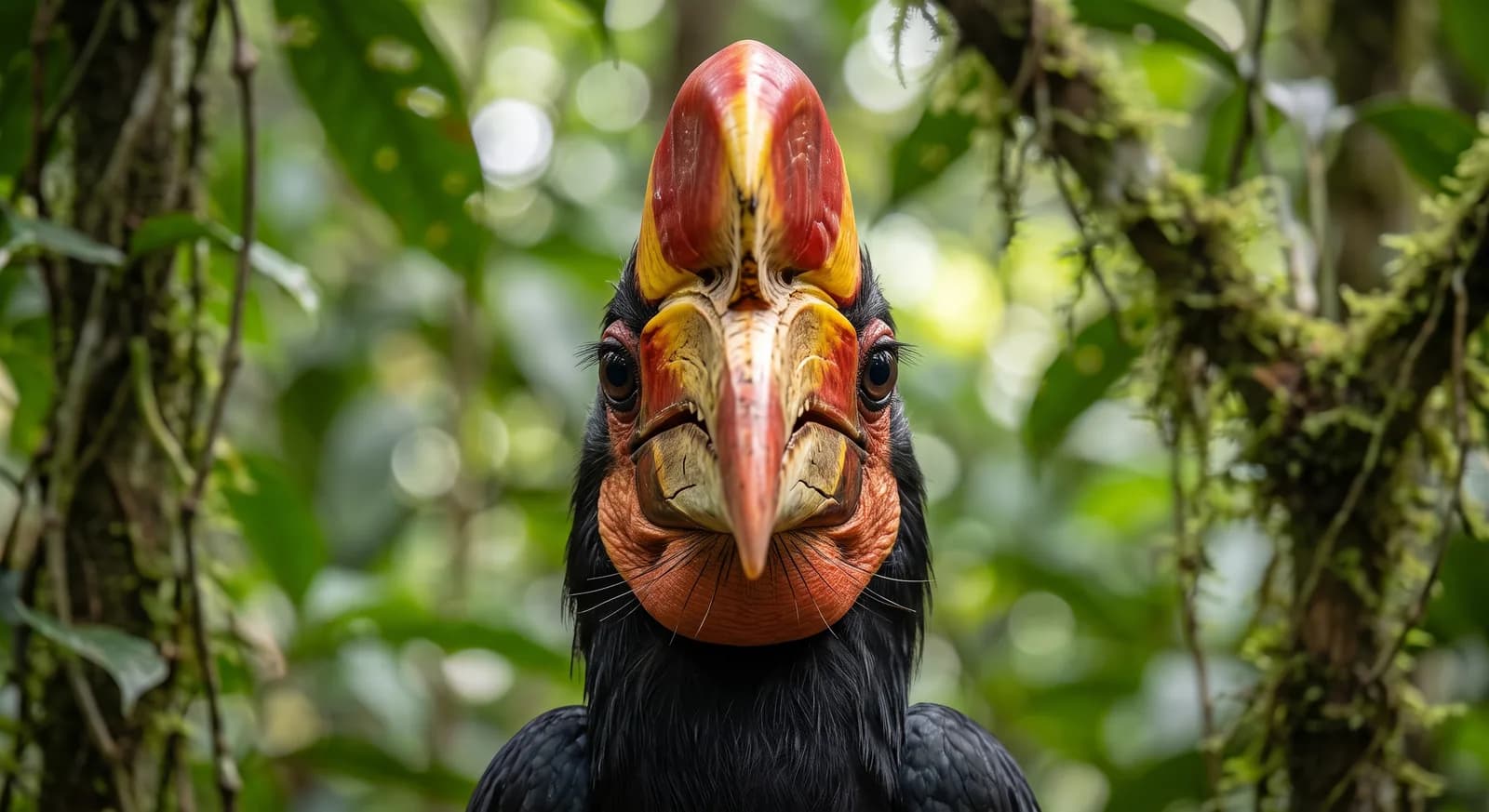 Critically Endangered
Helmeted Hornbill
Rhinoplax vigil
King Cobra
Ophiophagus hannah
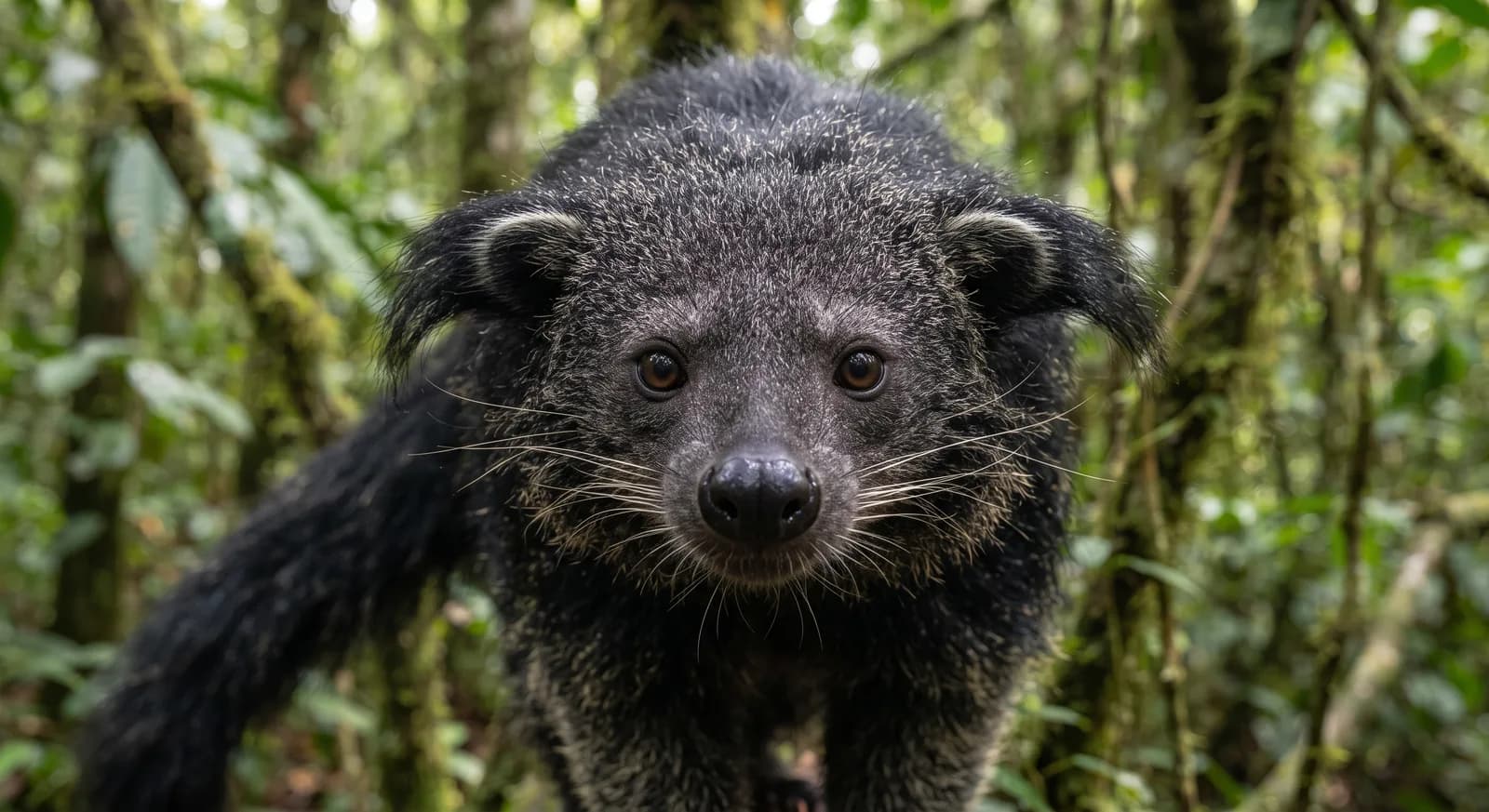 Vulnerable
Binturong
Arctictis binturong
Nicobar Pigeon
Caloenas nicobarica
Coconut Crab
Birgus latro
How to help
The palawan hornbill is classified as vulnerable. Organizations such as UICN, WWF y Wildlife Conservation Society work specifically on its conservation and that of its habitat; looking into their programs is a good starting point if you want to get involved.
It's documented in 1 real protected area — part of why protecting these places matters for its conservation.
Keep exploring
Based on what we already know about palawan hornbill.
Comments
Share an experience, a fun fact or a tip for seeing the palawan hornbill.
Be the first to comment.