Species group · Birds
Hornbills
WAnimals has 8 species of hornbill, all in the family Bucerotidae.
- 8 species
- 1 family
- 62 countries
- 97 parks
- Weight
- 128 g – 4.4 kg
- Length
- 42 cm – 1.3 m
- Lifespan
- 20 – 50 years
Ranges calculated from the entries that record the figure, not from all 8.
All 8 species of hornbills on WAnimals
Each one has its own full entry. This group does not replace them: it brings them together.
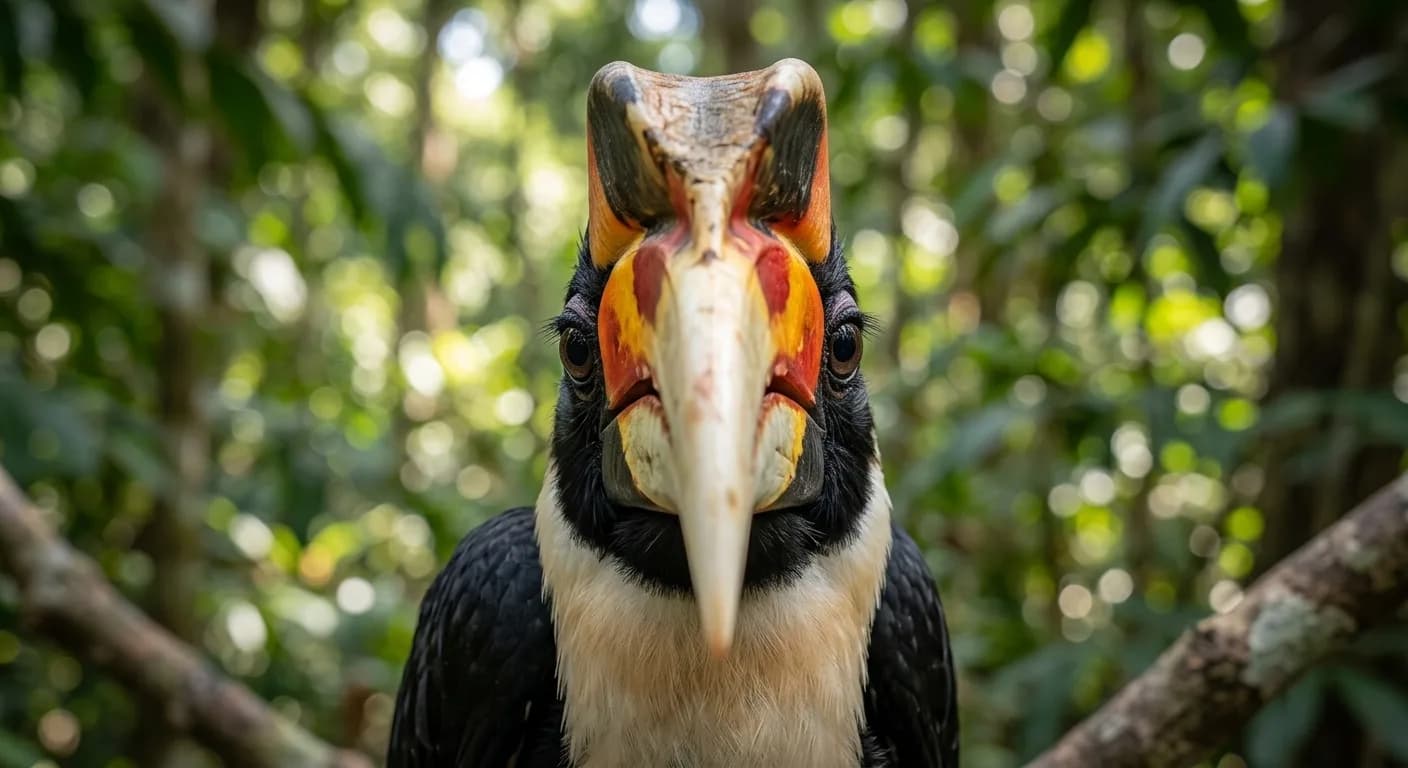 Vulnerable
Rhinoceros Hornbill
Buceros rhinoceros
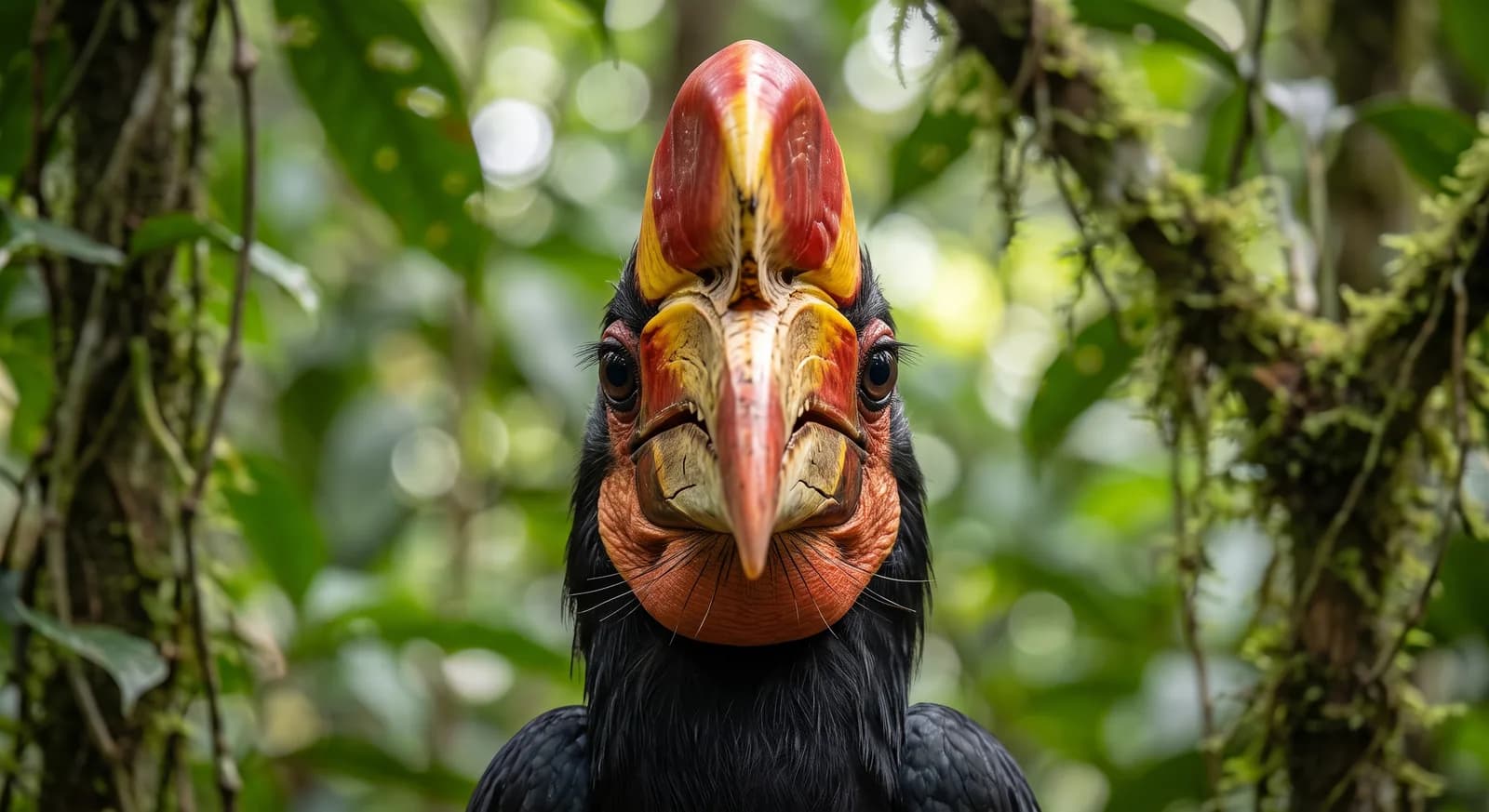 Critically Endangered
Helmeted Hornbill
Rhinoplax vigil
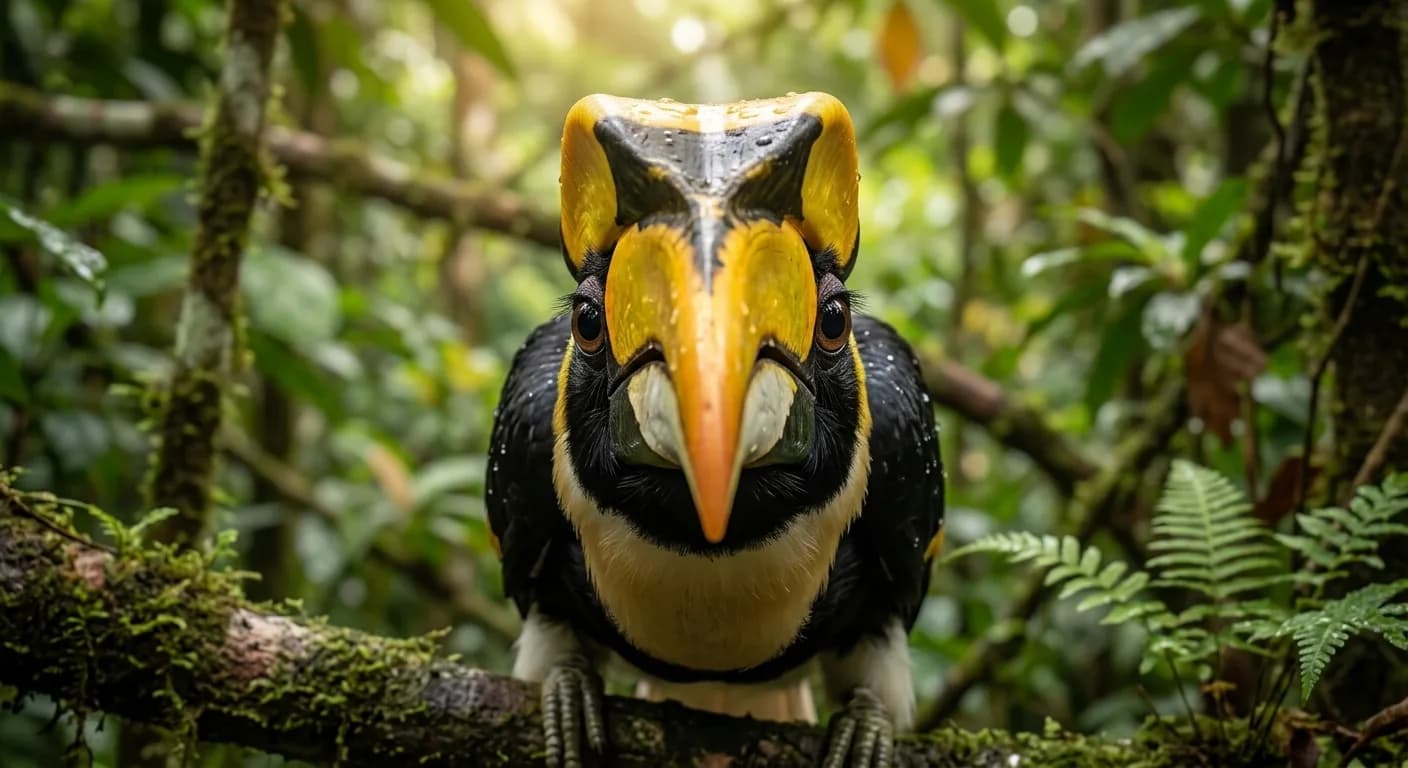 Vulnerable
Great Hornbill
Buceros bicornis
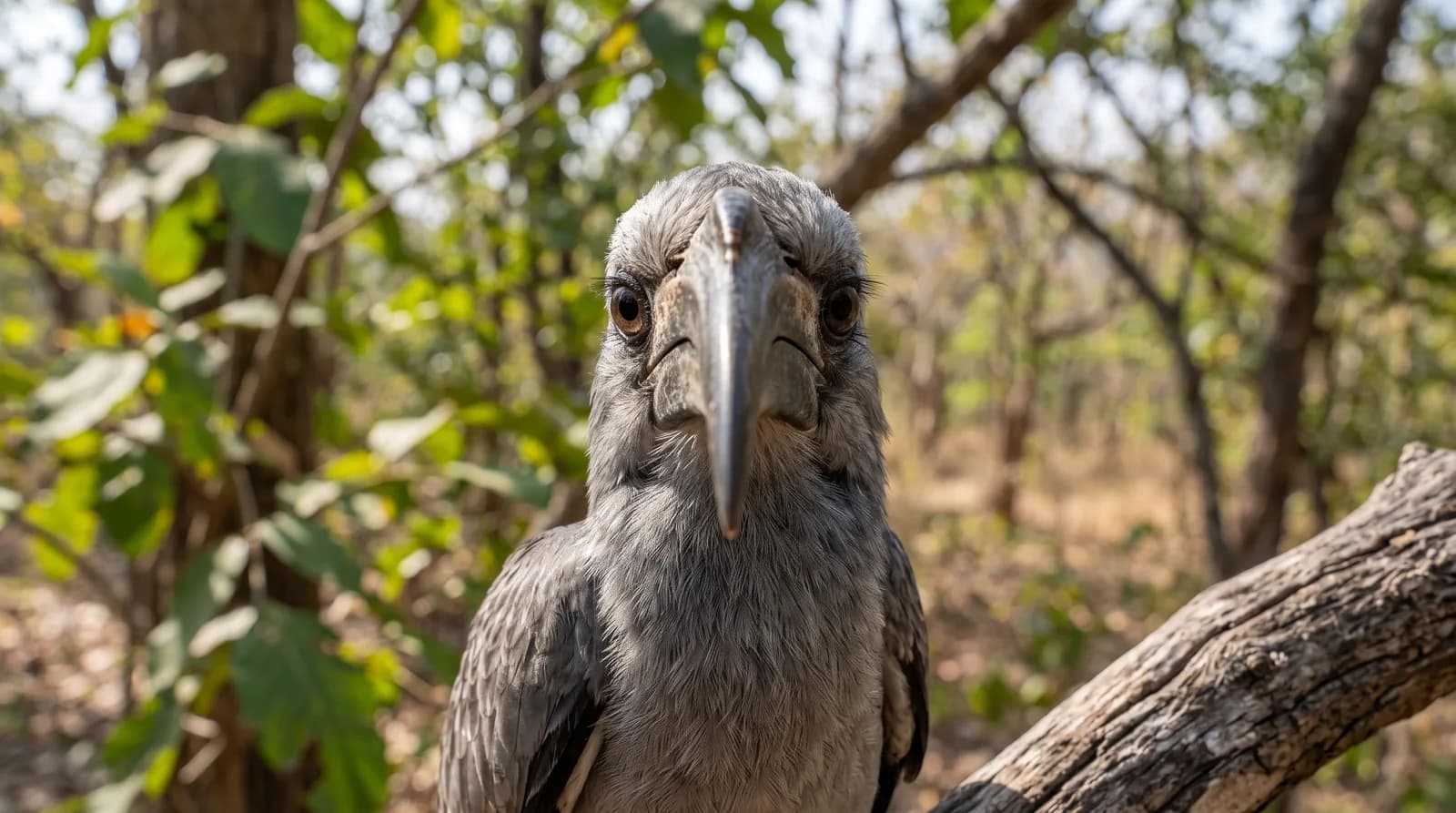 Least Concern
Indian Grey Hornbill
Ocyceros birostris
Red-billed Hornbill
Tockus erythrorhynchus
Yellow-casqued Hornbill
Ceratogymna elata
Southern Ground-Hornbill
Bucorvus leadbeateri
Palawan Hornbill
Anthracoceros marchei
Conservation status
6 especies in this group están en alguna categoría de riesgo real según la UICN.
See the global conservation statusWhere they live
Recorded in 62 countries. The ones with the most species in the group:
Where to see them
- Comoe2 species
- Gunung Leuser2 species
- Kaeng Krachan2 species
- Kidepo Valley2 species
- Mikumi2 species
- Ngorongoro2 species
- Nyerere (antiguo Selous)2 species
- Parque Nacional de Khao Sok2 species
- Parque Nacional del Serengeti2 species
- Reina Isabel (Queen Elizabeth)2 species
- Reserva Nacional Masái Mara2 species
- Ruaha2 species
Did you know…
The female seals herself into the nest cavity with mud and droppings, leaving only a narrow slit through which the male passes her food while she incubates.
From Rhinoceros Hornbill
It paints its own casque: the orange and red is not its own pigment but the secretion of the preen gland, which the bird rubs against the casque until it is stained, and a poorly preserved museum specimen loses that colour.
From Rhinoceros Hornbill
Like all Asian hornbills, the female walls herself into the nest hole for months, sealing the entrance and depending entirely on the male.
From Rhinoceros Hornbill
Unlike other hornbills, its casque is solid keratin, and males use it to butt heads in mid-air during territorial disputes.
From Helmeted Hornbill
Its solid casque is what is known as hornbill ivory, and on the Asian black market it fetches more than elephant ivory: that demand has caused a collapse so rapid that in 2015 the species jumped straight from Near Threatened to Critically Endangered.
From Helmeted Hornbill
The males fight by colliding casque-first in mid-flight, an impact that carries a long way through the forest and that no other bird in the world performs.
From Helmeted Hornbill
The male walls the female into a tree hollow with mud and feeds her for months.
From Great Hornbill
The female shuts herself inside a tree hollow and walls up the entrance with her own droppings, leaving only a slit through which the male feeds her throughout the incubation.
From Great Hornbill