One of the 17 toads on WAnimals
Amphibians · Anura · Alytidae
Betic Midwife Toad
Alytes dickhilleni
It faces a high risk of extinction in the wild over the medium term. See full glossary
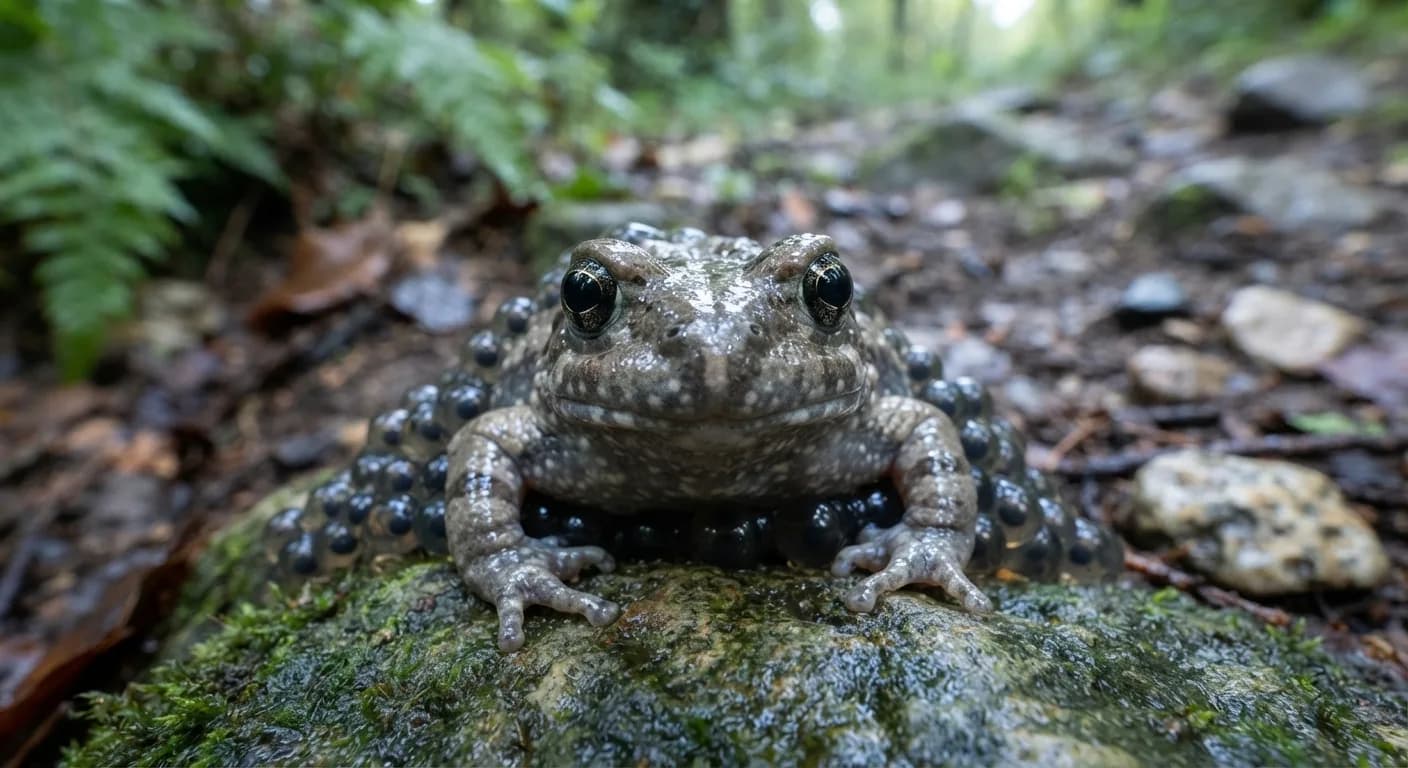
The Betic midwife toad is a Spanish endemic restricted to the sierras of the south-east of the peninsula: Cazorla, Segura, Sierra Nevada, Alcaraz and the ranges of Málaga and Granada. Like all midwife toads, the male carries the eggs wound around his hind legs until the tadpoles are ready to hatch.
Size
4 cm – 5 cm
Lifespan
8 years
Diet
Insectivore
Feeds mainly on insects and other invertebrates.
Activity
Nocturnal
Active mainly at night.
Social structure
Solitary
Lives and hunts alone, joining others only to breed.
Sighting difficulty
Moderate
Fun facts
- The male carries the eggs: he winds the string of spawn around his hind legs and carries it for weeks, moistening it in pools and protecting it from predators, until he releases the tadpoles into the water. It is one of the most singular forms of parental care in the animal world.
- It is a strict Spanish endemic: it exists only in the Baetic ranges of the south-east of the peninsula, and many of its populations depend on water troughs and springs built for livestock.
- The abandonment of grazing and the sealing of traditional springs and troughs are removing the water points it needs, and the chytrid fungus has caused die-offs in several populations in Sierra Nevada.
Life cycle & biology
- Skeleton type
- Vertebrate - internal bony skeleton (amphibian)
- Habitat & environment
- Streams, springs, water troughs and mountain pools of the Baetic ranges, in south-eastern Spain
- Birth weight
- Hatches as a tadpole, after being carried by the male
- Size at birth
- The male carries the strings of eggs tangled around his hind legs until they hatch
- Sexual maturity
- 2 years
- Gestation / incubation
- 40 days of development carried by the male
- Litter / clutch size
- 50 eggs
Sources consulted: https://es.wikipedia.org/wiki/Alytes_dickhilleni
Where to find it
See its range on the interactive mapBest time: From March to September, on mild nights, at springs, stock tanks and streams of the Baetic ranges; it is detected by its bell-like call.
Where to watch it
Parks and dive sites where this species has been documented.
Related species
Other species in the catalogue with the most in common with Betic Midwife Toad — same habitat, park, country, tags or family.
Iberian Painted Frog
Discoglossus galganoi
Iberian Midwife Toad
Alytes cisternasii
 Least Concern
Midwife Toad
Alytes obstetricans
Western Spadefoot
Pelobates cultripes
Sharp-ribbed Salamander
Pleurodeles waltl
How to help
The betic midwife toad is classified as vulnerable. Organizations such as UICN, WWF y Wildlife Conservation Society work specifically on its conservation and that of its habitat; looking into their programs is a good starting point if you want to get involved.
It's documented in 5 real protected areas — part of why protecting these places matters for its conservation.
Keep exploring
Based on what we already know about betic midwife toad.
Comments
Share an experience, a fun fact or a tip for seeing the betic midwife toad.
Be the first to comment.