One of the 41 turtles and tortoises on WAnimals
Reptiles · Testudines · Testudinidae
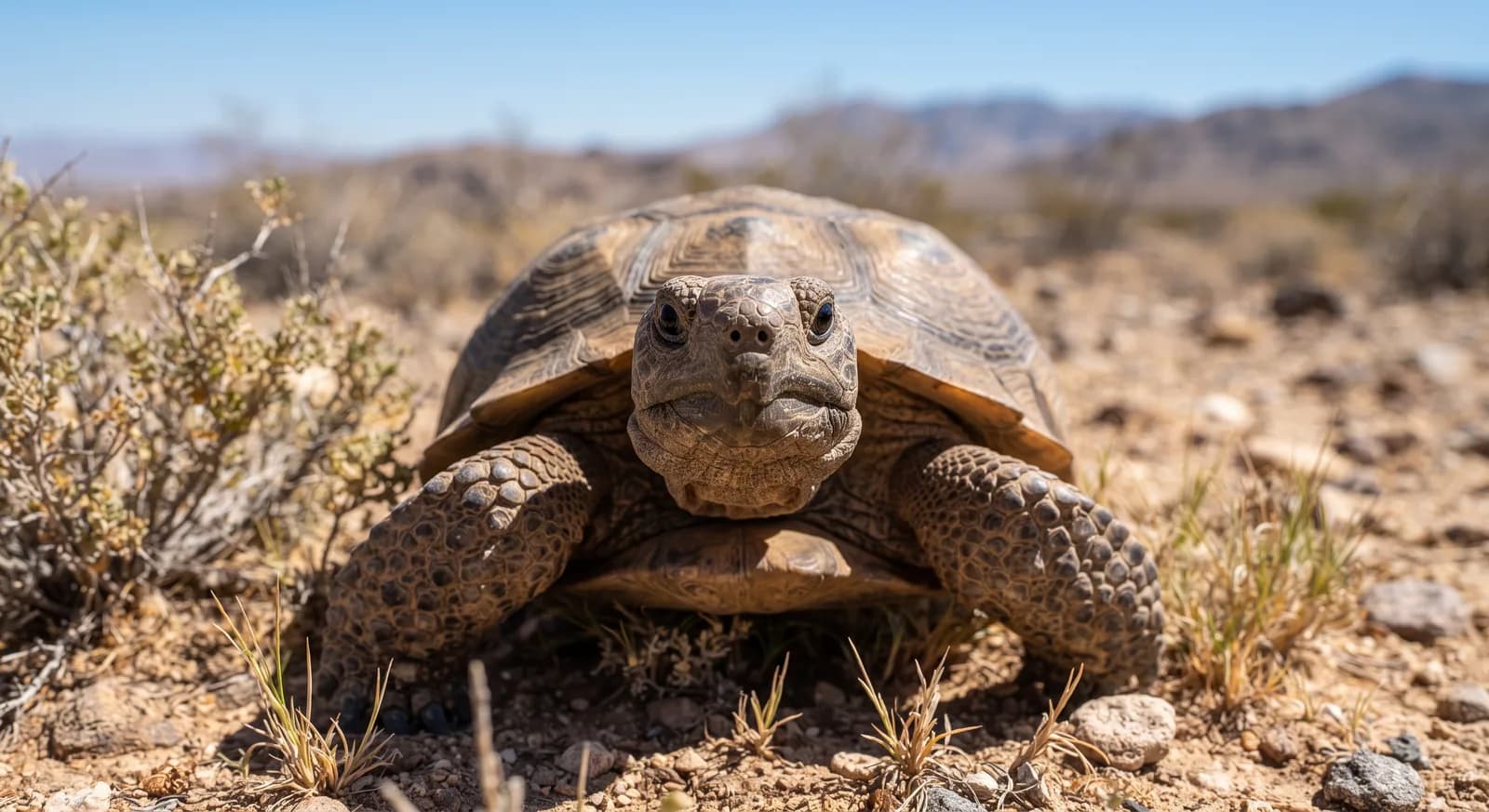
Mojave Desert Tortoise
Gopherus agassizii
It faces a high risk of extinction in the wild over the medium term. See full glossary
The Mojave desert tortoise is a tortoise of the family Testudinidae native to the Mojave Desert in the United States. The epithet agassizii honours the Swiss-American zoologist Jean Louis Rodolphe Agassiz.
Weight
4 kg – 7 kg
Size
25 cm – 36 cm
Lifespan
80 years
Diet
Herbivore
Feeds mainly on plants.
Activity
Diurnal
Active mainly during the day.
Social structure
Solitary
Lives and hunts alone, joining others only to breed.
Sighting difficulty
Moderate
Fun facts
- comportamientoIt digs burrows several metres deep to escape the desert extremes, and those same burrows are reused by other species.
- It stores water in its bladder for months and reabsorbs it as needed: which is why a desert tortoise should never be picked up off the ground, because the fright makes it void its bladder and it may die of dehydration before the next rain.
- It spends more than ninety per cent of its life in burrows it digs itself, and those tunnels give shelter to desert owls, lizards, snakes and rodents.
- It can survive more than a year with no access to standing water, taking it only from the plants it eats.
Life cycle & biology
- Skeleton type
- Vertebrate - internal bony skeleton with a shell (reptile)
- Habitat & environment
- The Mojave Desert and arid plains of the south-western United States and north-western Mexico
- Sexual maturity
- 15.1 years
- Gestation / incubation
- 3.9 months
- Litter / clutch size
- 8
Sources consulted: https://es.wikipedia.org/wiki/Gopherus_agassizii
Where to watch it
Parks and dive sites where this species has been documented.
Related species
Other species in the catalogue with the most in common with Mojave Desert Tortoise — same habitat, park, country, tags or family.
Gopher Tortoise
Gopherus polyphemus
Texas Horned Lizard
Phrynosoma cornutum
Common Desert Iguana
Dipsosaurus dorsalis
California Kingsnake
Lampropeltis californiae
Common Chuckwalla
Sauromalus ater
Common Tortoise
Testudo graeca
How to help
The mojave desert tortoise is classified as vulnerable. Organizations such as UICN, WWF y Wildlife Conservation Society work specifically on its conservation and that of its habitat; looking into their programs is a good starting point if you want to get involved.
It's documented in 4 real protected areas — part of why protecting these places matters for its conservation.
Keep exploring
Based on what we already know about mojave desert tortoise.
Comments
Share an experience, a fun fact or a tip for seeing the mojave desert tortoise.
Be the first to comment.