One of the 41 turtles and tortoises on WAnimals
Reptiles · Testudines · Testudinidae
Gopher Tortoise
Gopherus polyphemus
It faces a high risk of extinction in the wild over the medium term. See full glossary
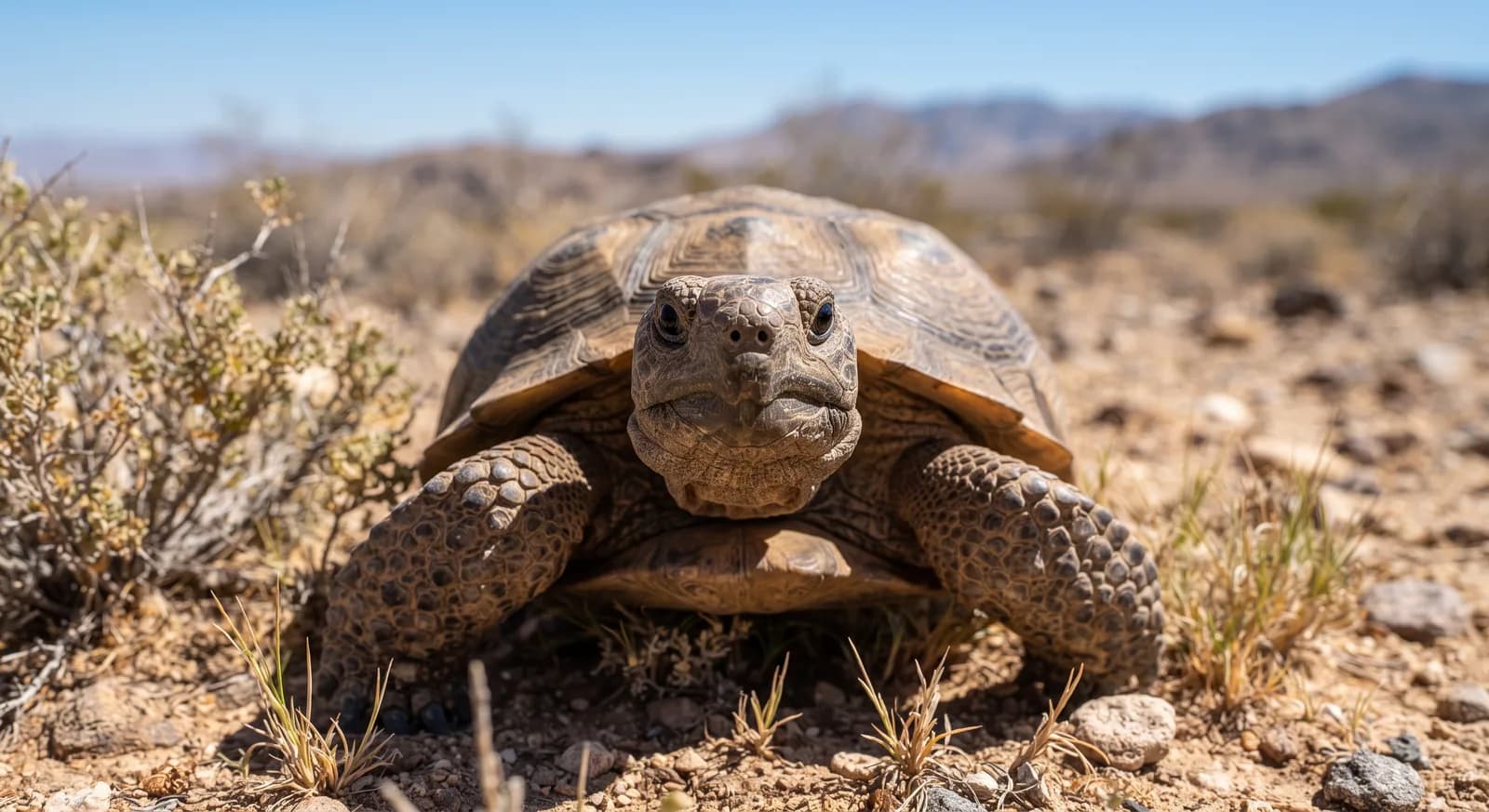
The gopher tortoise is a land tortoise of the south-eastern United States that digs burrows more than ten metres long and several metres deep. Those tunnels are the axis of its whole ecosystem: more than three hundred species use them as shelter from fire, cold and predators, which makes it an engineering species of the first order.
Weight
4 kg – 6 kg
Size
23 cm – 38 cm
Lifespan
60 years
Diet
Herbivore
Feeds mainly on plants.
Activity
Diurnal
Active mainly during the day.
Social structure
Solitary
Lives and hunts alone, joining others only to breed.
Sighting difficulty
Moderate
Fun facts
- Its burrows shelter more than three hundred different species, among them snakes, frogs, owls, rabbits and hundreds of invertebrates: it is one of the best-documented keystone species in North America.
- Those tunnels are also a refuge from fire: longleaf pine woods burn frequently, and the wildlife that survives the fires does so largely underground, in this tortoise's burrows.
- It takes between ten and twenty years to reach sexual maturity, and that extremely slow pace means a population takes decades to recover from any loss.
Life cycle & biology
- Skeleton type
- Vertebrate - internal bony skeleton with a shell (reptile)
- Habitat & environment
- Longleaf pine woods, sandy savanna and dry scrub of the south-eastern United States
- Sexual maturity
- 10 years
- Gestation / incubation
- 3 months
- Litter / clutch size
- 8
Sources consulted: https://www.iucnredlist.org/ | https://animaldiversity.org/ | https://es.wikipedia.org/
Where to watch it
Parks and dive sites where this species has been documented.
Related species
Other species in the catalogue with the most in common with Gopher Tortoise — same habitat, park, country, tags or family.
 Vulnerable
Mojave Desert Tortoise
Gopherus agassizii
Chimney Swift
Chaetura pelagica
Eastern Box Turtle
Terrapene carolina
Eastern Cottontail
Sylvilagus floridanus
Mourning Dove
Zenaida macroura
Turkey Vulture
Cathartes aura
How to help
The gopher tortoise is classified as vulnerable. Organizations such as UICN, WWF y Wildlife Conservation Society work specifically on its conservation and that of its habitat; looking into their programs is a good starting point if you want to get involved.
It's documented in 3 real protected areas — part of why protecting these places matters for its conservation.
Keep exploring
Based on what we already know about gopher tortoise.
Comments
Share an experience, a fun fact or a tip for seeing the gopher tortoise.
Be the first to comment.