One of the 41 turtles and tortoises on WAnimals
Reptiles · Testudines · Testudinidae
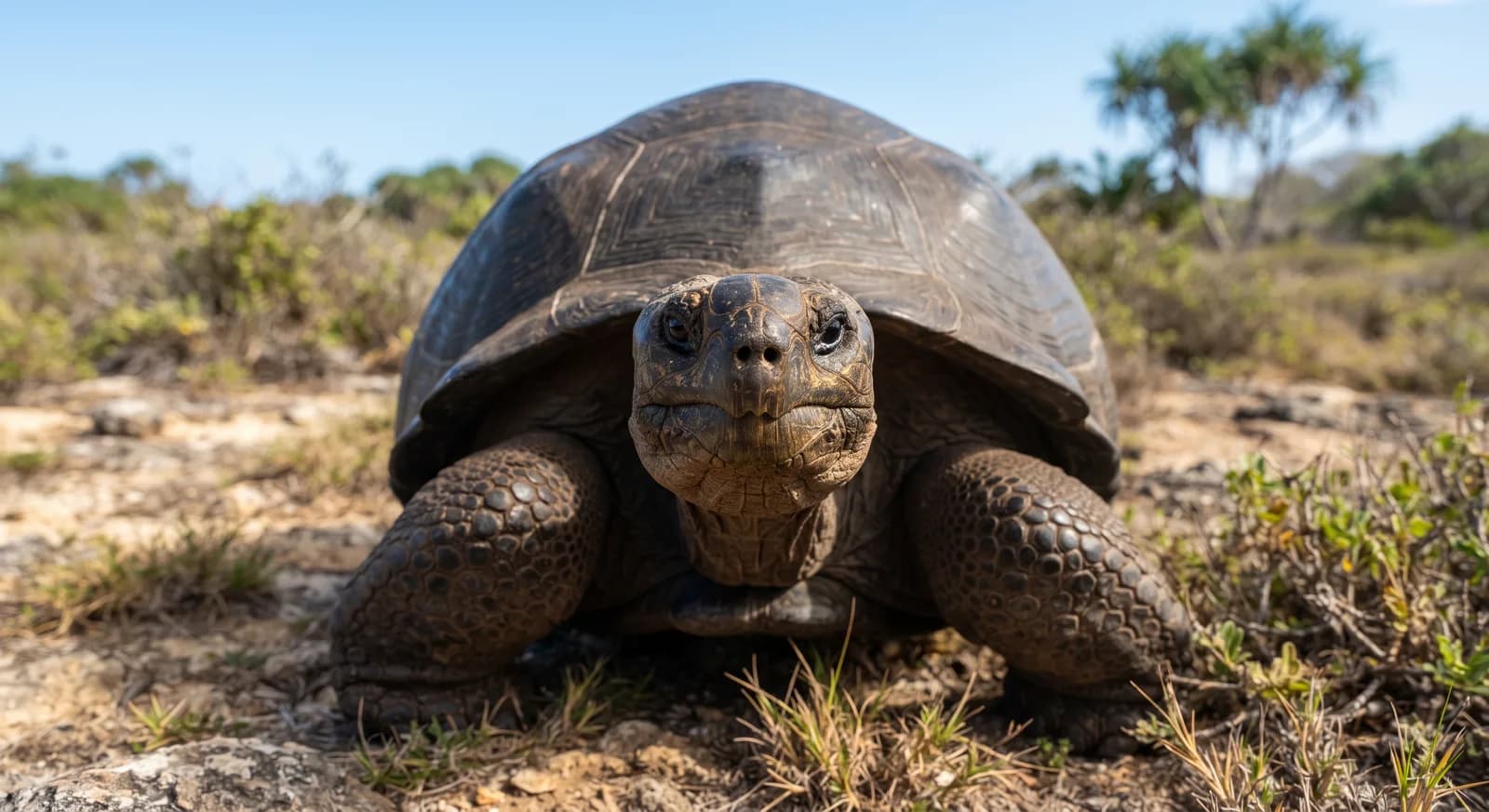
Aldabra Giant Tortoise
Aldabrachelys gigantea
It faces a high risk of extinction in the wild over the medium term. See full glossary
It is one of the longest-lived tortoises on the planet. An individual named Jonathan, living on Saint Helena, is regarded as the oldest known land animal alive.
Weight
159 kg – 250 kg
Size
91 cm – 1.2 m
Lifespan
150 years
Diet
Herbivore
Feeds mainly on plants.
Activity
Diurnal
Active mainly during the day.
Social structure
Solitary
Lives and hunts alone, joining others only to breed.
Sighting difficulty
Moderate
Fun facts
- An individual named Jonathan, on Saint Helena, is estimated to be over 190 years old.
- It can live more than 150 years on average, one of the longest-lived tortoises on the planet.
- It feeds mainly on vegetation, though it occasionally eats small invertebrates and carrion.
Life cycle & biology
- Skeleton type
- Vertebrate - bony skeleton with a fused shell (reptile)
- Habitat & environment
- Grassland, scrub, mangrove and coastal dunes of the Aldabra Atoll, Seychelles
- Birth weight
- The eggs weigh 40-75 grams; the sources consulted give no precise weight for the newly hatched young
- Size at birth
- Small on hatching, growing fast over its first 20-30 years
- Sexual maturity
- 15-30 years (sources vary; 20-25 years is commonly given)
- Gestation / incubation
- 95-250 days depending on temperature (110 days in a warm climate, up to 250 in a cold one)
- Litter / clutch size
- 5 to 25 eggs per clutch
- Lifespan in captivity
- Documented or alleged cases of 152 to 255 years (though the most extreme figures are not fully confirmed)
Sources consulted: Animal-pedia.org; A-Z Animals; AnAge (genomics.senescence.info); Animalia.bio; Wikipedia (Jonathan the tortoise); Cotswold Wildlife Park
Where to watch it
Parks and dive sites where this species has been documented.
Related species
Other species in the catalogue with the most in common with Aldabra Giant Tortoise — same habitat, park, country, tags or family.
Blacktip Reef Shark
Carcharhinus melanopterus
 Endangered
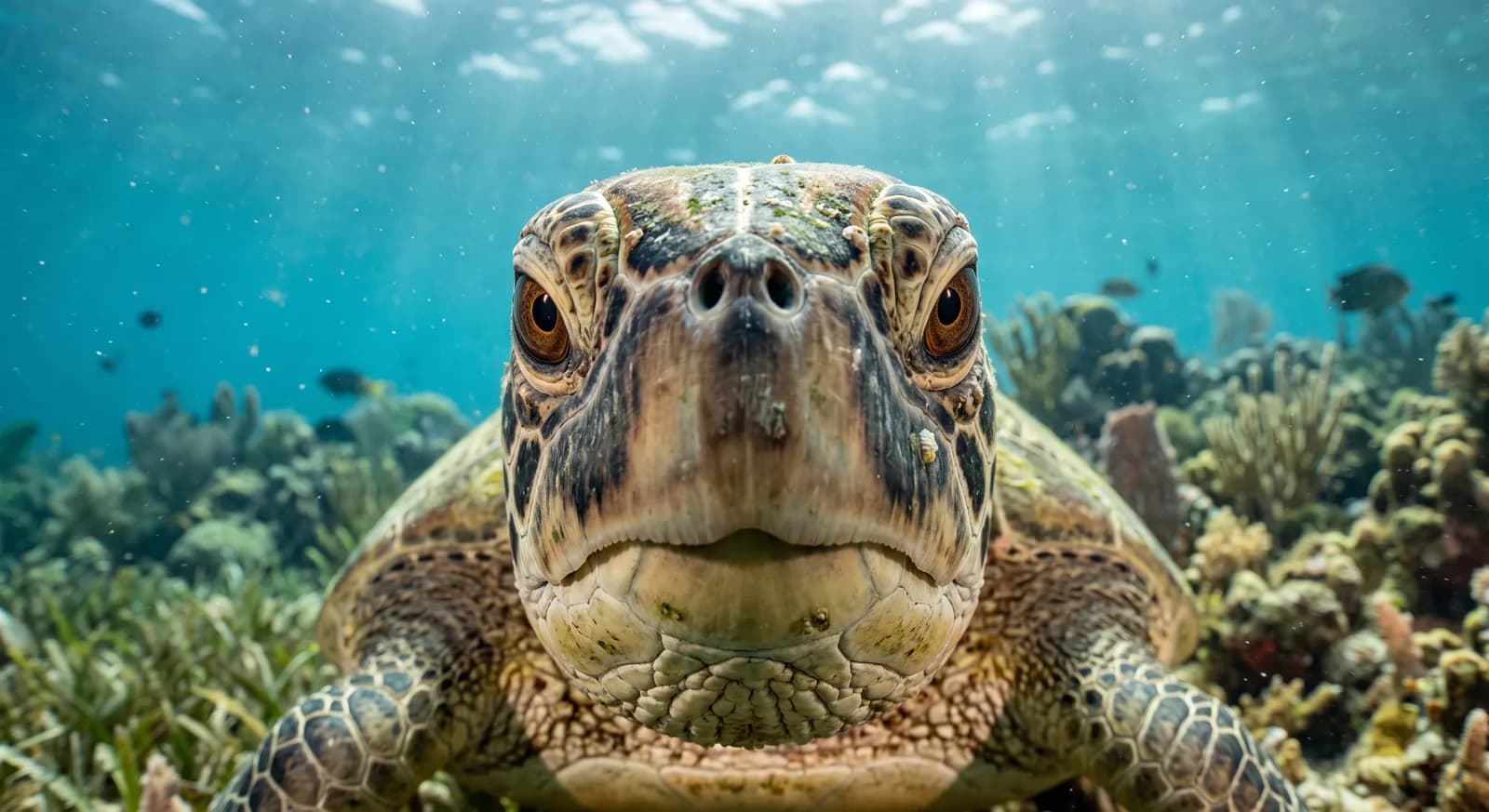
Green Turtle
Chelonia mydas
 Critically Endangered
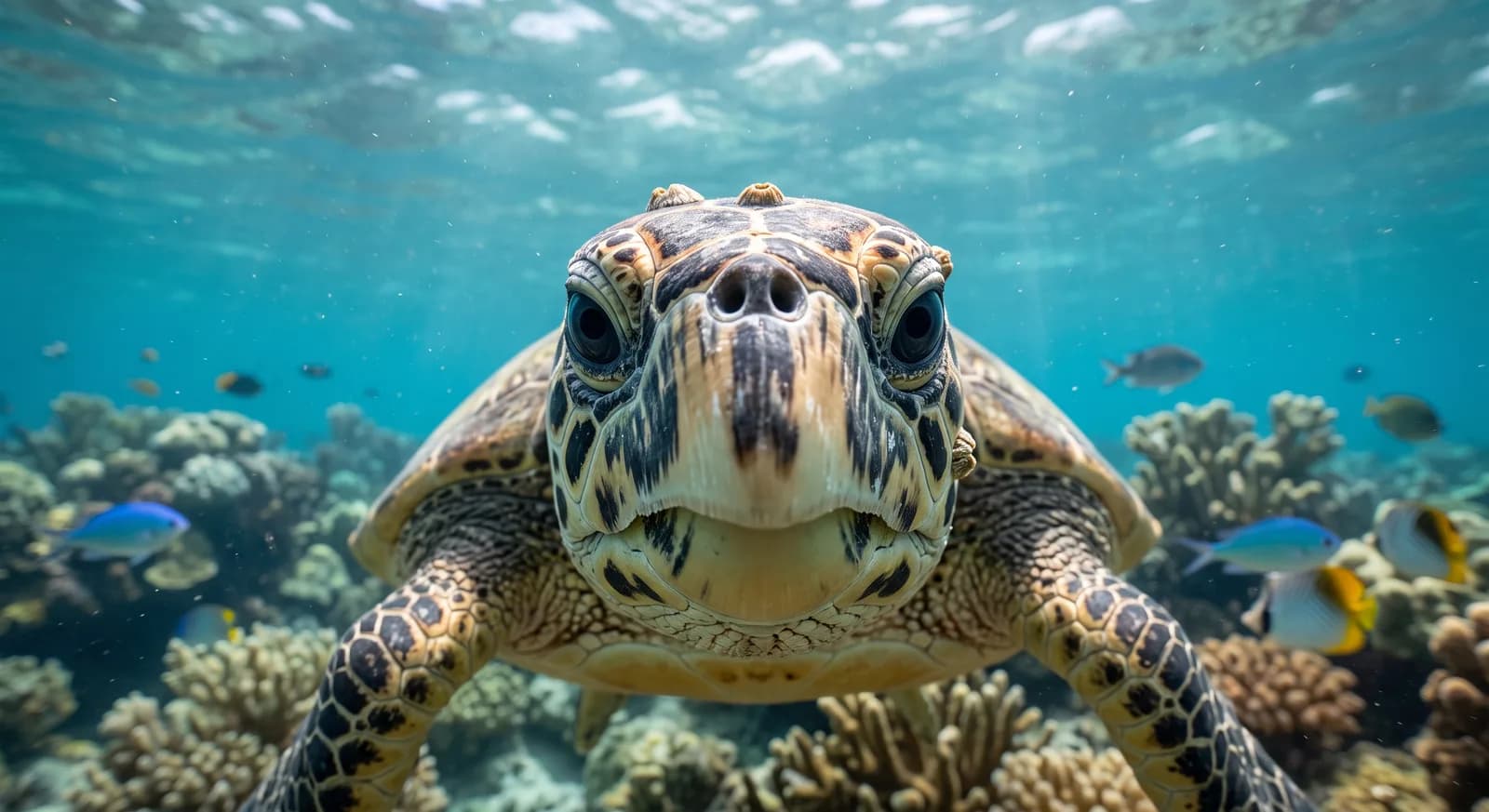
Hawksbill Turtle
Eretmochelys imbricata
 Vulnerable
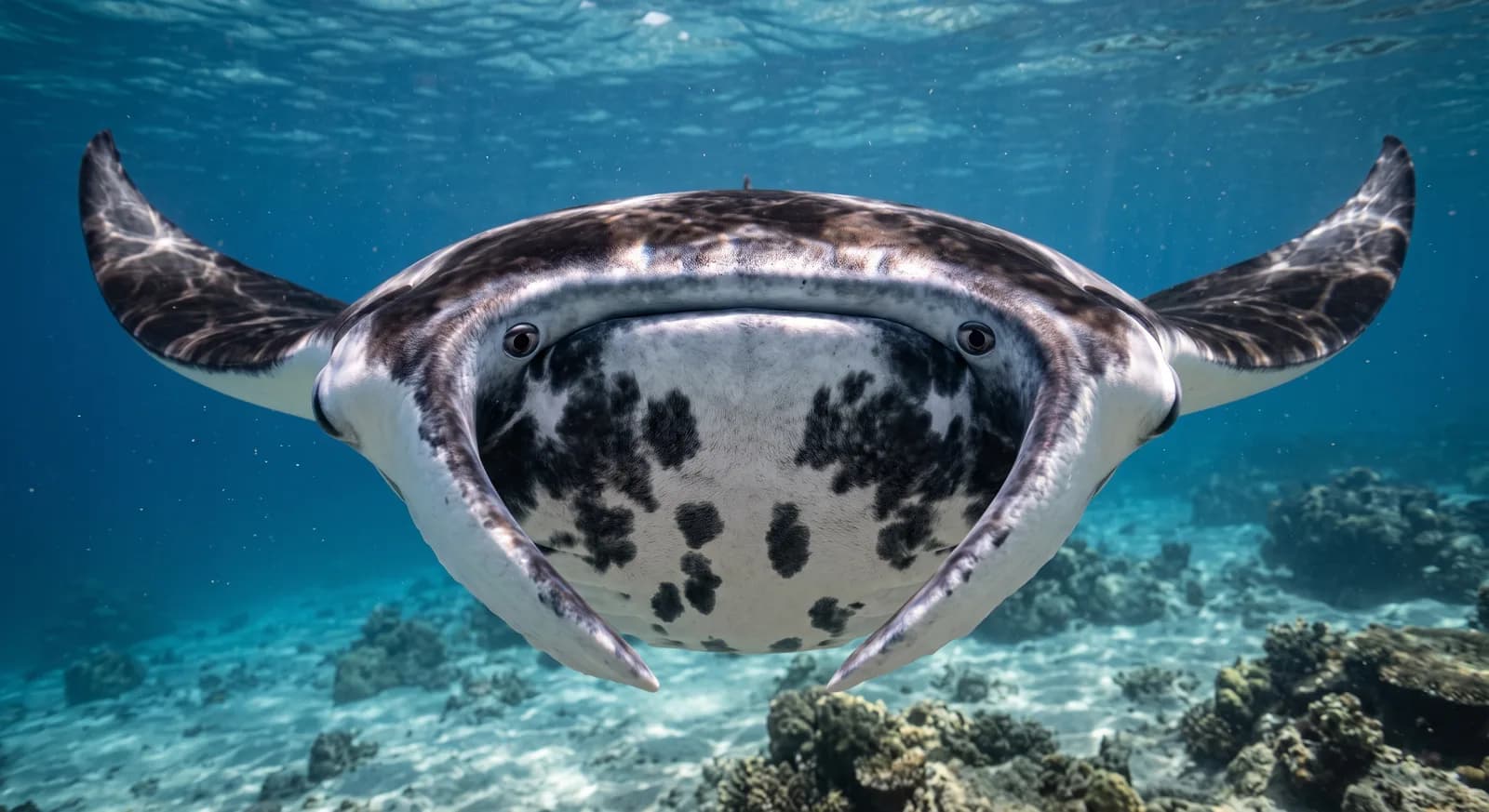
Reef Manta Ray
Mobula alfredi
Coconut Crab
Birgus latro
White-spotted Puffer
Arothron hispidus
How to help
The aldabra giant tortoise is classified as vulnerable. Organizations such as UICN, WWF y Wildlife Conservation Society work specifically on its conservation and that of its habitat; looking into their programs is a good starting point if you want to get involved.
It's documented in 2 real protected areas — part of why protecting these places matters for its conservation.
Keep exploring
Based on what we already know about aldabra giant tortoise.
Comments
Share an experience, a fun fact or a tip for seeing the aldabra giant tortoise.
Be the first to comment.