Mammals · Artiodactyla · Bovidae
Aurochs
Bos primigenius
No living individual remains anywhere in the world. See full glossary
The aurochs was the wild bovid from which all breeds of domestic cattle descend. It was far larger than a modern cow: bulls stood close to 1.8 metres at the shoulder and had long horns curving forwards. It occupied much of Eurasia and North Africa, and retreated with deforestation, hunting and competition from livestock. The last population survived under protection as a royal preserve in Poland, where the last known individual died in 1627.
Weight
700 kg – 1.5 t
Size
2.5 m – 3.1 m
Diet
Herbivore
Feeds mainly on plants.
Activity
Diurnal
Active mainly during the day.
Social structure
Herd
Lives in large groups as a strategy against predators.
Sighting difficulty
Impossible (extinct)
Fun facts
- GeneralThe wild ancestor of all domestic cattle; the last one died in Poland in 1627.
- Its extinction is one of the first documented in writing with a date and place: the last individual died in the forest of Jaktorów, in Poland, in 1627.
- It appears painted in the caves of Lascaux more than 17,000 years ago, with the horns and shoulder hump perfectly recognisable, and is one of the most frequently depicted animals in Palaeolithic art.
- Its extinction is the first in history to be documented in writing as it happened. The wardens of the Jaktorów forest, in Poland, kept an annual census of the last animals: the last bull died in 1620 and the last cow in 1627.
- The skull of that last female is kept in the Livrustkammaren, the Royal Armoury in Stockholm.
- It was far larger than modern cattle: bulls stood 160 to 180 cm at the shoulder, with maximums around 200, and cows about 150. Pleistocene individuals were on average ten centimetres taller than Holocene ones.
- It appears in the cave paintings of Lascaux, and Julius Caesar described it in the Gallic War.
- It is the wild ancestor of all the world's cattle, domesticated some 8,000 to 10,000 years ago in several places at once.
- The modern breeds created to resemble it, such as Heck cattle, are reconstructions of its appearance, not of the species: they look alike on the outside but do not share its genetic make-up.
Life cycle & biology
- Skeleton type
- Vertebrate - internal bony skeleton (mammal)
- Habitat & environment
- Open woodland, marshes and temperate grassland
- Gestation / incubation
- 9 months
- Litter / clutch size
- 1
Sources consulted: https://es.wikipedia.org/wiki/Bos_primigenius
Related species
Other species in the catalogue with the most in common with Aurochs — same habitat, park, country, tags or family.
Himalayan Tahr
Hemitragus jemlahicus
Dama Gazelle
Nanger dama
 Near Threatened
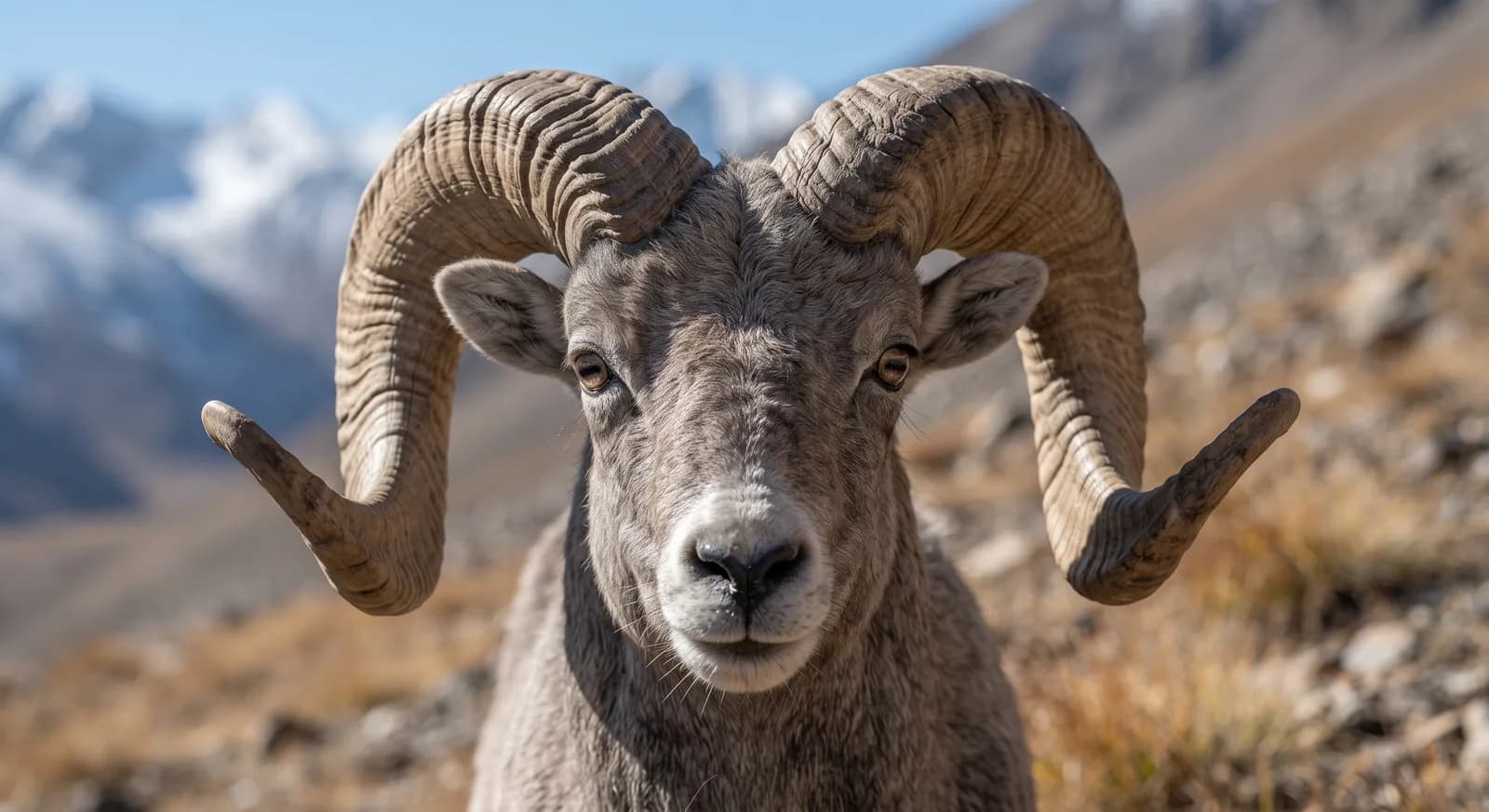
Argali
Ovis ammon
 Not Evaluated
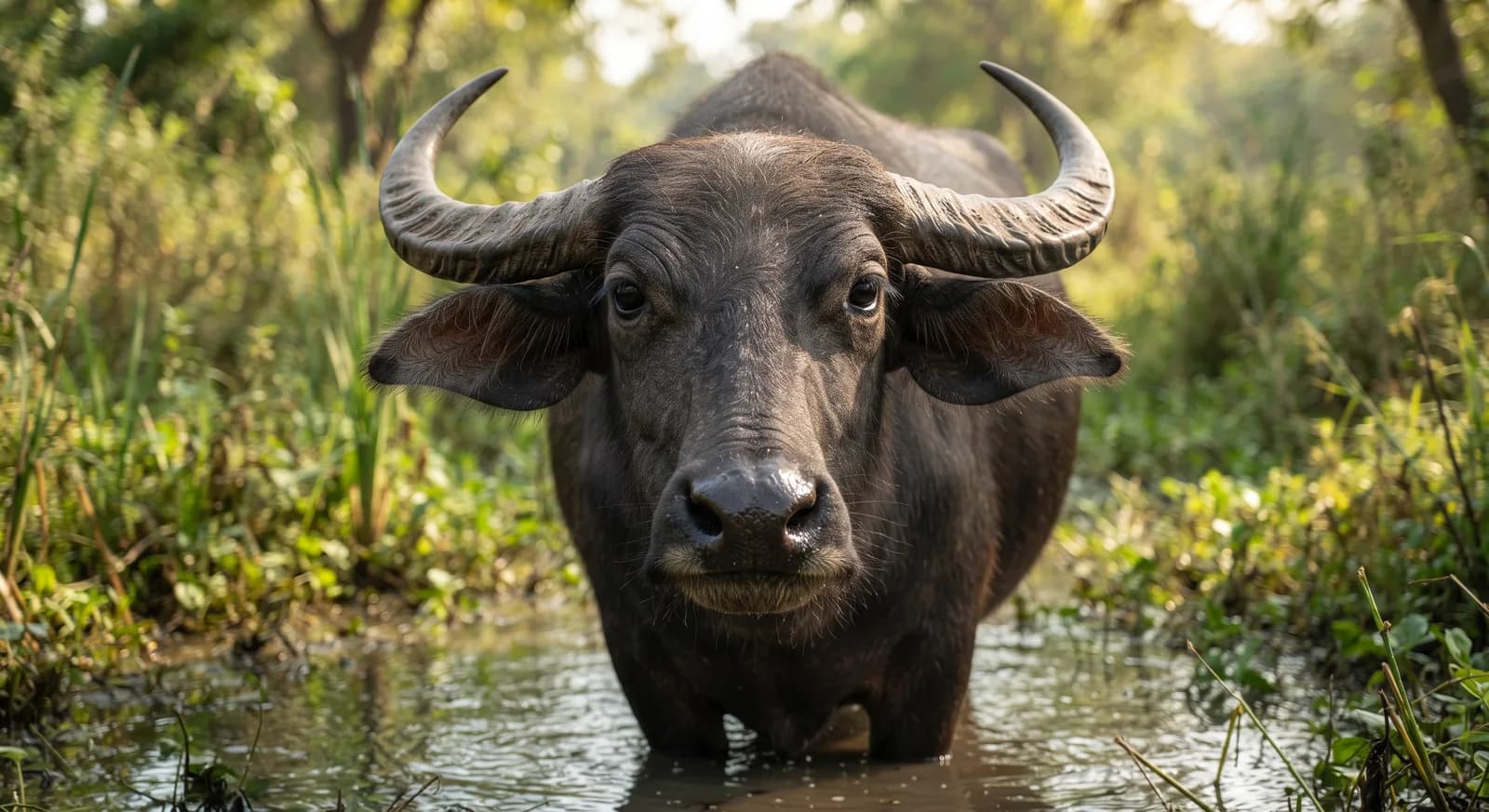
Water Buffalo
Bubalus bubalis
 Least Concern
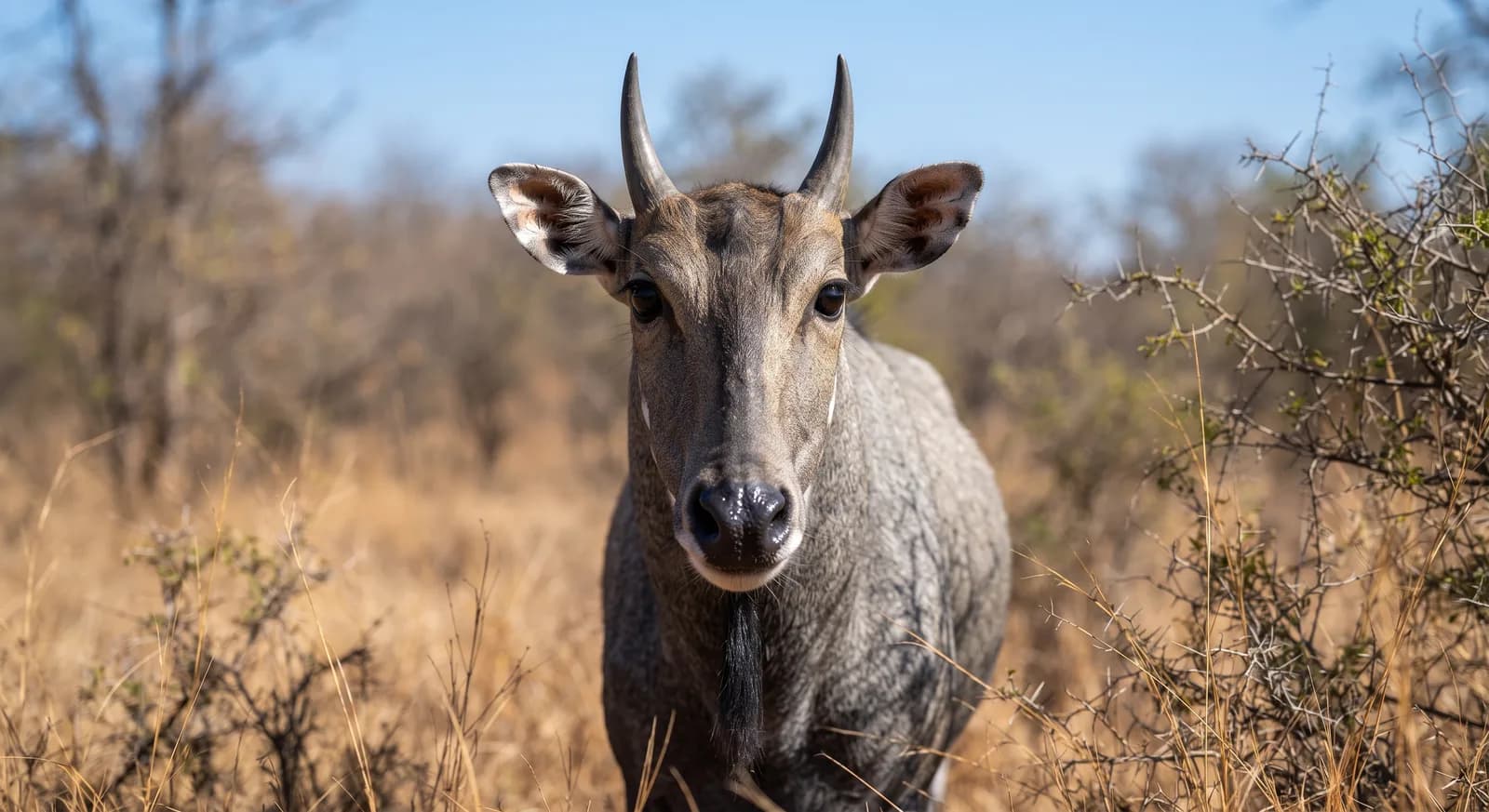
Nilgai
Boselaphus tragocamelus
Siberian Ibex
Capra sibirica
Keep exploring
Based on what we already know about aurochs.
Comments
Share an experience, a fun fact or a tip for seeing the aurochs.
Be the first to comment.