One of the 7 gazelles on WAnimals
Mammals · Artiodactyla · Bovidae
Dama Gazelle
Nanger dama
It faces an extremely high risk of imminent extinction in the wild. See full glossary
The dama gazelle is the largest and tallest of the gazelles, with a long, slender neck and white fur with a chestnut rump and neck. It once occupied the whole of the Sahel and the margins of the Sahara, and today it survives in tiny pockets in Niger, Chad and Mali, plus some reintroductions in Morocco, Tunisia and Senegal. It is the most threatened antelope in Africa. Spain plays a key part in its conservation: the captive breeding programme in Almería holds a substantial share of the world population.
Weight
35 kg – 75 kg
Size
1.4 m – 1.7 m
Lifespan
12 years
Diet
Herbivore
Feeds mainly on plants.
Activity
Diurnal
Active mainly during the day.
Sighting difficulty
Very hard
Estimated population
Fewer than 300 mature individuals in the wild
Fun facts
- It is the largest and tallest of all the gazelles, with a neck so long that at a distance it recalls a small oryx.
- A good part of its survival depends on Spain: since the 1970s the Estación Experimental de Zonas Áridas in Almería has run a breeding programme for Saharan gazelles that has supplied the animals for several reintroductions in North Africa.
Life cycle & biology
- Skeleton type
- Vertebrate - internal bony skeleton (mammal)
- Habitat & environment
- Saharan steppe, Sahel and semi-arid acacia plains of North Africa
- Sexual maturity
- 3.6 months
- Gestation / incubation
- 6.8 months
- Litter / clutch size
- 1
Sources consulted: https://es.wikipedia.org/wiki/Nanger_dama
Where to find it
See its range on the interactive mapWhere to watch it
Parks and dive sites where this species has been documented.
Related species
Other species in the catalogue with the most in common with Dama Gazelle — same habitat, park, country, tags or family.
Scimitar-horned Oryx
Oryx dammah
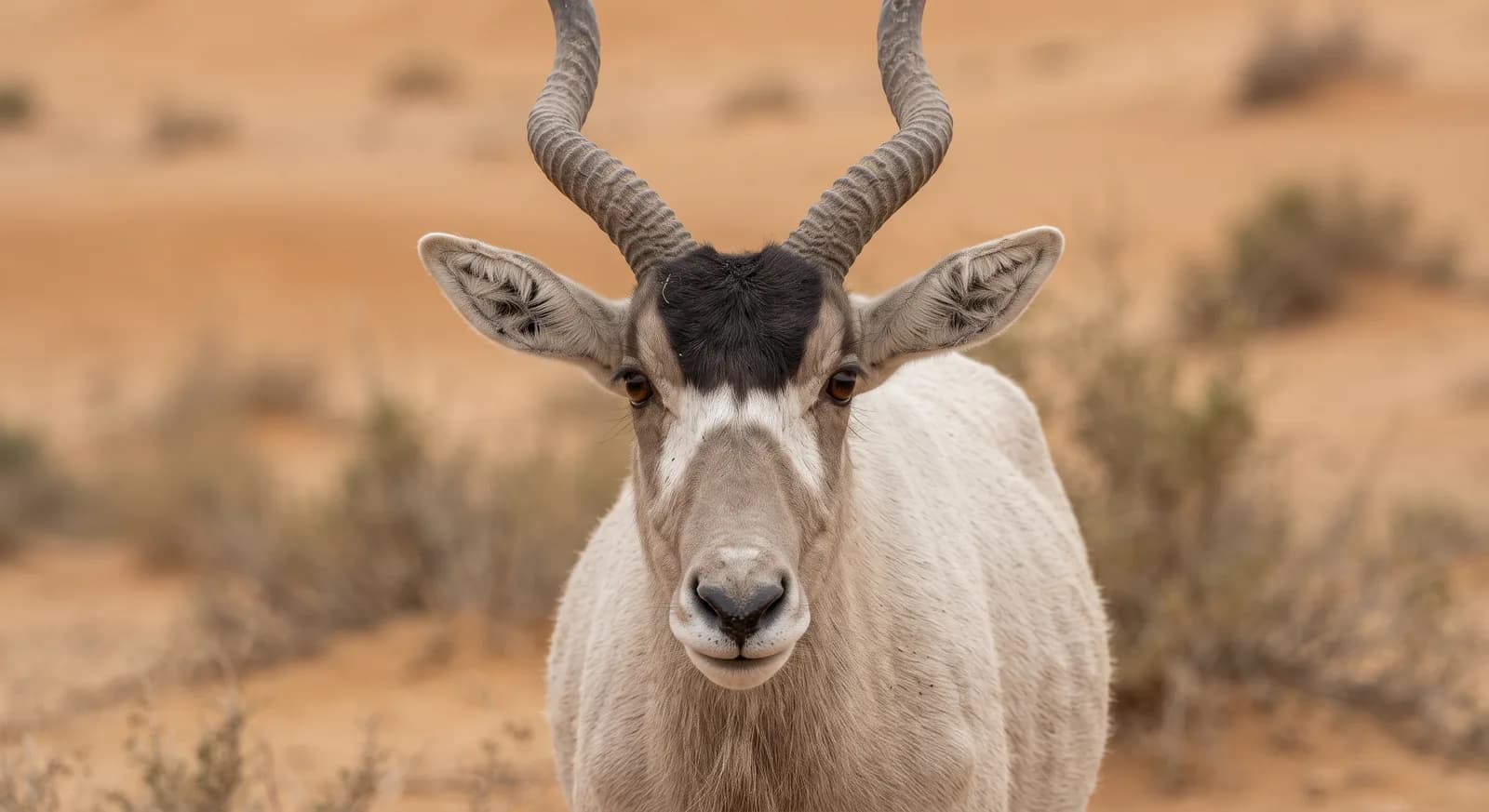 Critically Endangered
Addax
Addax nasomaculatus
Kob
Kobus kob
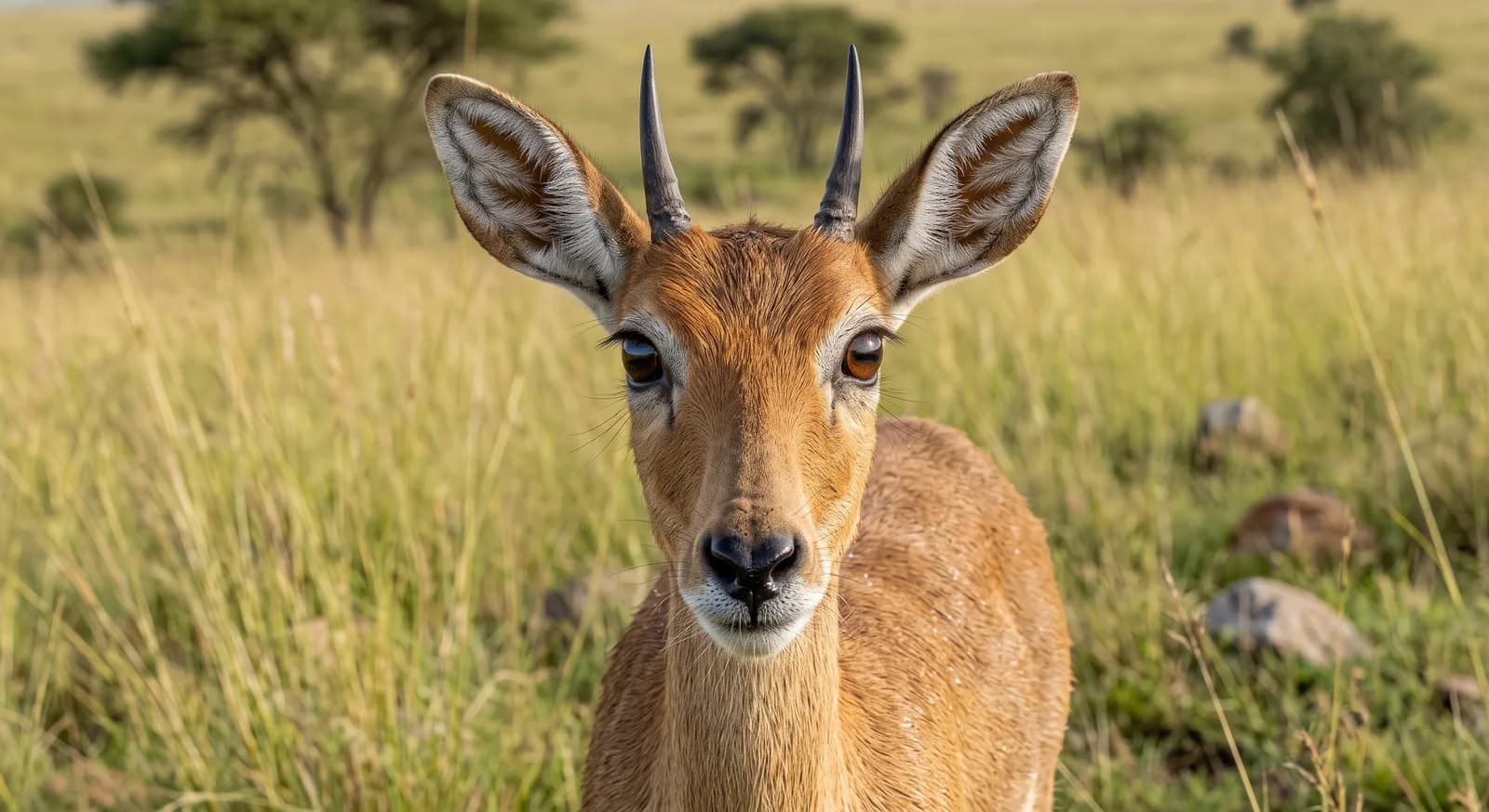 Least Concern
Oribi
Ourebia ourebi
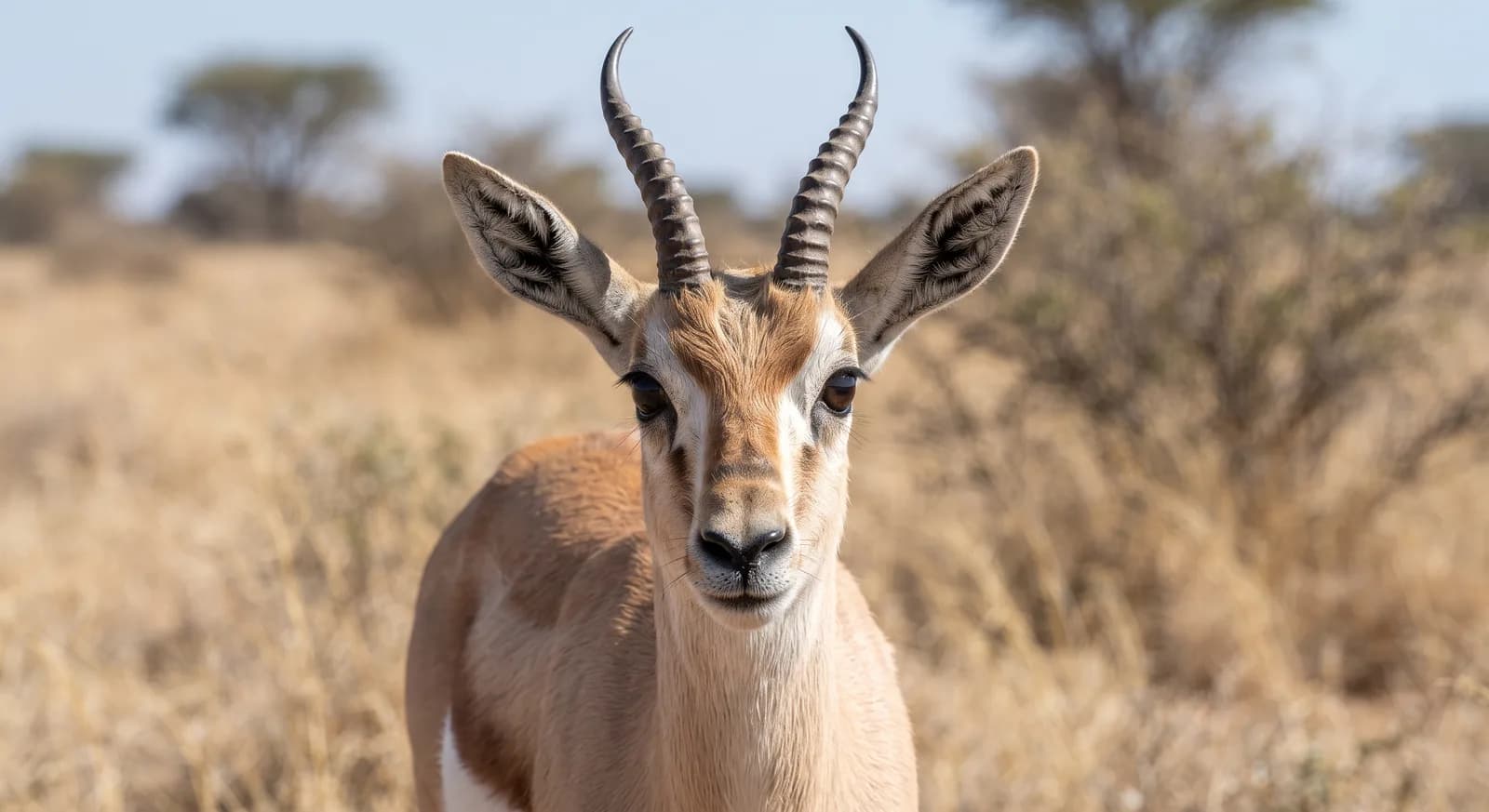 Vulnerable
Dorcas Gazelle
Gazella dorcas
Arabian Sand Gazelle
Gazella marica
How to help
The dama gazelle is classified as critically endangered. Organizations such as UICN, WWF y Wildlife Conservation Society work specifically on its conservation and that of its habitat; looking into their programs is a good starting point if you want to get involved.
It's documented in 5 real protected areas — part of why protecting these places matters for its conservation.
Keep exploring
Based on what we already know about dama gazelle.
Comments
Share an experience, a fun fact or a tip for seeing the dama gazelle.
Be the first to comment.