Mammals · Artiodactyla · Bovidae
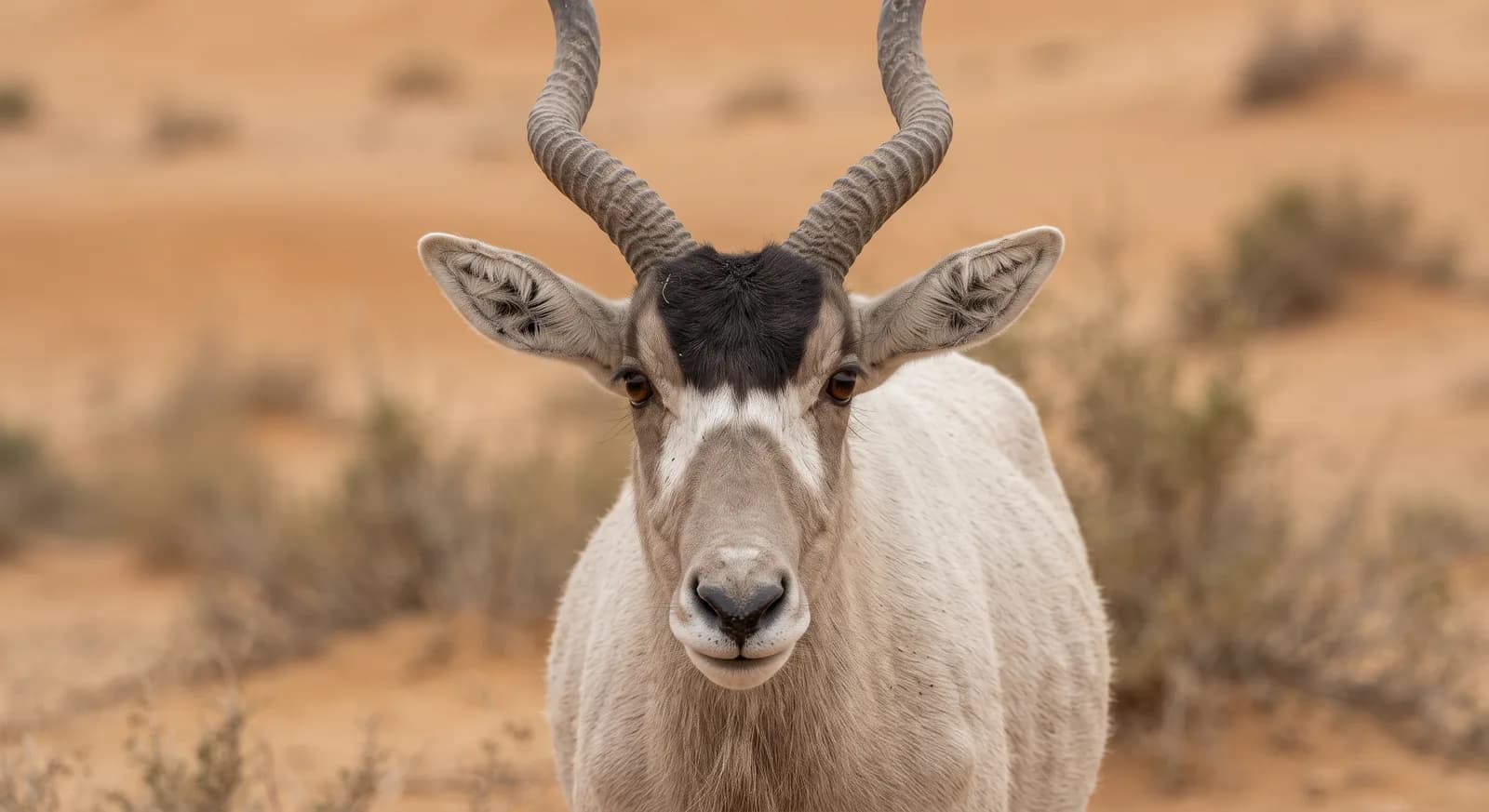
Addax
Addax nasomaculatus
It faces an extremely high risk of imminent extinction in the wild. See full glossary
It is one of the most threatened mammals on the planet: from a population that once numbered tens of thousands, fewer than 100 survive in the wild today.
Weight
60 kg – 125 kg
Size
1.5 m – 1.7 m
Diet
Herbivore
Feeds mainly on plants.
Activity
Nocturnal
Active mainly at night.
Social structure
Herd
Lives in large groups as a strategy against predators.
Sighting difficulty
Very hard
Fun facts
- Fewer than 100 survive in the wild in the Sahara.
- Its broad, flat-soled hooves let it cross loose sand without sinking in.
- It can survive without drinking, taking its water from the plants it eats.
- fisiologíaIt is one of the antelopes best adapted to extreme desert conditions, able to survive with virtually no drinking water, taking it instead from the plants it eats at night.
Life cycle & biology
- Skeleton type
- Vertebrate - internal bony skeleton (mammal)
- Habitat & environment
- Sand and stony deserts of the central Sahara, including dune fields and arid steppe
- Birth weight
- 4.7 - 6.75 kg
- Size at birth
- Tawny-coated with barely visible markings at birth
- Sexual maturity
- Female: 1.5 years | Male: 3 years
- Gestation / incubation
- 257-282 days (~8.5-9 months)
- Litter / clutch size
- 1 young per birth
- Lifespan in captivity
- Documented record of up to 28 years in captivity
Sources consulted: AnAge (genomics.senescence.info); SeaWorld/Busch Gardens; A-Z Animals; Animal Diversity Web; Animal List; Animalia.bio; Creature Atlas; The Animal Facts
Where to find it
See its range on the interactive mapWhere to watch it
Parks and dive sites where this species has been documented.
Related species
Other species in the catalogue with the most in common with Addax — same habitat, park, country, tags or family.
Scimitar-horned Oryx
Oryx dammah
Dama Gazelle
Nanger dama
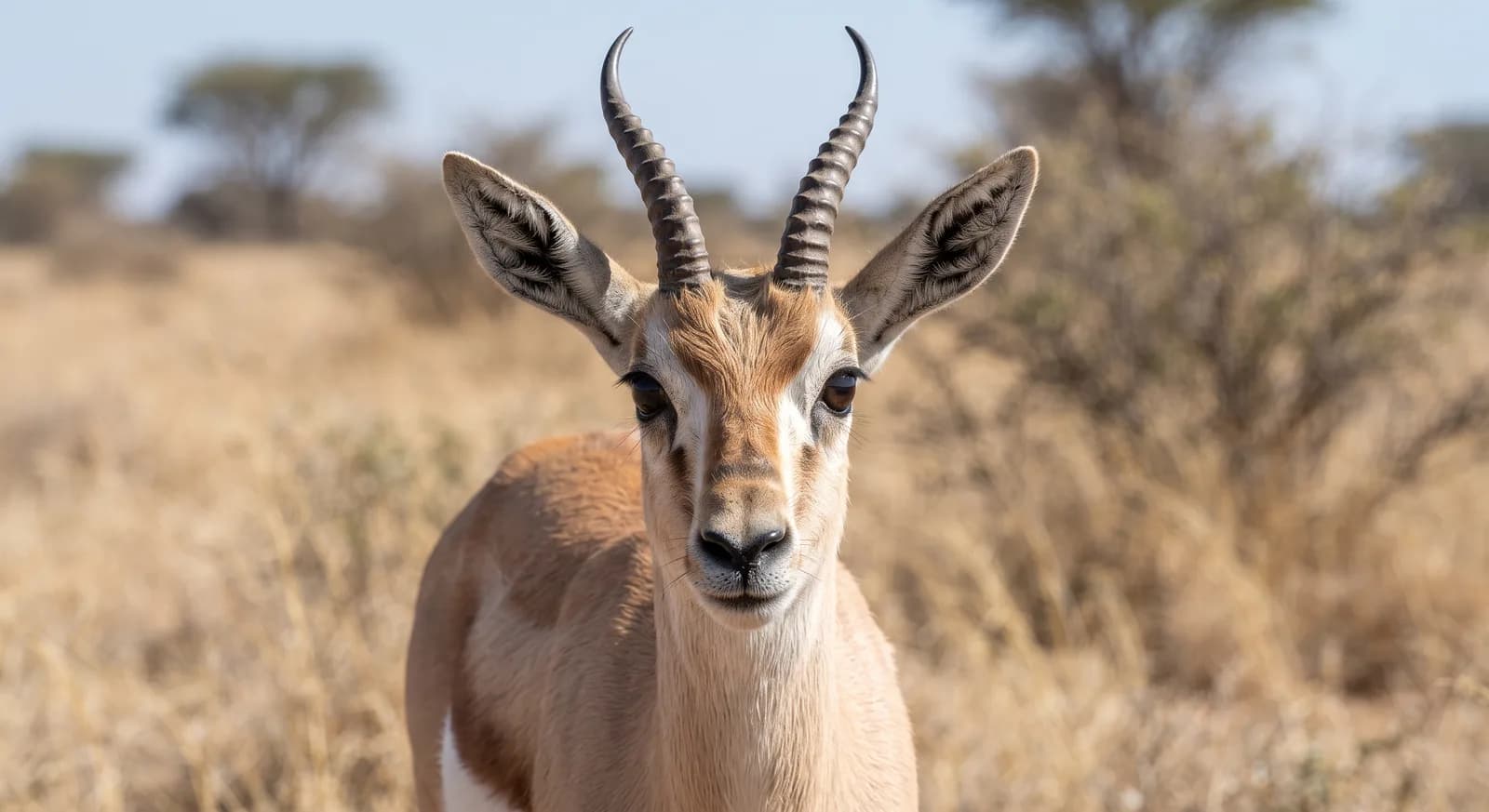 Vulnerable
Dorcas Gazelle
Gazella dorcas
Arabian Sand Gazelle
Gazella marica
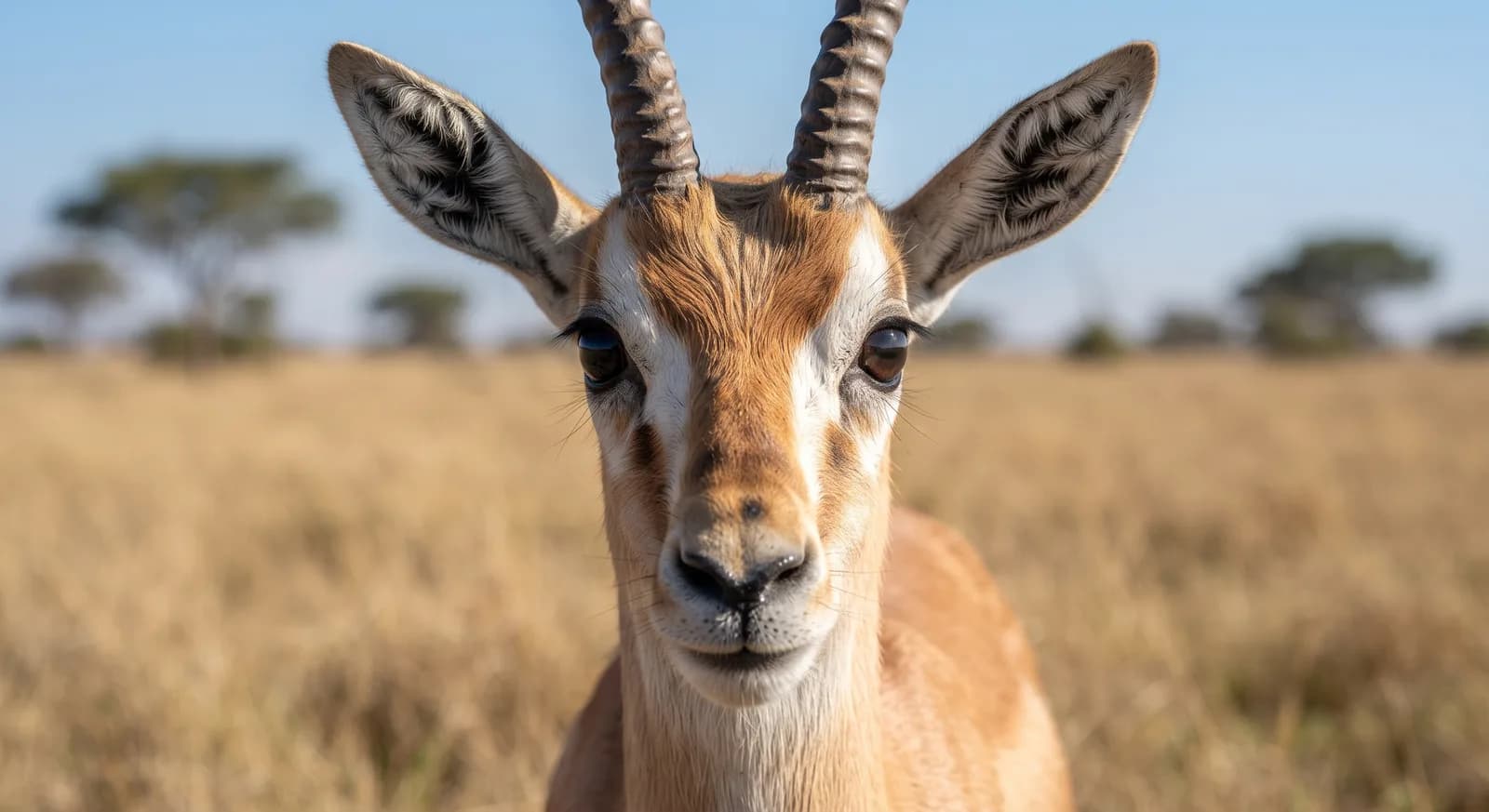 Least Concern
Grant's Gazelle
Nanger granti
Lesser Egyptian Jerboa
Jaculus jaculus
How to help
The addax is classified as critically endangered. Organizations such as UICN, WWF y Wildlife Conservation Society work specifically on its conservation and that of its habitat; looking into their programs is a good starting point if you want to get involved.
It's documented in 4 real protected areas — part of why protecting these places matters for its conservation.
Keep exploring
Based on what we already know about addax.
Comments
Share an experience, a fun fact or a tip for seeing the addax.
Be the first to comment.