One of the 7 gazelles on WAnimals
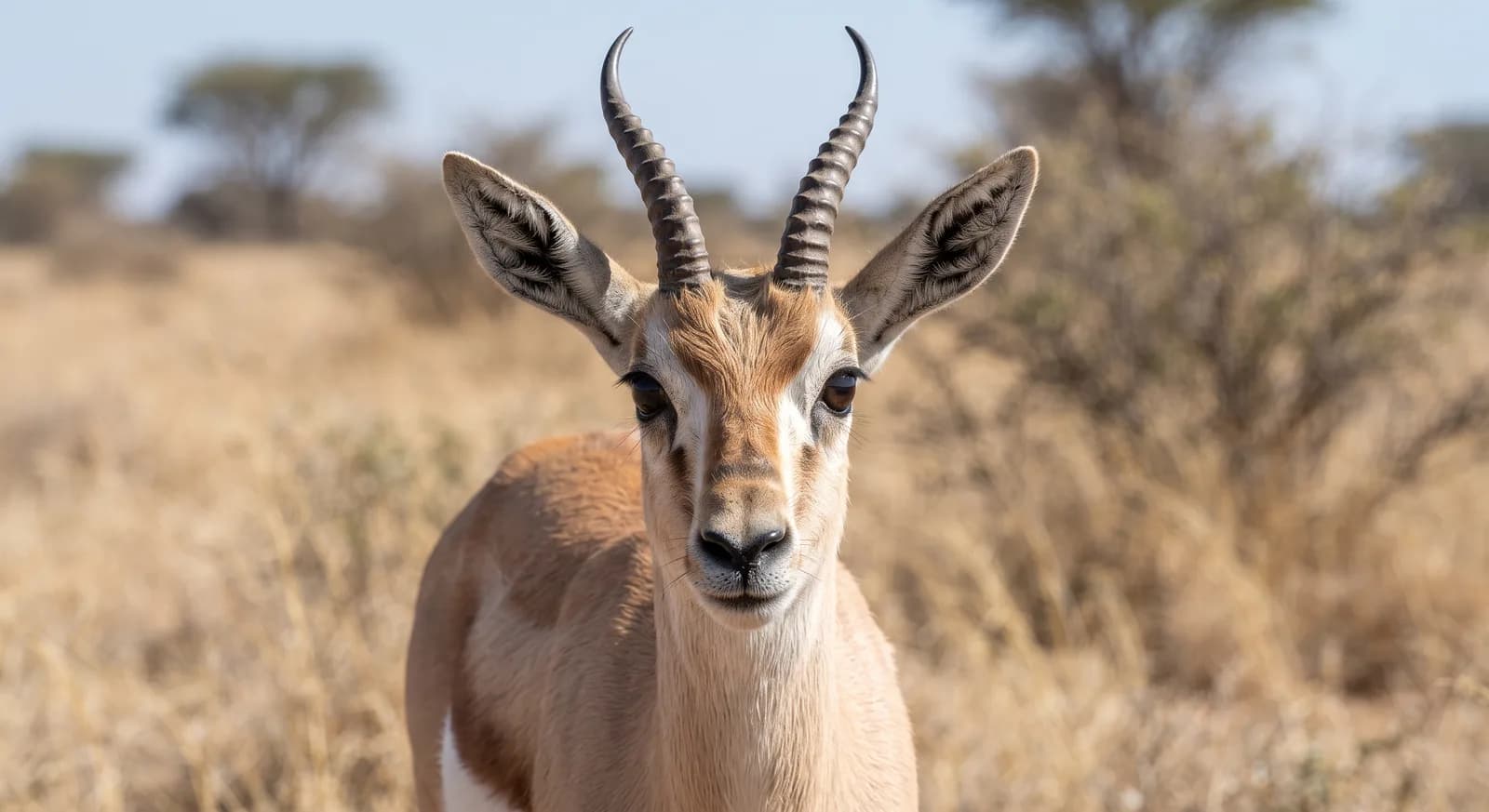
Mammals · Artiodactyla · Bovidae
Dorcas Gazelle
Gazella dorcas
It faces a high risk of extinction in the wild over the medium term. See full glossary
The dorcas gazelle is the smallest and hardiest gazelle of the Sahara and Arabia. It is extraordinarily well adapted to drought: it can live its whole life without drinking, taking its water from plants and dew, and it concentrates its urine to extreme levels so as not to lose fluid. It lives in small family groups and moves about following the rains. Hunting from off-road vehicles has wiped out entire populations in the Sahara over recent decades.
Weight
15 kg – 25 kg
Size
90 cm – 1.1 m
Lifespan
12 years
Diet
Herbivore
Feeds mainly on plants.
Activity
Crepuscular
Active above all at dawn and dusk.
Sighting difficulty
Moderate
Fun facts
- GeneralIt can go its whole life without drinking, taking its water from plants.
- It can go its whole life without drinking a drop: it takes its water from leaves, shoots and dew, and its kidneys concentrate the urine to a degree very few mammals reach.
- It is the gazelle that appears in ancient Egyptian art and in the Roman mosaics of North Africa: it lived alongside the first Mediterranean civilisations and has now disappeared from much of those same regions.
Life cycle & biology
- Skeleton type
- Vertebrate - internal bony skeleton (mammal)
- Habitat & environment
- Desert, semi-desert and Sahelian savannah
- Sexual maturity
- 2 years
- Gestation / incubation
- 6 months
- Litter / clutch size
- 1
Sources consulted: https://en.wikipedia.org/wiki/Dorcas_gazelle
Where to find it
See its range on the interactive mapWhere to watch it
Parks and dive sites where this species has been documented.
Related species
Other species in the catalogue with the most in common with Dorcas Gazelle — same habitat, park, country, tags or family.
Arabian Sand Gazelle
Gazella marica
Dama Gazelle
Nanger dama
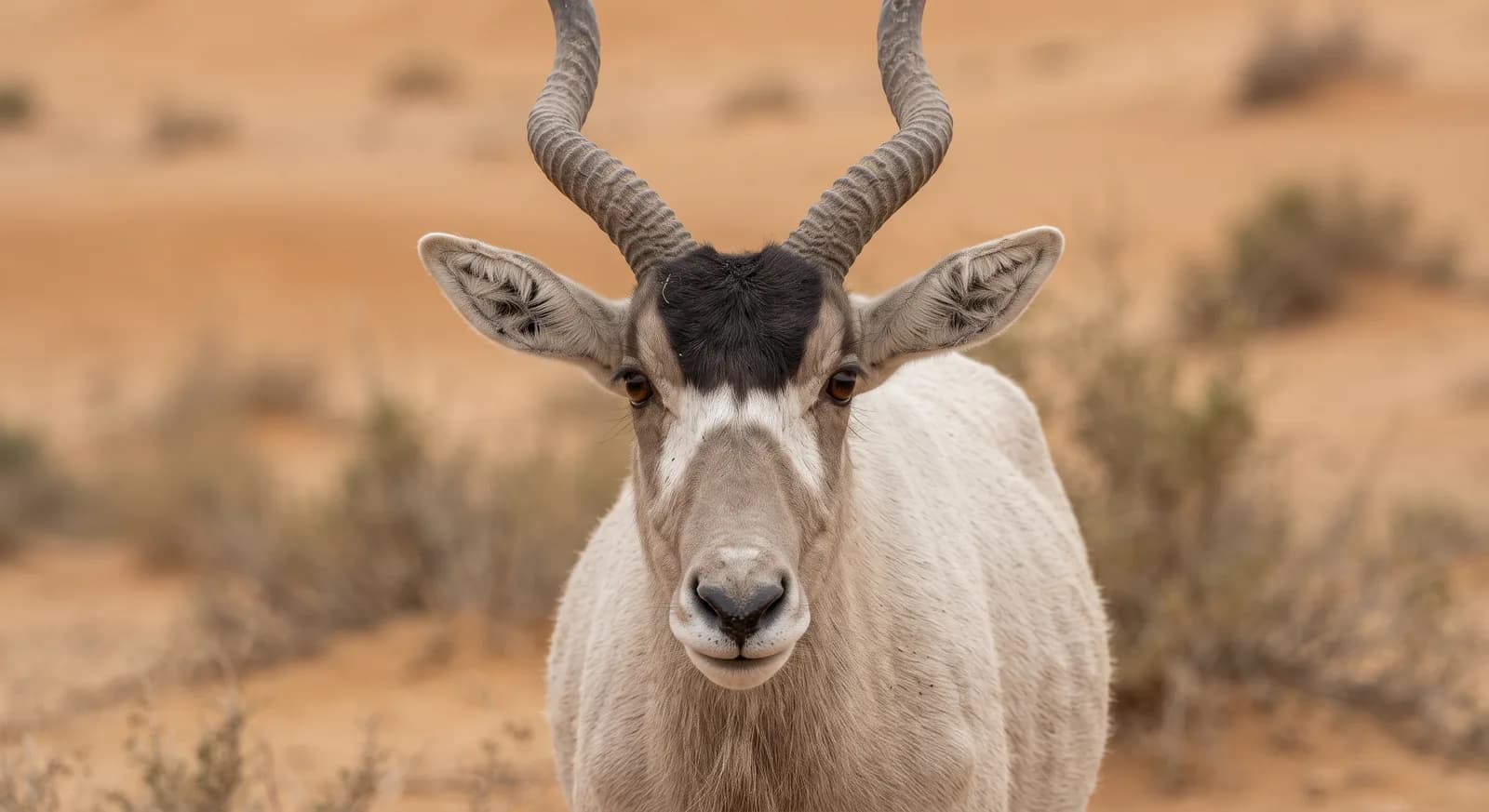 Critically Endangered
Addax
Addax nasomaculatus
Derby Eland
Taurotragus derbianus
Arabian Oryx
Oryx leucoryx
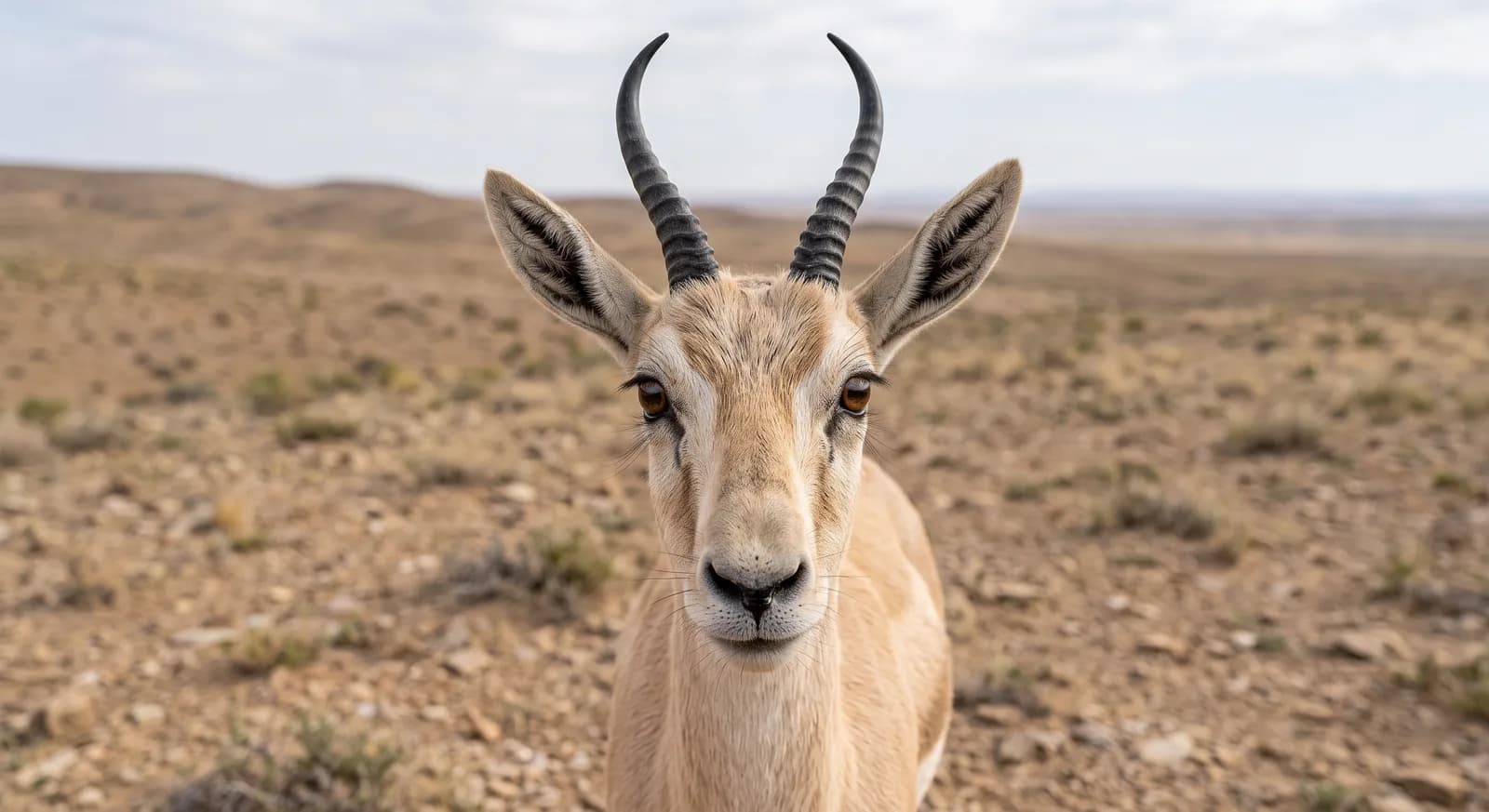 Vulnerable
Goitered Gazelle
Gazella subgutturosa
How to help
The dorcas gazelle is classified as vulnerable. Organizations such as UICN, WWF y Wildlife Conservation Society work specifically on its conservation and that of its habitat; looking into their programs is a good starting point if you want to get involved.
It's documented in 4 real protected areas — part of why protecting these places matters for its conservation.
Keep exploring
Based on what we already know about dorcas gazelle.
Comments
Share an experience, a fun fact or a tip for seeing the dorcas gazelle.
Be the first to comment.