One of the 4 oryxes on WAnimals
Mammals · Artiodactyla · Bovidae
Arabian Oryx
Oryx leucoryx
It faces a high risk of extinction in the wild over the medium term. See full glossary
The Arabian oryx is the smallest of the oryxes and one of the best desert-adapted antelopes. It is almost white, which reflects the sun's radiation, with black markings on the face and legs, and two long straight horns. It can go weeks without drinking, taking moisture from plants and dew, and it detects rain tens of kilometres away. It became extinct in the wild in 1972 and is the subject of one of the most cited recovery stories in world conservation.
Weight
65 kg – 75 kg
Size
1.5 m – 2.4 m
Lifespan
20 years
Diet
Herbivore
Feeds mainly on plants.
Activity
Crepuscular
Active above all at dawn and dusk.
Sighting difficulty
Moderate
Estimated population
Around 1,200 individuals in the wild
Fun facts
- conservaciónIt was declared extinct in the wild in 1972 and later successfully reintroduced through captive breeding, one of the first large mammals pulled back from complete extinction.
- It is the first species the IUCN moved back from Extinct in the Wild to Vulnerable: it died out in the wild in 1972 and returned to the desert in 1982 thanks to captive breeding.
- Seen from the side, with its two horns overlapping, it appears to have only one, and some hold that part of the unicorn legend was born there.
Life cycle & biology
- Skeleton type
- Vertebrate - internal bony skeleton (mammal)
- Habitat & environment
- Gravel and sand deserts, plains and dry valleys of the Arabian Peninsula
- Sexual maturity
- 2.2 years
- Gestation / incubation
- 8 months
- Litter / clutch size
- 1
Sources consulted: https://en.wikipedia.org/wiki/Arabian_oryx
Where to find it
See its range on the interactive mapWhere to watch it
Parks and dive sites where this species has been documented.
Related species
Other species in the catalogue with the most in common with Arabian Oryx — same habitat, park, country, tags or family.
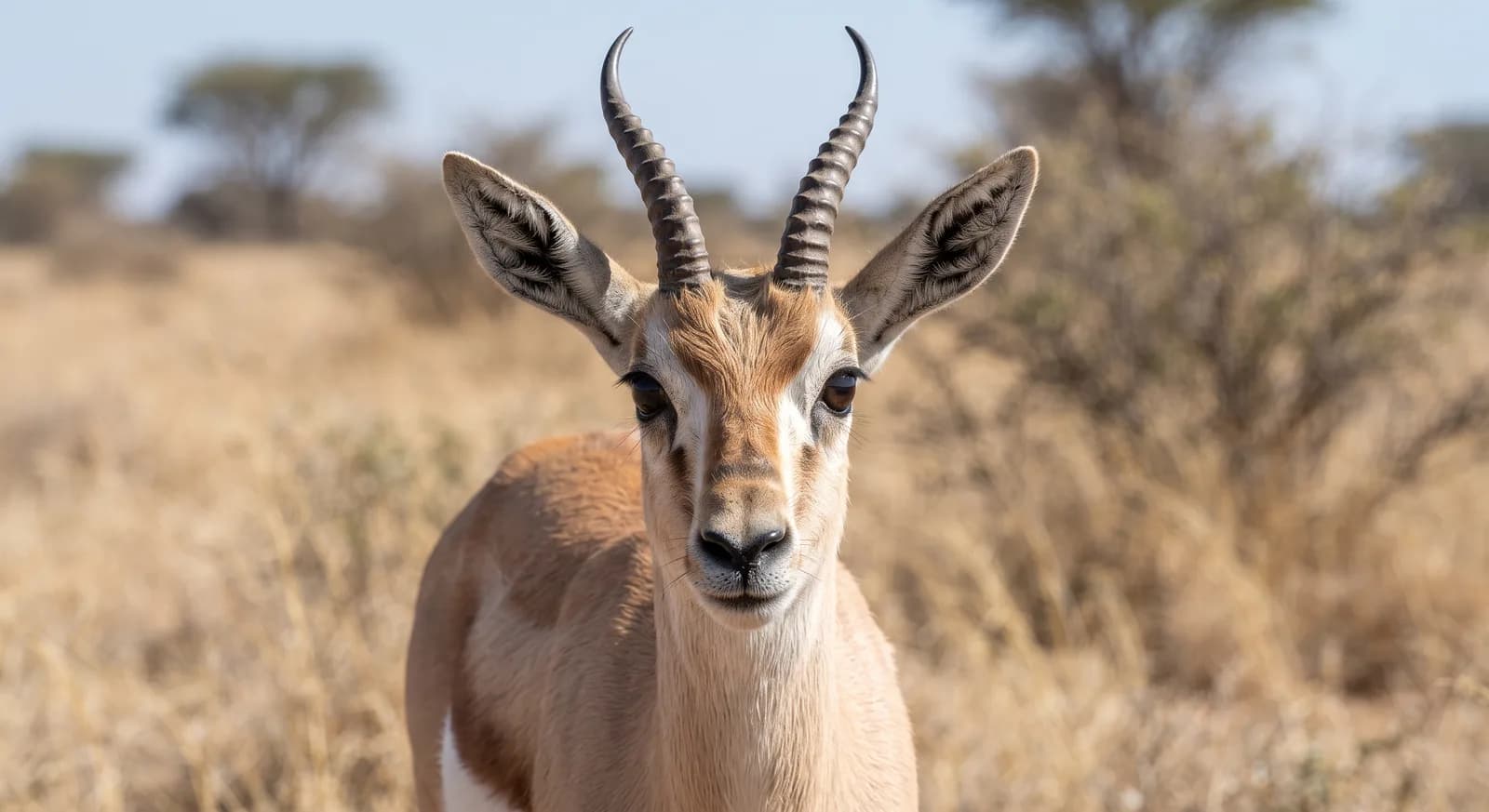
Arabian Sand Gazelle
Gazella marica
 Vulnerable
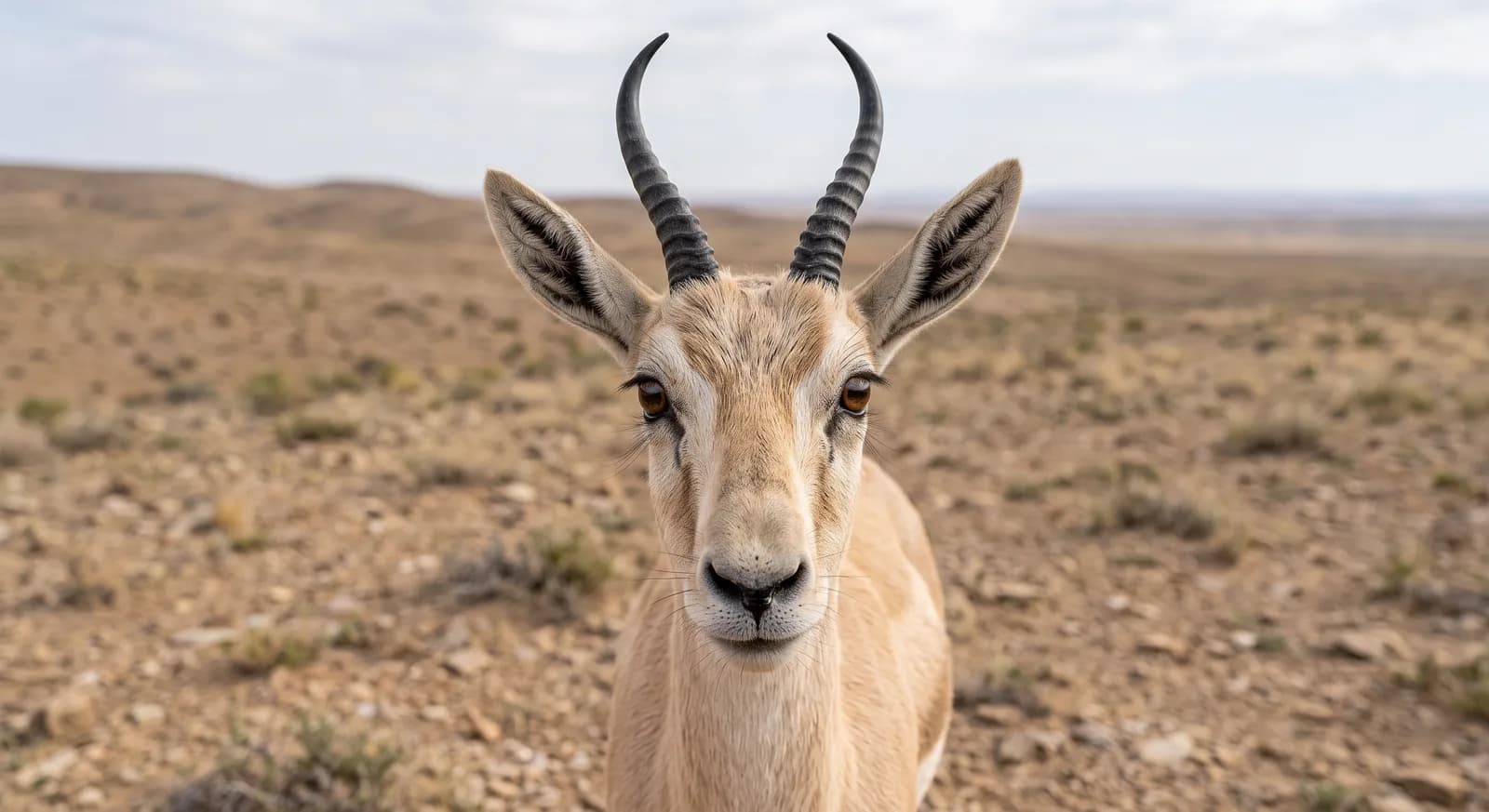
Goitered Gazelle
Gazella subgutturosa
 Vulnerable
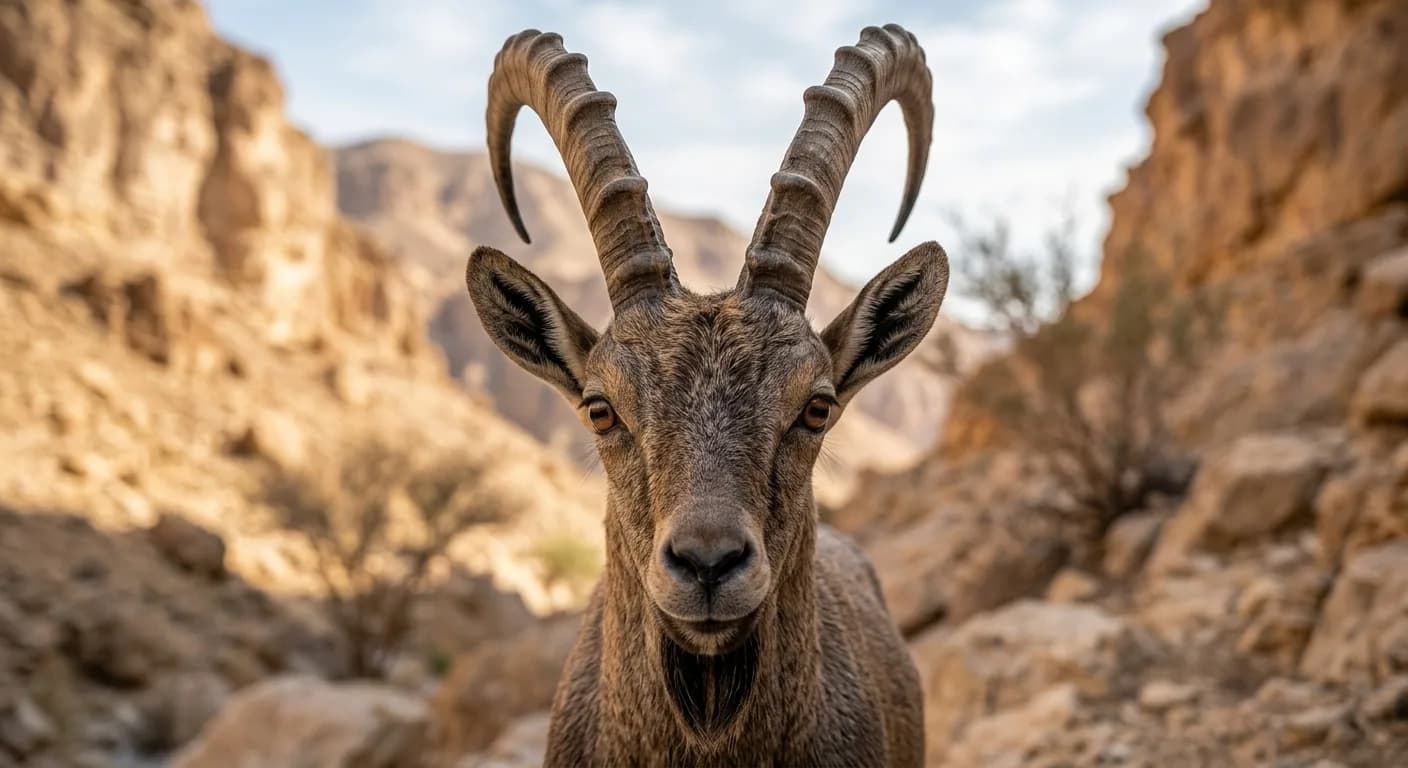
Nubian Ibex
Capra nubiana
 Vulnerable
Dorcas Gazelle
Gazella dorcas
Urial
Ovis vignei
 Vulnerable
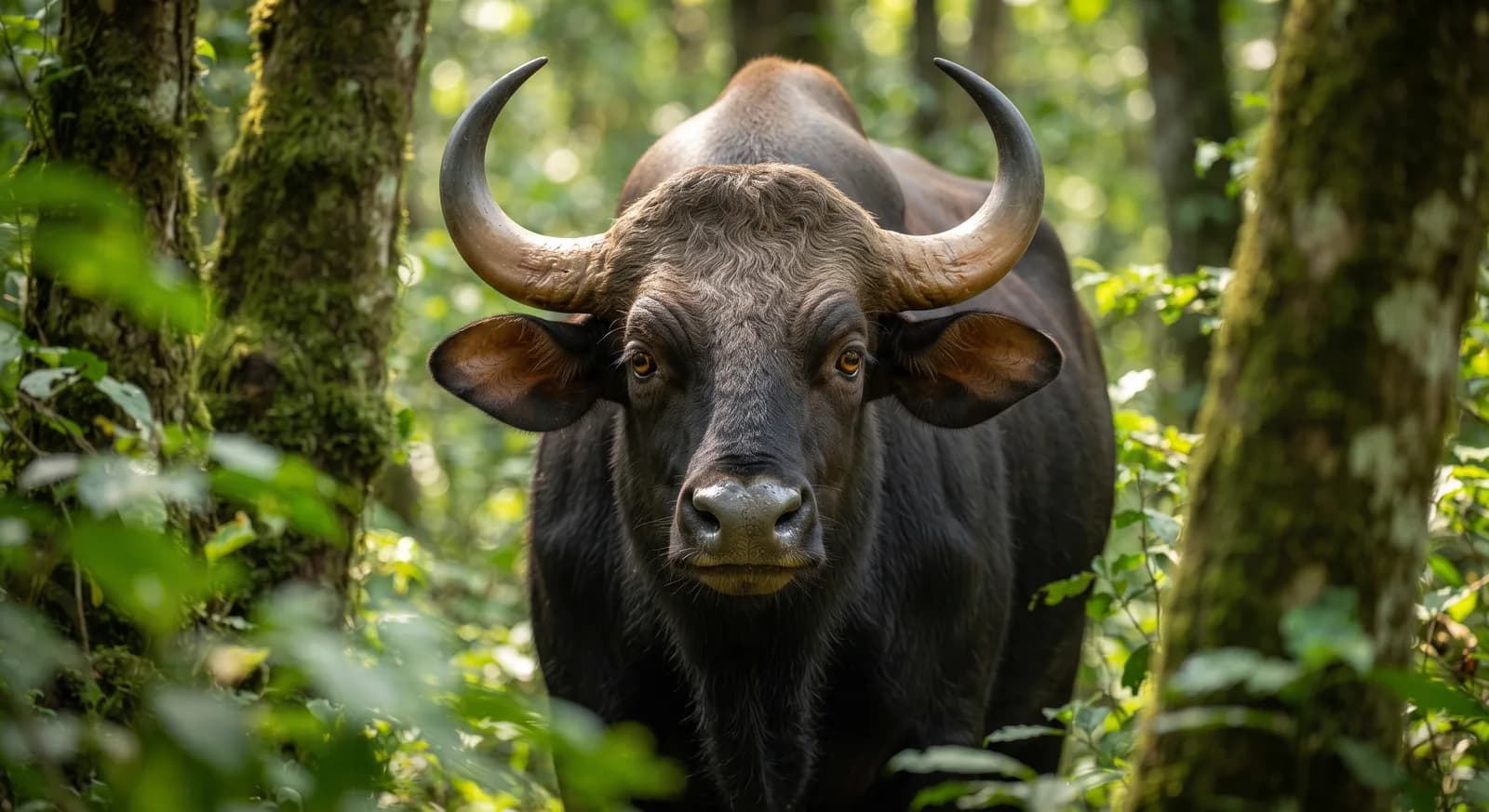
Gaur
Bos gaurus
How to help
The arabian oryx is classified as vulnerable. Organizations such as UICN, WWF y Wildlife Conservation Society work specifically on its conservation and that of its habitat; looking into their programs is a good starting point if you want to get involved.
It's documented in 2 real protected areas — part of why protecting these places matters for its conservation.
Keep exploring
Based on what we already know about arabian oryx.
Comments
Share an experience, a fun fact or a tip for seeing the arabian oryx.
Be the first to comment.