One of Japan's three sacred mountains, a volcano of 2,702 m and a biosphere reserve since 1980.
Area
477 km²
Declared in
1962
Region
East Asia
Climate
Tropical, Templado, Polar / frío
Best time
March to May
Highlight
A sacred volcano with complete altitudinal zonation
Hakusan National Park extends across central Honshu, straddling the prefectures of Ishikawa, Toyama, Gifu and Fukui, on the Sea of Japan side. It was first designated Hakusan Quasi-National Park in 1955 and gained full national park status in 1962. Its centre is Mount Haku, a volcano of 2,702 metres with eight craters near the summit, among them Lake Senjaga, frozen all year round.
Hakusan is the westernmost mountain in Japan with an alpine zone, and that gives it a particular botanical value: it displays a complete altitudinal zonation, from the warm temperate belt to the alpine. The base is covered by coniferous forests dominated by Abies mariesii, pines and Japanese cedar along the Tedori river, followed by deciduous forests of Mongolian oak and Japanese beech, and above them alpine scrub and grassland, with a notable endemic flora at the higher levels.
It is one of the three most sacred mountains in Japan, alongside Fuji and Tateyama, and that status has shaped settlement: around the shrines and temples tied to its cult grew communities of monks and villages that lodged pilgrims and that produced and distributed medicinal herbs and amulets. In 1980 the park's territory, some 480 km², was designated a UNESCO Biosphere Reserve, one of Japan's first four alongside Shiga Kogen, Odaigahara-Omine and Yakushima. The designation was processed by local authorities with hardly any knowledge among residents and remained practically inactive for more than thirty years; it was revived from 2010 with the addition of transition zones, reaching today's 199,329 hectares and some 17,000 inhabitants. The main management concern today is demographic: ageing and the departure of young people to the cities threaten to erase the ways of life tied to natural resources and the traditional cultures of these valleys.
Location
See on the interactive map2 dive sites within 300 km are also shown.
11 species documented in Hakusan
At conservation risk:Salamandra gigante japonesa
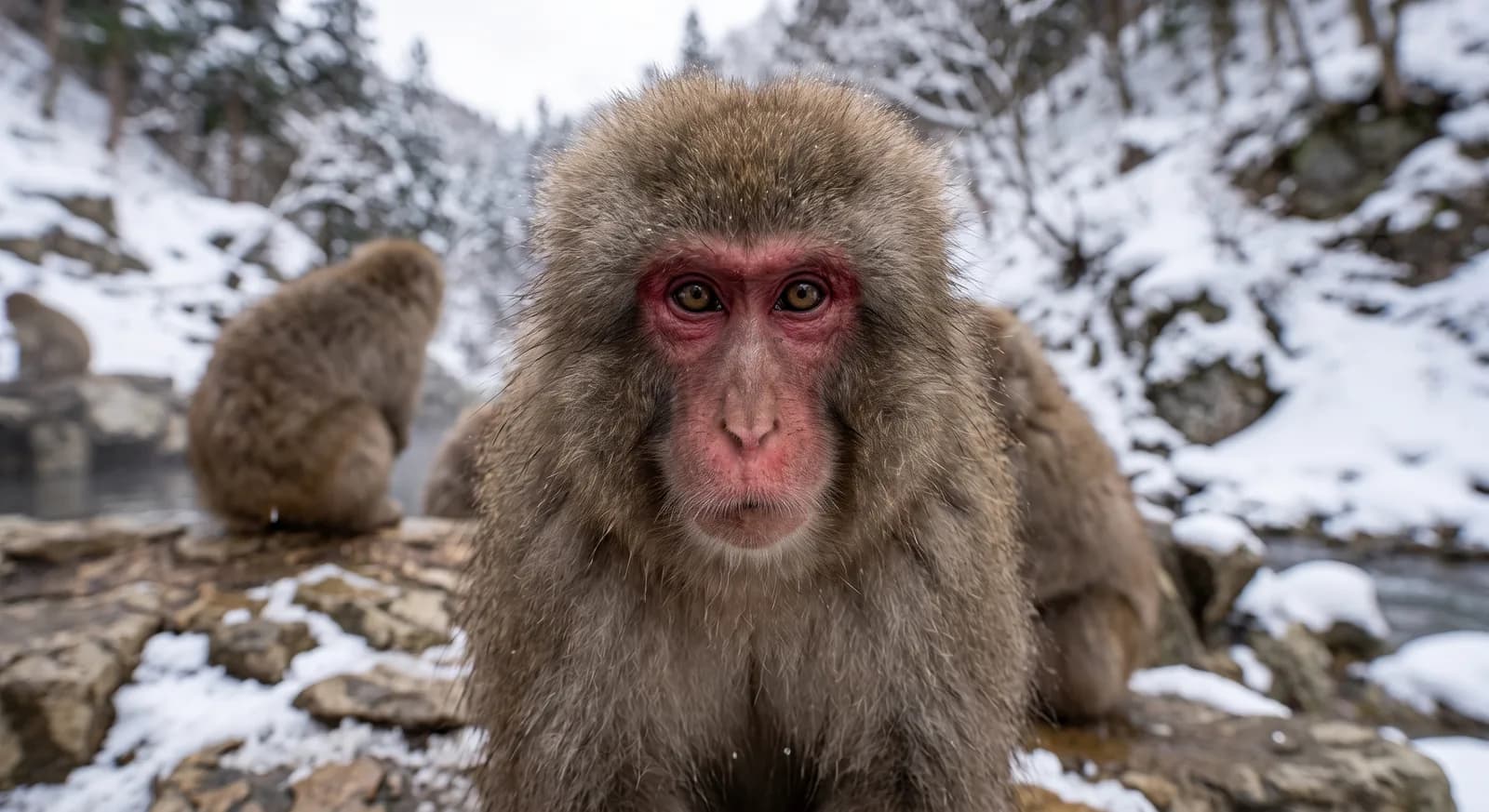
Endemic to Japan:Macaco japonés,Salamandra gigante japonesa,Serow japonés
Águila azor montañesa
Nisaetus nipalensis
Anteojitos japonés
Zosterops japonicus
 Least Concern
Macaco japonés
Macaca fuscata
Pato mandarín
Aix galericulata
Perro mapache
Nyctereutes procyonoides
Ruiseñor japonés
Larvivora akahige
Salamandra de bosque japonesa
Hynobius nigrescens
Salamandra gigante japonesa
Andrias japonicus
Serow japonés
Capricornis crispus
Tejón japonés
Meles anakuma
Tritón de vientre de fuego japonés
Cynops pyrrhogaster
Flora and ecosystems
Ecosystems found in Japan, where Hakusan lies.
Experiences in this park
Nearby dive sites
Where can I dive near here?
Osezaki
225 km away
Sagami Bay
242 km away
Similar parks
Which other parks are like this one?
Chubu-Sangaku
Japan
Rock Ptarmigan · Japanese Serow
Marzo a mayo
View parkMismo país: Japan
Kushiroshitsugen
Japan
Red-crowned Crane · Siberian Salamander
Marzo a mayo
View parkMismo país: Japan
Keep exploring
Based on what we already know about Hakusan.
Your rating
How many stars would you give Hakusan?
Comments
Share your experience visiting Hakusan, or a tip for other travellers.
Be the first to comment.