Birds · Passeriformes · Zosteropidae
Warbling White-eye
Zosterops japonicus
The species is abundant and widely distributed; it faces no significant short-term risk. See full glossary
The warbling white-eye is a tiny olive-green bird with a strongly marked white ring around the eye that gives it its name. It is extremely abundant in Japan, Korea and China, where it visits flowers in search of nectar and insects. Introduced to Hawaii in the 1920s, it has become the most abundant land bird in the archipelago and a serious problem for the native birdlife.
Weight
9 g – 13 g
Size
10 cm – 12 cm
Lifespan
9 years
Diet
Omnivore
Combines animal and plant food depending on availability.
Activity
Diurnal
Active mainly during the day.
Social structure
In pairs
Usually lives in pairs, sometimes for life.
Sighting difficulty
Easy
Fun facts
- It is the most abundant land bird in Hawaii, where it was introduced in the 1920s and from where it has displaced several native species through competition and disease transmission.
- The white-eyes are one of the fastest-diversifying groups of birds: they colonise islands and generate new species at such a rate that they are called the great speciator among birds.
- Its tongue ends in a brush of filaments, an adaptation to nectar that it shares with honeyeaters and sunbirds without being related to them.
Life cycle & biology
- Skeleton type
- Vertebrate - internal bony skeleton (bird)
- Habitat & environment
- Woodland, scrub, orchards, parks and gardens of East Asia and of the islands where it has been introduced
- Size at birth
- Altricial: born blind, naked or with sparse down and entirely dependent
- Sexual maturity
- 12 months
- Gestation / incubation
- 11 days
- Litter / clutch size
- 3.5 (average)
Sources consulted: https://es.wikipedia.org/wiki/Zosterops_japonicus
Where to find it
See its range on the interactive mapBest time: All year round in Japan, Korea and China, by day; in winter it forms flocks that work their way through flowering trees and feeders.
Where to watch it
Parques y spots de buceo donde se ha documentado esta especie — se muestran 10 de 28 documentados.
Related species
Other species in the catalogue with the most in common with Warbling White-eye — same habitat, park, country, tags or family.
Common Myna
Acridotheres tristis
Mountain Hawk-Eagle
Nisaetus nipalensis
Oriental Fire-bellied Toad
Bombina orientalis
Raccoon Dog
Nyctereutes procyonoides
 Least Concern
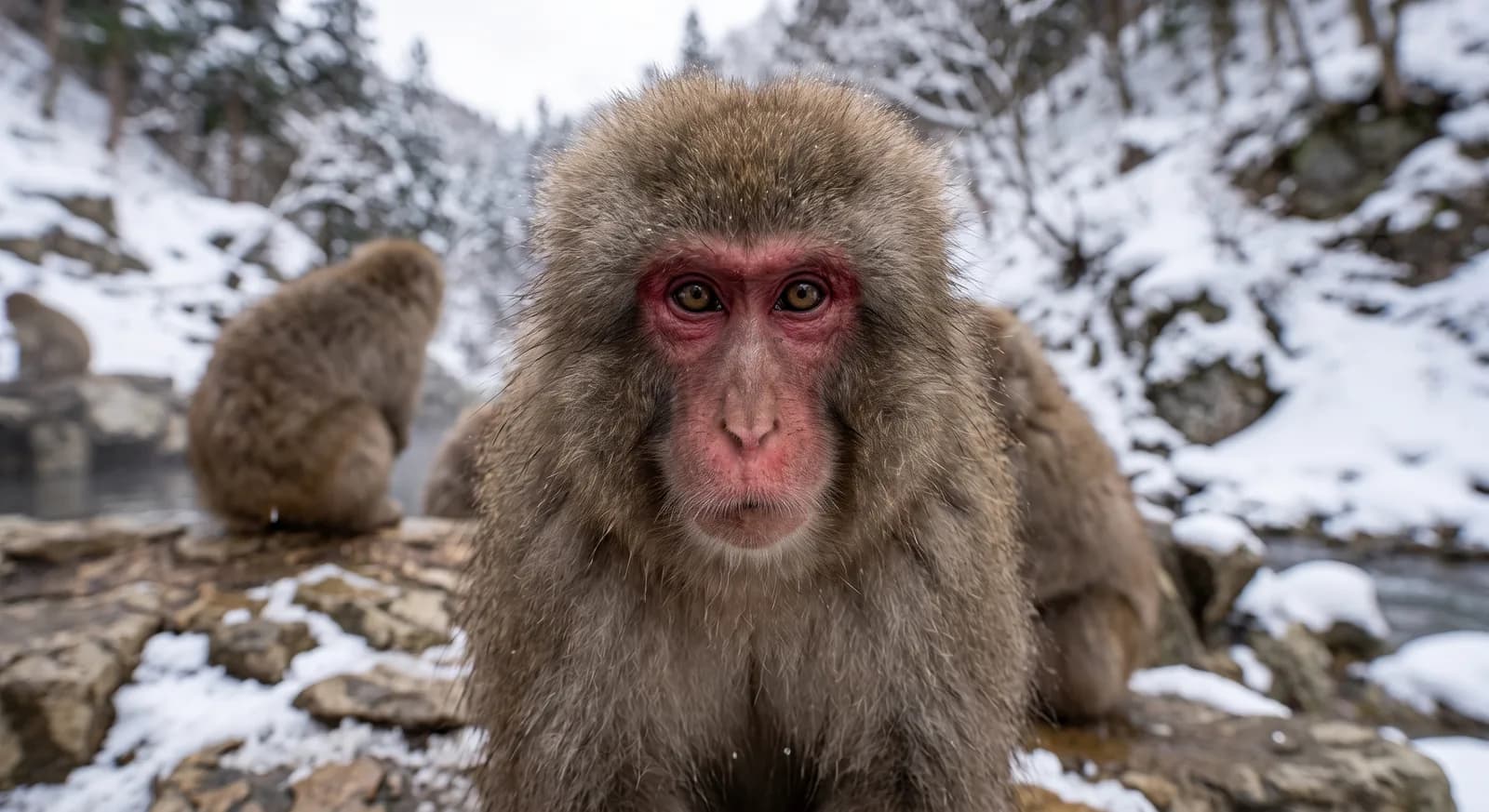
Japanese Macaque
Macaca fuscata
Horned Puffin
Fratercula corniculata
Keep exploring
Based on what we already know about warbling white-eye.
Comments
Share an experience, a fun fact or a tip for seeing the warbling white-eye.
Be the first to comment.