The Northern Japanese Alps: the Hida massif, with Kamikōchi, Mount Yari and the Tateyama-Kurobe alpine route.
Area
1,743 km²
Declared in
1934
Region
East Asia
Climate
Tropical, Templado, Polar / frío
Best time
March to May
Highlight
High mountains of the Northern Japanese Alps
Chubu-Sangaku was declared in 1934, in the first group of Japanese national parks, and protects the Hida massif, known internationally as the Northern Japan Alps. It is shared between the prefectures of Nagano, Gifu, Toyama and Niigata, and concentrates the greatest density of peaks above 3,000 metres in Japan, among them Hotaka, Yari with its characteristic spear silhouette, Tateyama and Norikura.
Its most famous gateway is Kamikochi, a flat-bottomed valley at about 1,500 metres crossed by the clear waters of the Azusa River, with the Kappa Bridge and the larches and birches reflecting the walls of Hotaka. Access by private vehicle has been banned for decades, a pioneering visitor-management measure in Japan. In the northern sector runs the Tateyama-Kurobe Alpine Route, an itinerary combining cable cars, funiculars and buses to cross the range, and which in spring passes between walls of snow more than ten metres high.
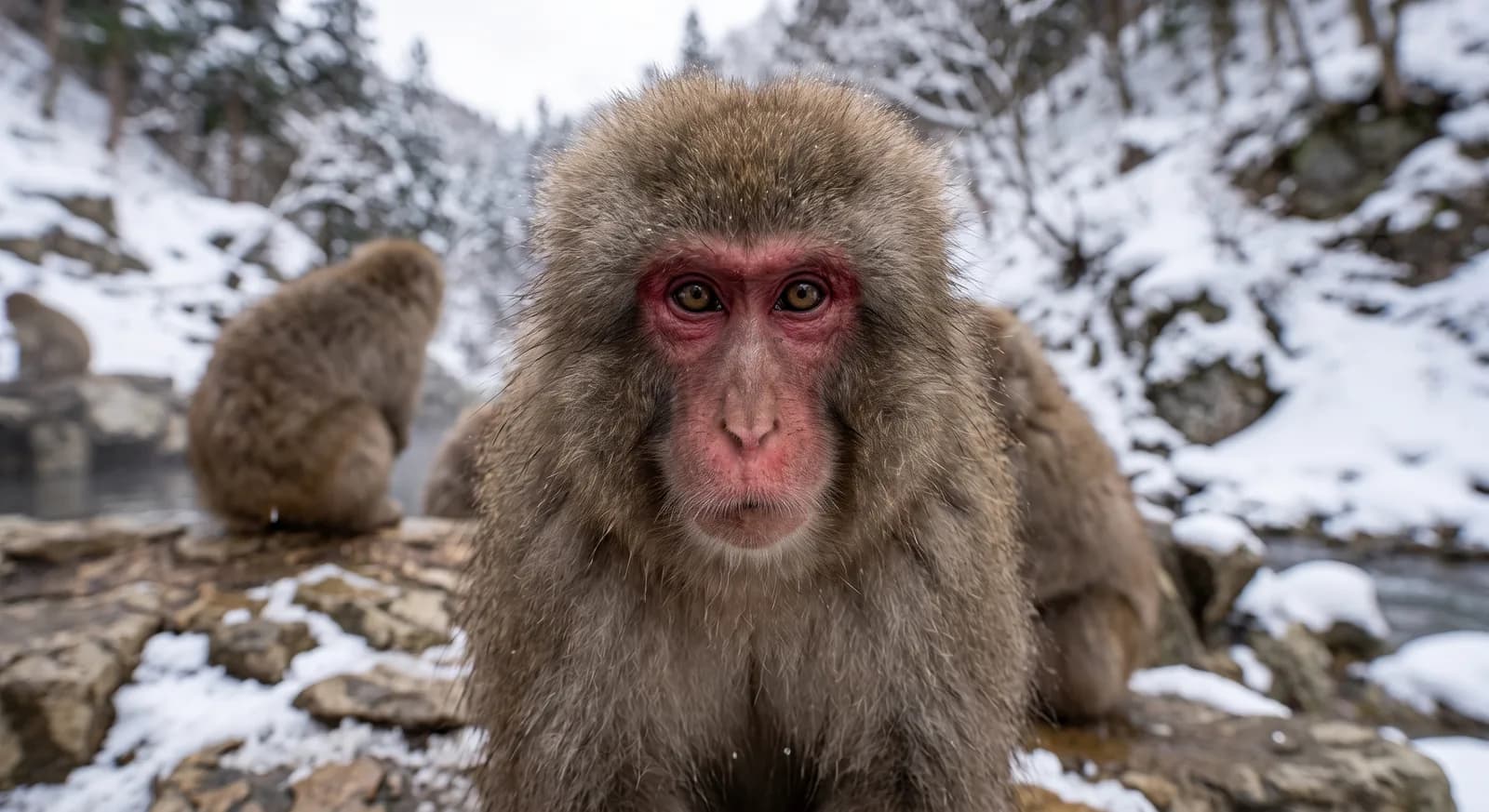
The landscape is glaciated high mountain, with cirques, moraines and some of the very few glaciers recognised in Japan. The vegetation is tiered from the beech and mixed forests of the valleys up to the alpine scrub of dwarf pine, and on the summits lives the rock ptarmigan, a bird protected as a Special Natural Monument whose Japanese population has been isolated since the last glaciation and is especially vulnerable to warming. It is joined by the Japanese serow, the macaque and the black bear. Mountaineering has its Japanese epicentre here, with a highly developed network of mountain huts.
Location
See on the interactive map2 dive sites within 300 km are also shown.
10 species documented in Chubu-Sangaku
At conservation risk:Salamandra gigante japonesa
Endemic to Japan:Macaco japonés,Salamandra gigante japonesa,Serow japonés
Águila azor montañesa
Nisaetus nipalensis
Anteojitos japonés
Zosterops japonicus
 Least Concern
Macaco japonés
Macaca fuscata
Perro mapache
Nyctereutes procyonoides
Ruiseñor japonés
Larvivora akahige
Salamandra de bosque japonesa
Hynobius nigrescens
Salamandra gigante japonesa
Andrias japonicus
Serow japonés
Capricornis crispus
Tejón japonés
Meles anakuma
Tritón de vientre de fuego japonés
Cynops pyrrhogaster
Flora and ecosystems
Ecosystems found in Japan, where Chubu-Sangaku lies.
Experiences in this park
Nearby dive sites
Where can I dive near here?
Osezaki
180 km away
Sagami Bay
186 km away
Similar parks
Which other parks are like this one?
Keep exploring
Based on what we already know about Chubu-Sangaku.
Your rating
How many stars would you give Chubu-Sangaku?
Comments
Share your experience visiting Chubu-Sangaku, or a tip for other travellers.
Be the first to comment.