National Park
White Desert
Egypt
 Egypt
Dorcas Gazelle · Fennec Fox
October to April
See parkThe site that documents how whales stopped walking: fossil cetaceans with hind limbs in the middle of the desert.
Area
200 km²
Designated in
2005
Region
North Africa
An Eocene archaeocete site with preserved hind limbs
Wadi Al-Hitan, the Valley of the Whales, was inscribed on the World Heritage List in 2005 and covers some 200 km² in the Egyptian Western Desert, within the Wadi El Rayan Protected Area, in Fayum governorate, some hundred and fifty kilometres south-west of Cairo.
Its value is palaeontological and hard to match. Some forty million years ago, in the Eocene, the area was the floor of the Tethys Sea, and hundreds of skeletons of archaeocetes, the primitive whales, were buried in its sediments. What is exceptional is that many retain recognisable hind limbs: reduced but still present back legs, which directly document the passage from a four-legged land mammal to a fully marine cetacean. It is one of the major evolutionary transitions in the fossil record and here it can be read in sequence.
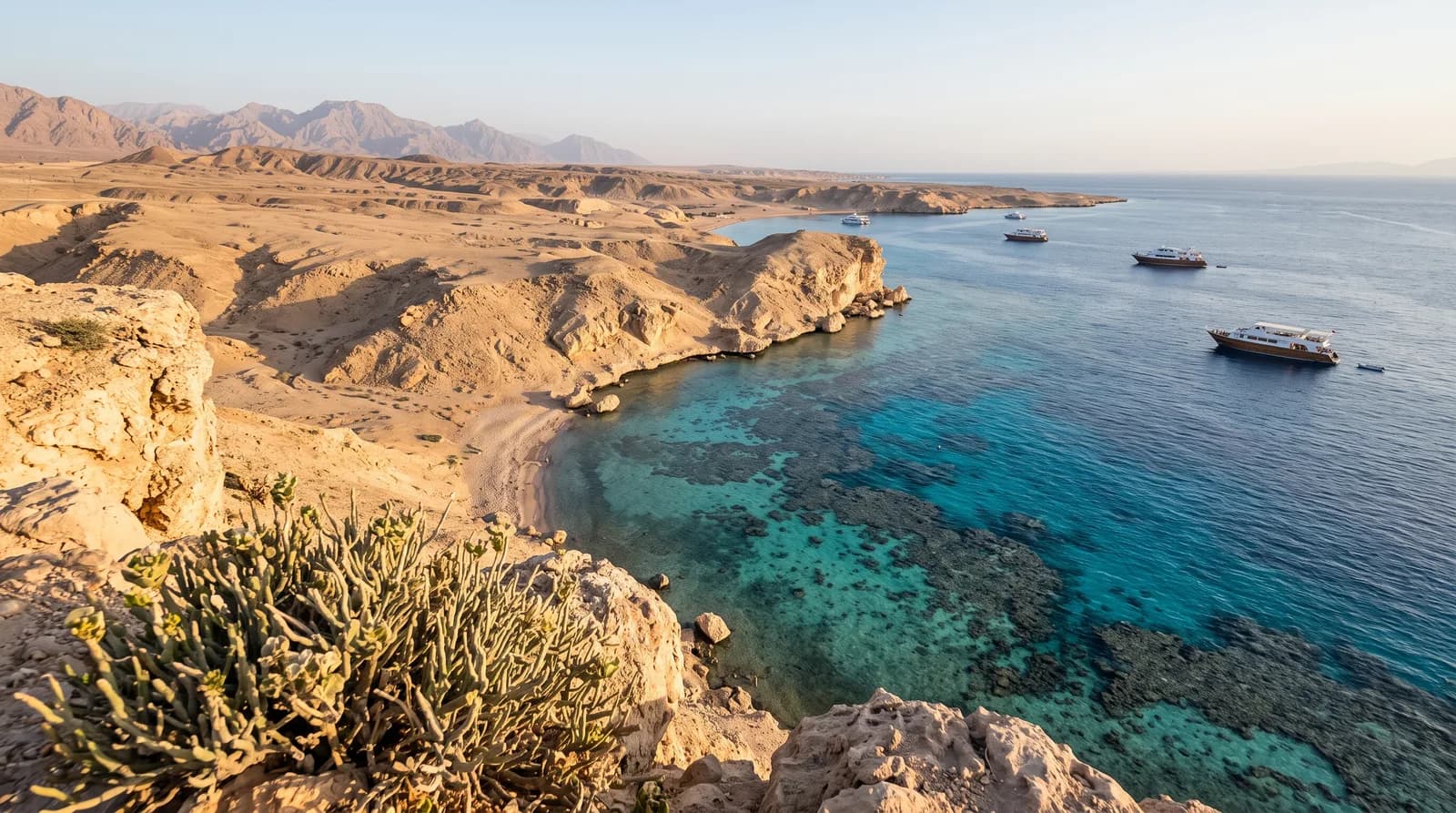
The fossils lie at the surface or very close to it, in a landscape of badlands, eroded hills and wind-sculpted sandstone formations, and many have been left in situ so that they can be seen in their geological context. Among the genera represented are Basilosaurus, up to eighteen metres long, and Dorudon. The site also contains fossils of sirenians, turtles, crocodiles and sharks that reconstruct the complete marine ecosystem of that vanished sea.
Ecosystems found in Egypt, where Whale Valley (Wadi Al-Hitan) lies.
Which other parks are like this one?
Same country: Egypt
Same country: Egypt
Same country: Egypt
Same country: Egypt
Based on what we already know about this park.
Climate
Arid / desert, Mediterranean
Best season
October to April