Skip to content
WAnimals
  • Map
  • Species
  • Parks
  • Diving
Log inCreate account
WAnimals

The guide for travellers and animal lovers: discover, plan and share your wild adventures around the world.

Discover wildlife

  • Species
  • Ecosystems
  • Glossary
  • Tags

Explore places

  • Map
  • Countries
  • Parks
  • Diving

Plan experiences

  • Guides

Learn

  • Blog

Resources

  • Help centre
  • Contact
  • Install the app

Follow us

Account

  • Log in
  • Create account

© 2026 WAnimals. All rights reserved.

About usHow we build our profilesTerms of servicePrivacyLegal notice
MapSpeciesParksDiving
  1. Home
  2. Species
  3. Atlantic Canary

Birds · Passeriformes · Fringillidae

Atlantic Canary

Serinus canaria

Least Concern

The species is abundant and widely distributed; it faces no significant short-term risk.

Spotted something wrong?

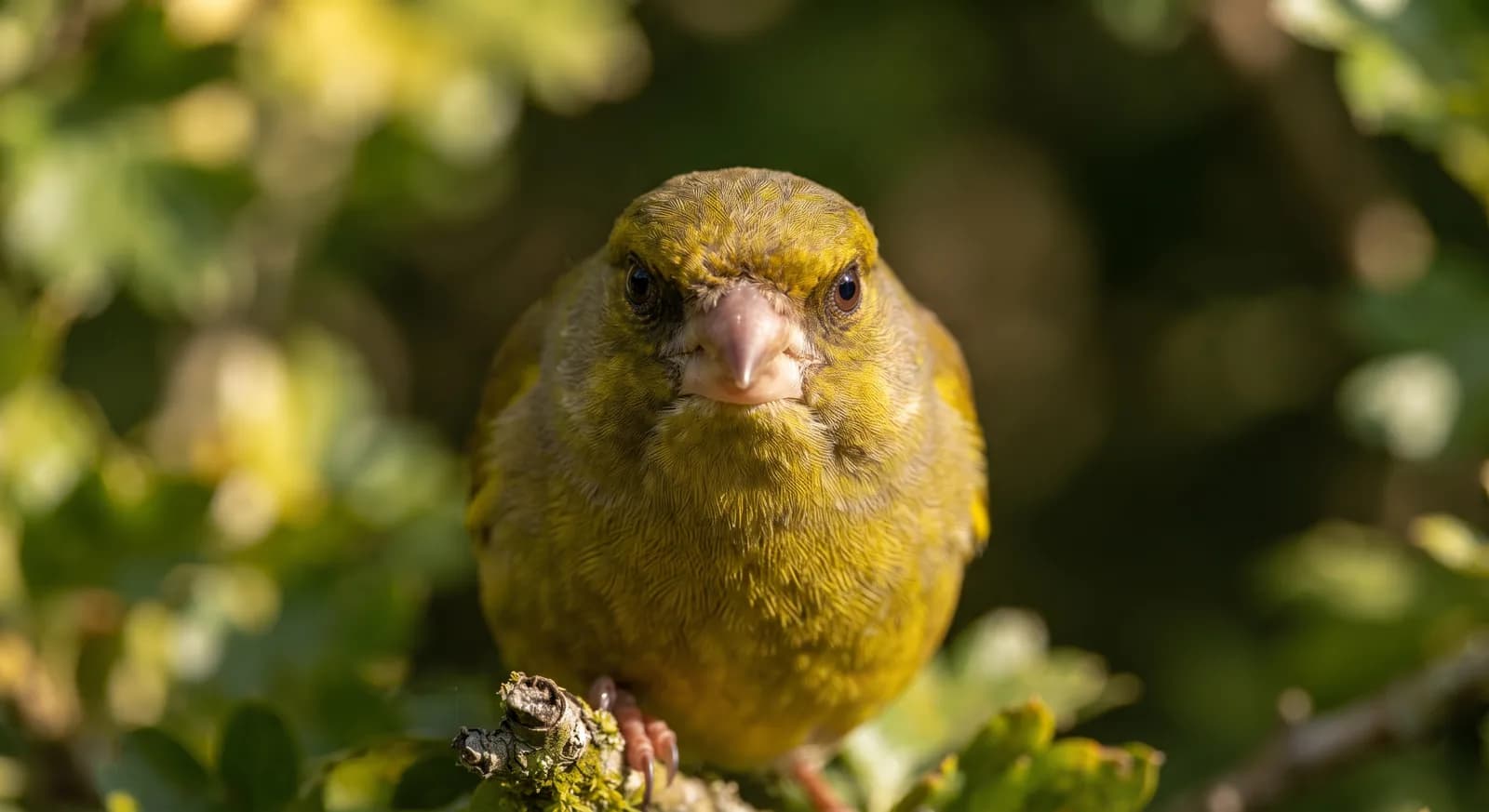
A small finch with mostly yellowish-green plumage and brown streaking on the back. It is the wild ancestor of the domestic canary, from which countless colour varieties have been bred, but the wild bird is far more subdued than caged birds.

Weight

24 g on average

Size

10 cm – 12 cm

Diet

Herbivore

Feeds mainly on plants.

Activity

Diurnal

Active mainly during the day.

Sighting difficulty

Easy

Estimated population

Between 3,000,000 and 5,050,000 mature individuals, with 1,500,000-2,520,000 breeding pairs

Temperate forest
2countries4parks13same family

Fun facts

  • fisiologíaThe males learn new song phrases each breeding season, and their brains grow fresh neurons for vocal learning every year, which is unusual in an adult vertebrate.
  • historia naturalIt was domesticated from a wild species of the Canary Islands, and the colour canary yellow is named after the bird, not the other way round.
  • It is the natural symbol of the Canary Islands, along with the Canary Island date palm.
  • Its name comes not from the colour yellow but from the islands, and they in turn from the Latin canis, dog, after the large dogs that according to Pliny lived there.
  • The domestic form is recognised as a subspecies in its own right, Serinus canaria domestica, distinct from the wild Canarian bird.

Life cycle and biology

Skeleton type
Vertebrate - internal bony skeleton (bird)
Habitat and environment
Endemic to Macaronesia: the Canary Islands, the Azores and Madeira, where it occupies varied settings from sea level to the mountains
Gestation / incubation
13-14 days of incubation, by the female alone
Litter / clutch size
3-4 eggs, occasionally 5, with 2-3 clutches a year
Life expectancy in captivity
Up to 24 years in captivity

Sources consulted: IUCN Red List; Wikipedia (Atlantic canary); Birding Canarias; Linnaeus 1758

Where to find it

Best time: All year round in the Canary Islands, the Azores and Madeira

Loading map…

The pins mark the parks where its presence is documented.

Where to see it

Parks and dive sites where this species has been documented.

Related species

Other species in the catalogue with the most in common with Atlantic Canary — same habitat, park, country, tags or family.

Same taxonomic family

Keep exploring

Based on what we already know about atlantic canary.

Comments

Share an experience, a fun fact or a tip for seeing the atlantic canary.

Be the first to comment.

See full glossary
This page in other languages: Español · Deutsch · Français · Português · Italiano
See its range on the interactive map→
TeideSpain
GarajonaySpain
Caldera de TaburienteSpain
MadeiraPortugal
Least Concern

Common Chaffinch

Fringilla coelebs

Blue ChaffinchNot Evaluated

Blue Chaffinch

Fringilla teydea

Trumpeter FinchLeast Concern

Trumpeter Finch

Bucanetes githagineus

Least Concern

Red Crossbill

Loxia curvirostra

Least Concern

Eurasian Siskin

Spinus spinus

European GreenfinchLeast Concern

European Greenfinch

Chloris chloris

CountriesSpain
ParksTeideSpain
TagsHerbivore
Herbivore
Diurnal
Bird
Temperate forest
Spain
Portugal