Birds · Passeriformes · Fringillidae
Chloris chloris
The species is abundant and widely distributed; it faces no significant short-term risk.
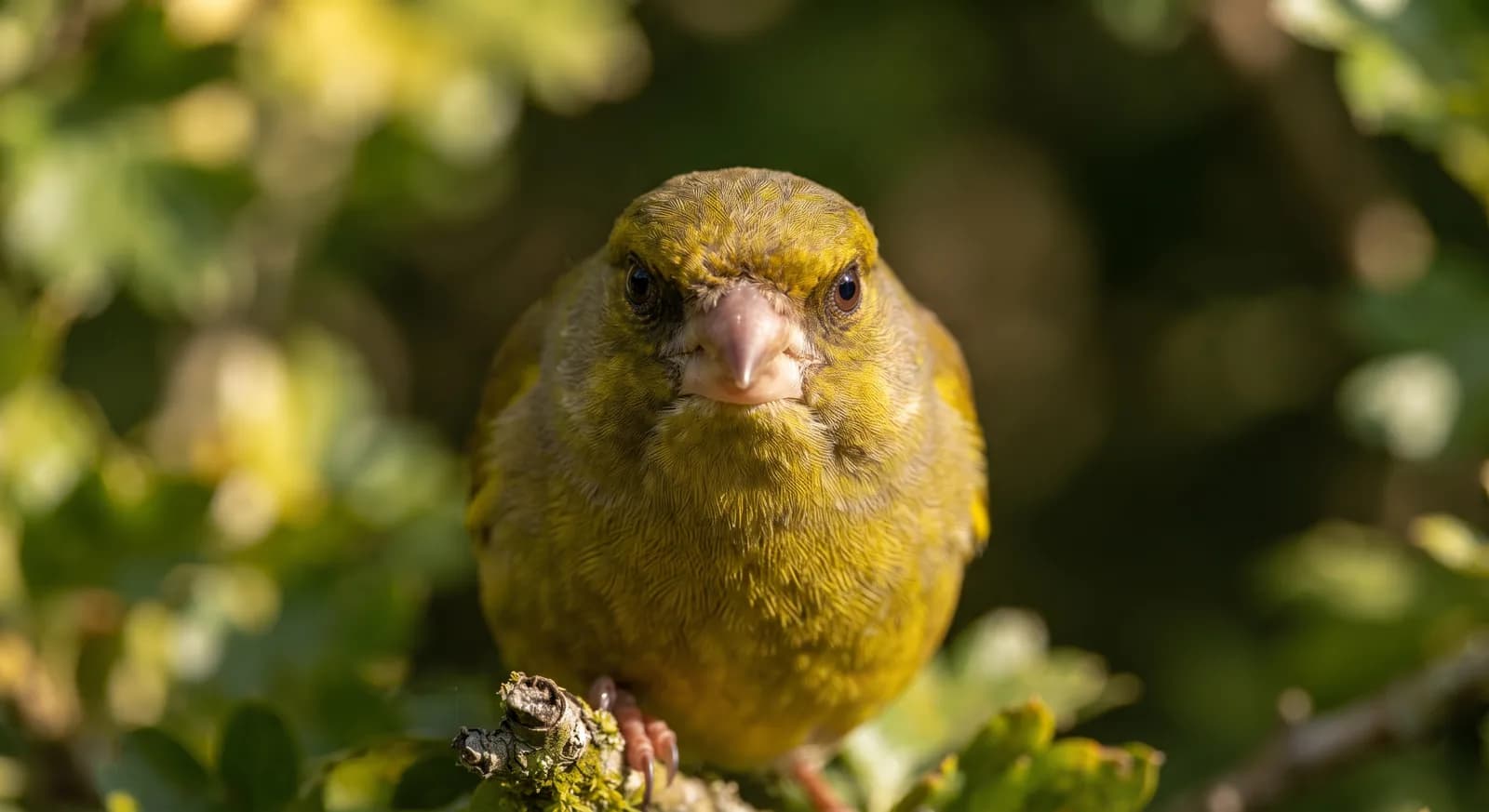
A robust finch that recalls a sparrow but is emerald green, with a large head and a broad, strong bill. It shows very visible yellow patches on the shoulder, the flight feathers and the sides of the tail. The female is noticeably duller.
Weight
25 g – 30 g
Size
14 cm – 16 cm
Life expectancy
3 years
Diet
Herbivore
Feeds mainly on plants.
Activity
Diurnal
Active mainly during the day.
Social structure
Colony
Lives in large concentrations, often for breeding reasons.
Sighting difficulty
Easy
Estimated population
Between 41.5 and 64.4 million mature individuals in Europe. The Spanish census counted 6,293,125 greenfinches between 2014 and 2018, with Castile and León, Andalusia and Castile-La Mancha accounting for around 51 %
AI-generated images: illustrations, not photographs.
Sources consulted: SEO/BirdLife (ficha y III Atlas de las aves en época de reproducción en España); IUCN Red List; Asturnatura; Cano-Barbacil y Cano 2022, III Atlas; estudio de 14 temporadas en los naranjales de Sagunto (Ardeola)
Best time: All year round; in spring and summer it sings from wires and high branches, and in winter it forms flocks
Parks and dive sites where this species has been documented — showing 10 of 261.
Other species in the catalogue with the most in common with European Greenfinch — same habitat, park, country, tags or family.
Based on what we already know about european greenfinch.
Share an experience, a fun fact or a tip for seeing the european greenfinch.
Be the first to comment.
The pins mark the parks where its presence is documented.