One of the 3 bullfinches on WAnimals

Birds · Passeriformes · Fringillidae
Bucanetes githagineus
The species is abundant and widely distributed; it faces no significant short-term risk.
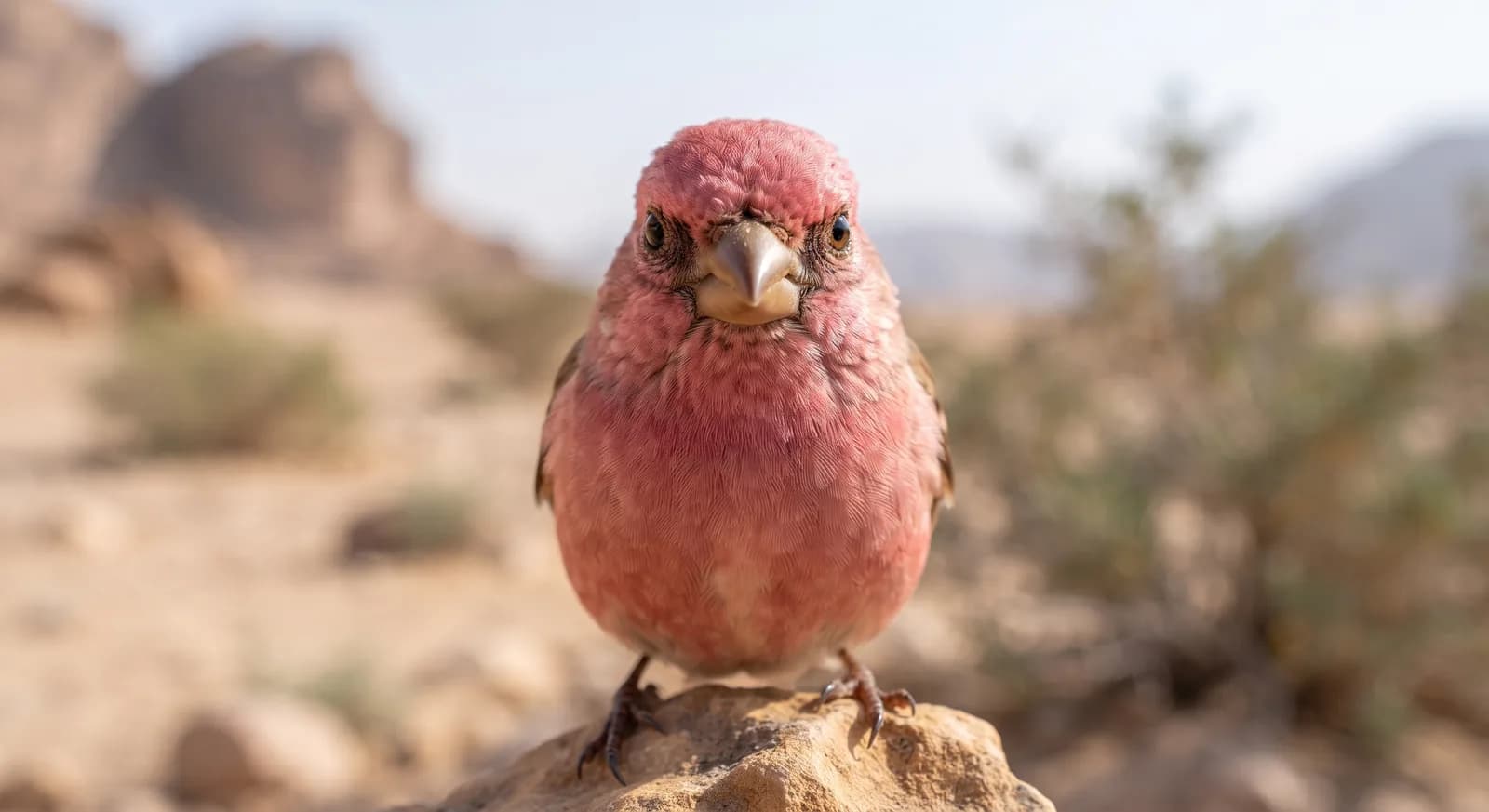
A small, stocky finch with a large head and long wings, and a short, thick pinkish-orange bill perfectly suited to cracking hard seeds. The plumage is a uniform grey in both sexes outside the breeding season; in spring adult males take on orange or pink tones on the bill, wings, tail and belly.
Weight
22 g on average
Size
12 cm on average
Life expectancy
2 years
Diet
Herbivore
Feeds mainly on plants.
Activity
Diurnal
Active mainly during the day.
Social structure
In pairs
Usually lives in pairs, sometimes for life.
Sighting difficulty
Easy
Estimated population
21,300-44,000 individuals according to the 2021 European Red List of Birds, all of them in Spain
AI-generated images: illustrations, not photographs.
Sources consulted: IUCN Red List; SEO/BirdLife (ficha y III Atlas: Barrientos 2022); Lista Roja Europea de Aves 2021; Carrillo 2007 (tesis doctoral, Universidad de Almería); Pérez-Contreras y Fernández-Ordóñez 2006, Acta Granatense 4; Ruiz y López 2015, Quercus 354; López-Iborra et al. 2006; Oiseaux.net; Lichtenstein 1823
Best time: Spring, when the males take on their orange plumage and sing; it is resident but very mobile outside the breeding season
The pins mark the parks where its presence is documented.
Parks and dive sites where this species has been documented — showing 10 of 19.
Other species in the catalogue with the most in common with Trumpeter Finch — same habitat, park, country, tags or family.
Based on what we already know about trumpeter finch.
Share an experience, a fun fact or a tip for seeing the trumpeter finch.
Be the first to comment.