 Least Concern
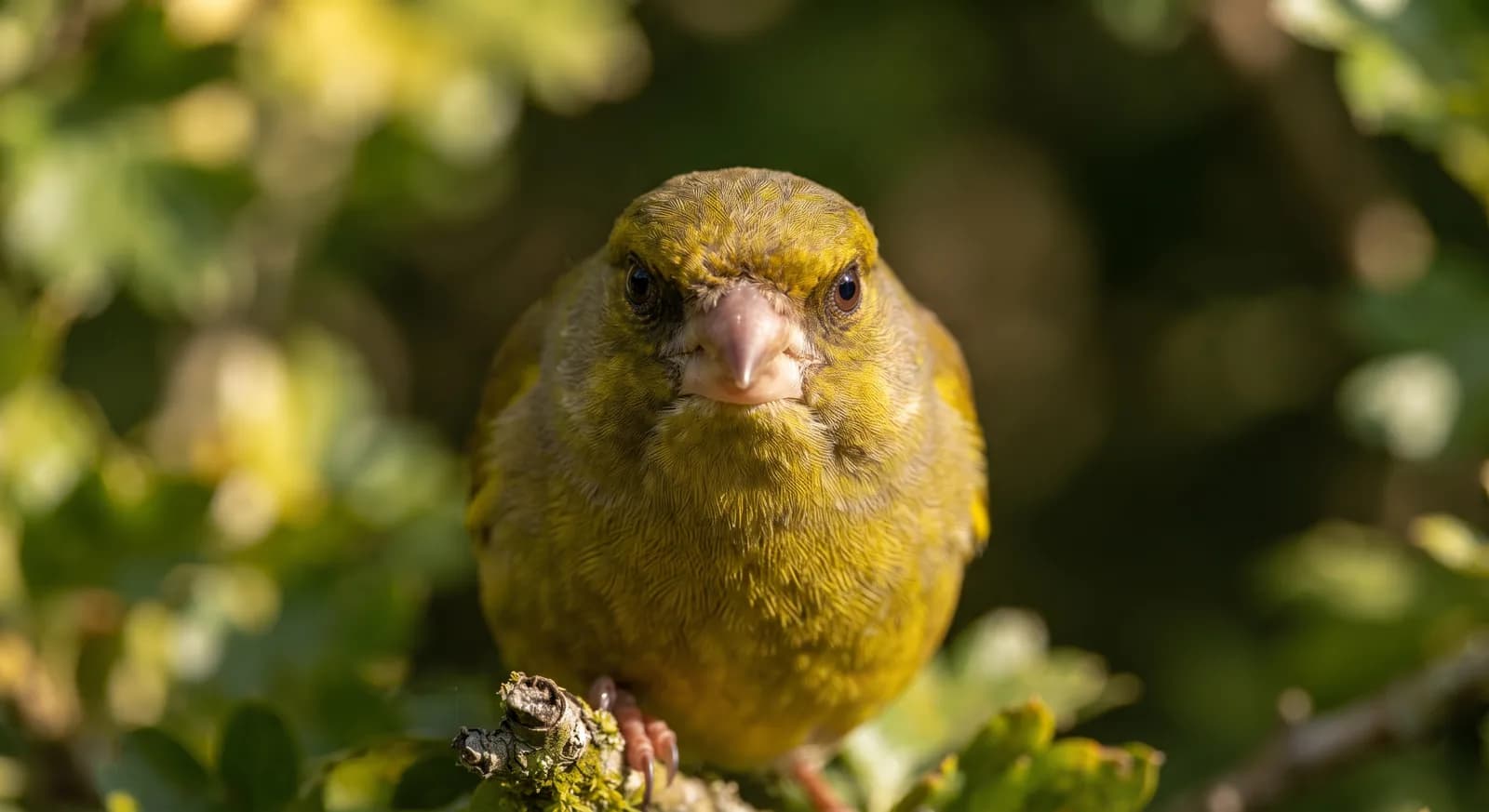
European Greenfinch
Chloris chloris
One of the 3 bullfinches on WAnimals
Birds · Passeriformes · Fringillidae
Pyrrhula pyrrhula
The species is abundant and widely distributed; it faces no significant short-term risk.
A stout, rounded finch, almost neckless, with a short, broad, very robust black bill. It has a black cap, a blue-grey back, a white rump and black wings and tail with a pale wing bar. The male has an intensely orange-red breast and cheeks; the female's are a dull brown.
Weight
20 g – 22 g
Size
14.5 cm – 17.5 cm
Life expectancy
3 years
Diet
Omnivore
Combines animal and plant food depending on availability.
Activity
Diurnal
Active mainly during the day.
Social structure
In pairs
Usually lives in pairs, sometimes for life.
Sighting difficulty
Easy
Estimated population
Between 15 and 28 million individuals in Europe
Sources consulted: SEO/BirdLife (ficha y III Atlas de las aves en época de reproducción en España); IUCN Red List; Asturnatura; Belamendia 2022, III Atlas; Noval 1971, Ardeola (volumen especial); Carrascal y Palomino 2008; Clement y Christie 2013, Handbook of the Birds of the World Alive; De Juana y García 2015
Best time: All year round on the Cantabrian coast; in winter it moves down to lower ground and spreads over almost the whole peninsula
Parks and dive sites where this species has been documented — showing 10 of 225.
Other species in the catalogue with the most in common with Eurasian Bullfinch — same habitat, park, country, tags or family.
Based on what we already know about eurasian bullfinch.
Share an experience, a fun fact or a tip for seeing the eurasian bullfinch.
Be the first to comment.
The pins mark the parks where its presence is documented.