 Least Concern
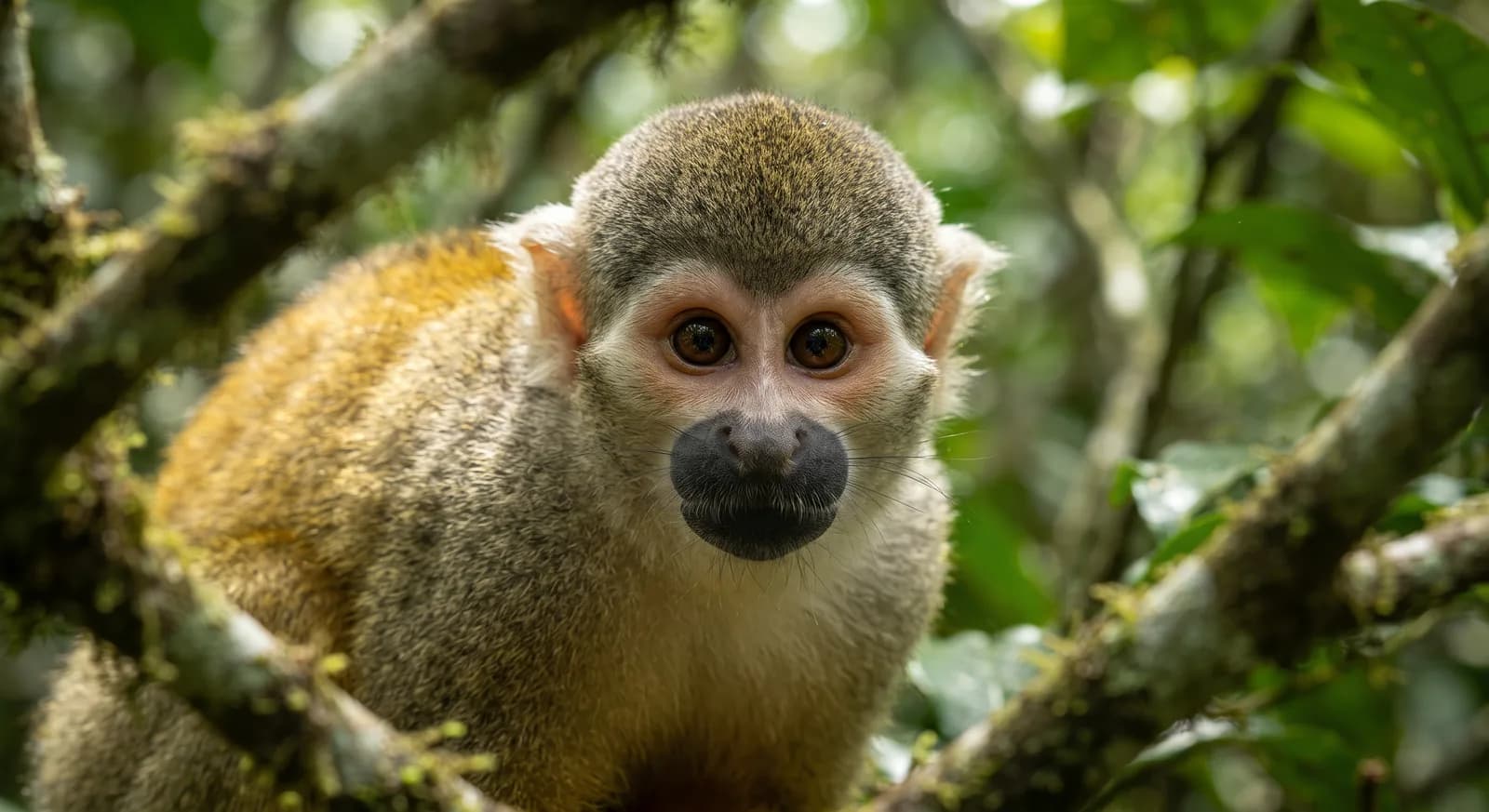
Guianan Squirrel Monkey
Saimiri sciureus
One of the 18 monkeys on WAnimals
Mammals · Primates · Cebidae
Saimiri boliviensis
The species is abundant and widely distributed; it faces no significant short-term risk.
It has the largest brain-to-body mass ratio of any primate, greater even than the great apes in proportional terms. It practises aunting, in which other females in the troop help raise the infants.
Weight
365 g – 1.1 kg
Size
22.5 cm – 37 cm
Life expectancy
17 years
Diet
Omnivore
Combines animal and plant food depending on availability.
Activity
Diurnal
Active mainly during the day.
Social structure
Family group
Lives in small family groups with close bonds.
Sources consulted: AnAge · Animal Diversity Web · Animalia.bio · New England Primate Conservancy · PMC · Dublin Zoo · The Animal Facts
Best time: All year round in the Amazonia of Bolivia, Peru and Brazil, by day; it moves in large, noisy troops through the midstorey.
The pins mark the parks where its presence is documented.
Parks and dive sites where this species has been documented.
Other species in the catalogue with the most in common with Bolivian Squirrel Monkey — same habitat, park, country, tags or family.
Based on what we already know about bolivian squirrel monkey.