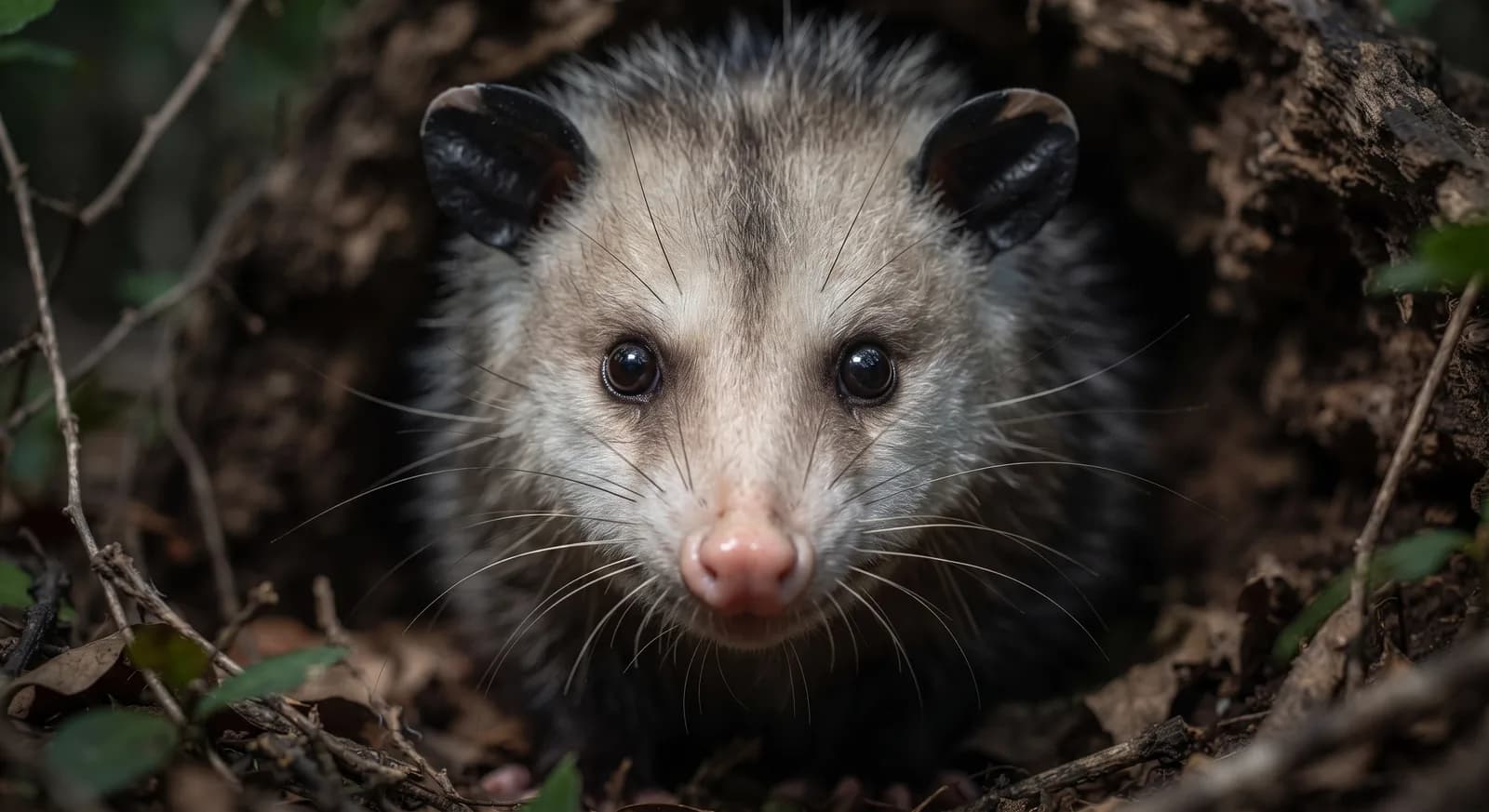
 Least Concern
Virginia Opossum
Didelphis virginiana
One of the 2 skunks on WAnimals
Mammals · Carnivora · Mephitidae
Spilogale putorius
The species is abundant and widely distributed; it faces no significant short-term risk.
Before spraying, it gives a striking acrobatic warning: it stands on its front paws in an inverted V to intimidate the predator.
Weight
200 g – 1.8 kg
Size
11.5 cm – 34.5 cm
Life expectancy
5 years
Diet
Omnivore
Combines animal and plant food depending on availability.
Activity
Nocturnal
Active mainly at night.
Social structure
Solitary
Lives and hunts alone, joining others only to breed.
Sources consulted: AnAge · Animal Diversity Web · Animalia.bio · Wikipedia · Texas Tech Mammals of Texas · Florida Wildlife Trappers
Best time: All year round in the eastern United States, at night; if it feels threatened it does a handstand on its front legs before spraying.
The pins mark the parks where its presence is documented.
Parks and dive sites where this species has been documented.
Other species in the catalogue with the most in common with Eastern Spotted Skunk — same habitat, park, country, tags or family.
Based on what we already know about eastern spotted skunk.