Skip to content
WAnimals
  • Map
  • Species
  • Parks
  • Diving
Log inCreate account
WAnimals

The guide for travellers and animal lovers: discover, plan and share your wild adventures around the world.

Discover wildlife

  • Species
  • Ecosystems
  • Glossary
  • Tags

Explore places

  • Map
  • Countries
  • Parks
  • Diving

Plan experiences

  • Guides

Learn

  • Blog

Resources

  • Help centre
  • Contact
  • Install the app

Follow us

Account

  • Log in
  • Create account

© 2026 WAnimals. All rights reserved.

About usHow we build our profilesTerms of servicePrivacyLegal notice
MapSpeciesParksDiving
  1. Home
  2. Species
  3. Fierce Snake

Reptiles · Squamata · Elapidae

Fierce Snake

Oxyuranus microlepidotus

Least Concern

The species is abundant and widely distributed; it faces no significant short-term risk.

Spotted something wrong?

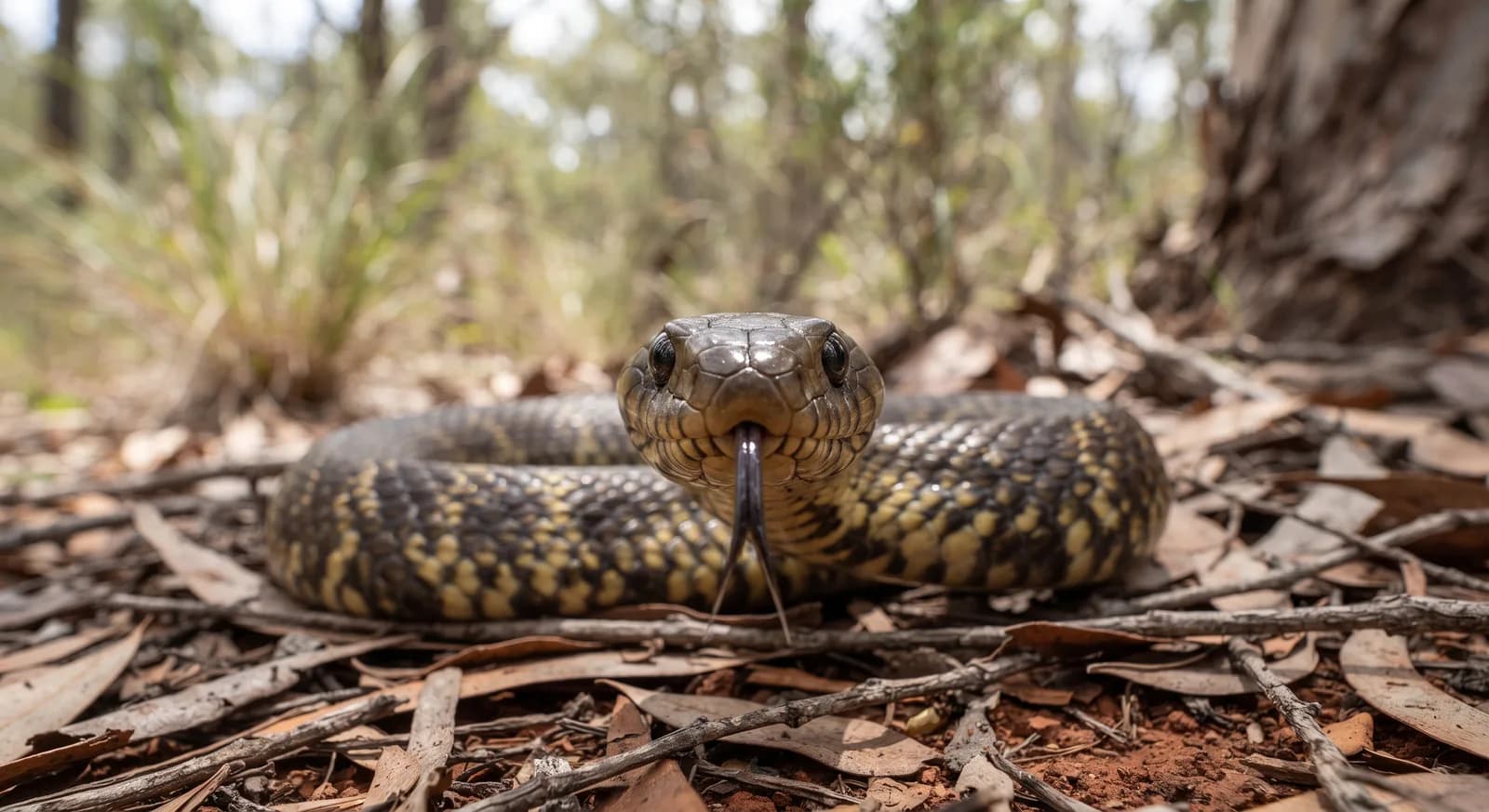
The inland taipan, small-scaled snake or fierce snake is a snake of the family Elapidae native to Australia and the most venomous land snake in the world. Extremely venomous though it is, this snake is shy and docile. Recent studies indicate that it is the snake with the most lethal venom in the world.

Size

1.8 m – 2.5 m

Life expectancy

20 years

Diet

Carnivore

Feeds mainly on other animals.

Activity

Diurnal

Active mainly during the day.

Social structure

Solitary

Lives and hunts alone, joining others only to breed.

Sighting difficulty

Easy

DesertFreshwaterGrassland
1countries17same family

Fun facts

  • GeneralThe most venomous land snake in the world, though it is shy and rarely bites anyone.
  • It is the most venomous land snake on the planet: a single bite contains enough venom to kill a hundred people, and its toxicity is tens of times greater than a cobra's.
  • Even so, no human death from its bite is known: it lives in remote areas, is retiring, and every recorded case, in herpetologists and keepers, has been treated with antivenom in time.
  • It changes colour with the season: it darkens in winter to absorb more heat and lightens in summer, a thermal adjustment uncommon among snakes.

Life cycle and biology

Skeleton type
Vertebrate - internal bony skeleton (reptile)
Habitat and environment
Cracking clay plains and deserts of inland Queensland and South Australia
Sexual maturity
2 years
Gestation / incubation
66 days of incubation
Litter / clutch size
15 eggs

Sources consulted: https://es.wikipedia.org/wiki/Oxyuranus_microlepidotus

Where to find it

Loading map…

Related species

Other species in the catalogue with the most in common with Fierce Snake — same habitat, park, country, tags or family.

Same taxonomic family

Keep exploring

Based on what we already know about fierce snake.

Comments

Share an experience, a fun fact or a tip for seeing the fierce snake.

Be the first to comment.

See full glossary
This page in other languages: Español · Deutsch · Français · Português · Italiano
See its range on the interactive map→
Least Concern

Eastern Brown Snake

Pseudonaja textilis

Least Concern

Common Death Adder

Acanthophis antarcticus

Mainland Island SnakeLeast Concern

Mainland Island Snake

Notechis scutatus

Least Concern

Eastern Coral Snake

Micrurus fulvius

Least Concern

Banded Krait

Bungarus fasciatus

Least Concern

Black-necked Spitting Cobra

Naja nigricollis

CountriesAustralia
TagsCarnivore
Carnivore
Diurnal
Solitary
Reptile
Desert
Freshwater
Grassland
Australia