Skip to content
WAnimals
  • Map
  • Species
  • Parks
  • Diving
Log inCreate account
WAnimals

The guide for travellers and animal lovers: discover, plan and share your wild adventures around the world.

Discover wildlife

  • Species
  • Ecosystems
  • Glossary
  • Tags

Explore places

  • Map
  • Countries
  • Parks
  • Diving

Plan experiences

  • Guides

Learn

  • Blog

Resources

  • About us
  • How we build our profiles
  • Help centre
  • Contact
  • Install the app

Follow us

Account

  • Log in
  • Create account

© 2026 WAnimals. All rights reserved.

Terms of servicePrivacyCookiesLegal notice
MapSpeciesParksDiving
  1. Home
  2. Species
  3. Common Death Adder

One of the 26 snakes on WAnimals

Reptiles · Squamata · Elapidae

Common Death Adder

Acanthophis antarcticus

Least Concern

The species is abundant and widely distributed; it faces no significant short-term risk.

Spotted something wrong?

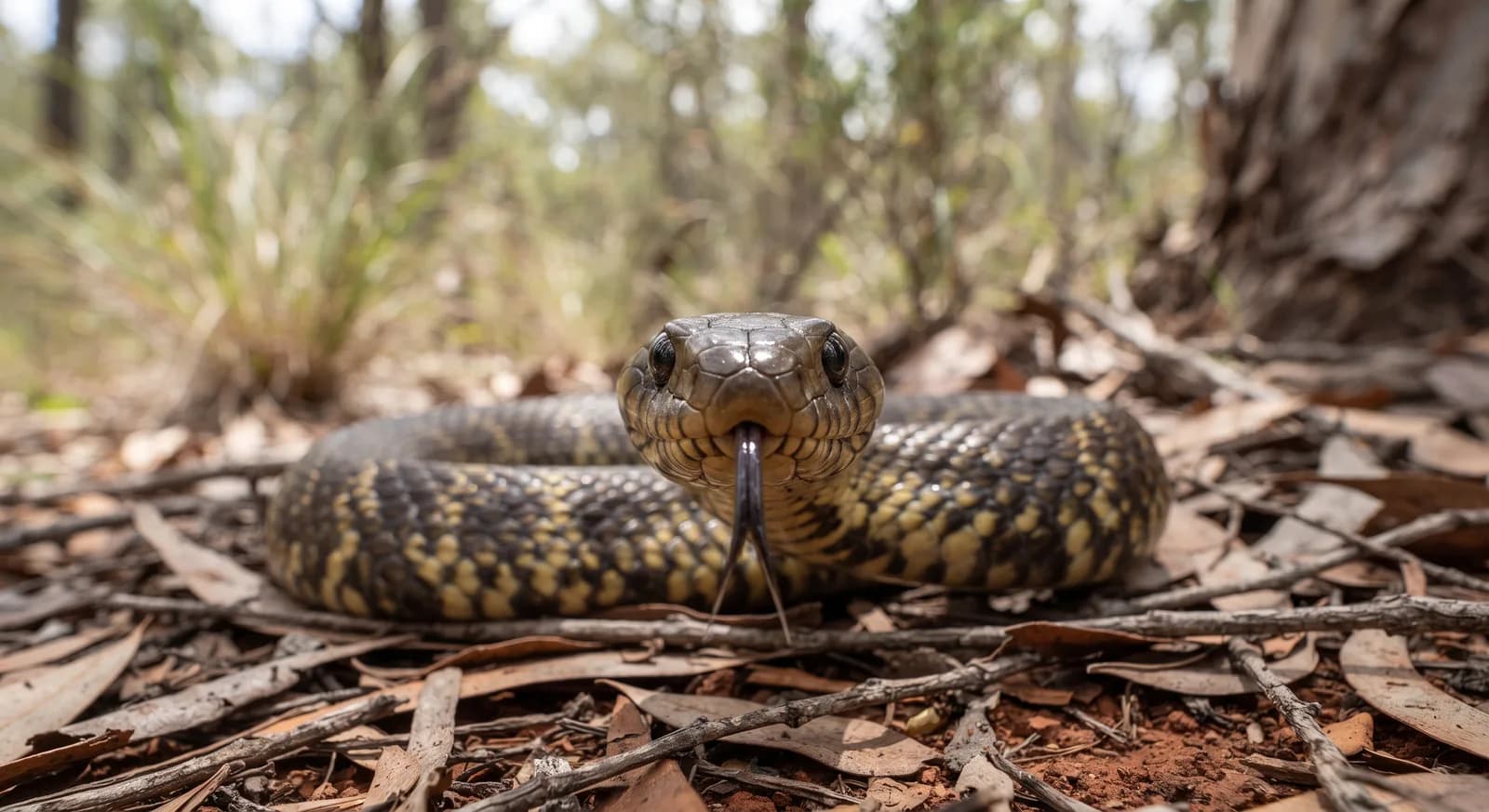
Acanthophis antarcticus, the common death adder, is a snake of the family Elapidae, native to Australia. It is one of the most venomous land snakes in Australia and in the world. Although its distribution remains widespread, it faces a growing threat from the ongoing invasion of the cane toad across Australia.

Weight

384 g on average

Size

70 cm – 1 m

Life expectancy

9 years

Diet

Carnivore

Feeds mainly on other animals.

Activity

Nocturnal

Active mainly at night.

Social structure

Solitary

Lives and hunts alone, joining others only to breed.

Temperate forestGrassland
1countries29parks17same family

Fun facts

  • It fishes with its tail: the tip is slender and contrastingly coloured, and it wriggles it like a worm while the rest of the body stays buried in the leaf litter, drawing frogs, lizards and birds within reach.
  • It has the fastest strike of any Australian snake: it can bite and return to its starting position in little more than a tenth of a second.
  • It is the only dangerous Australian snake that does not flee: it stays motionless, trusting to its camouflage, which means people tread on it without seeing it and accounts for a share of the accidents.

Life cycle and biology

Skeleton type
Vertebrate - internal bony skeleton (reptile)
Habitat and environment
Sclerophyll woodland, heathland and scrub with leaf litter in eastern and southern Australia
Sexual maturity
3 years
Gestation / incubation
4 months of gestation
Litter / clutch size
15 live young

Sources consulted: Wikipedia (es): Acanthophis antarcticus

Where to find it

Loading map…

The pins mark the parks where its presence is documented.

Where to see it

Parks and dive sites where this species has been documented — showing 10 of 29.

Related species

Other species in the catalogue with the most in common with Common Death Adder — same habitat, park, country, tags or family.

Same taxonomic family
Shares a park
Shares a park
Shares a park

Keep exploring

Based on what we already know about common death adder.
Share an experience, a fun fact or a tip for seeing the common death adder.
See full glossary
This page in other languages: Español · Deutsch · Français · Português · Italiano
See its range on the interactive map→
KakaduAustralia
DaintreeAustralia
Blue MountainsAustralia
K'gari (Fraser Island)Australia
KosciuszkoAustralia
LitchfieldAustralia
Grampians (Gariwerd)Australia
Wilsons PromontoryAustralia
Royal National ParkAustralia
LamingtonAustralia
See all 29 parks
Least Concern

Eastern Brown Snake

Pseudonaja textilis

Mainland Island SnakeLeast Concern

Mainland Island Snake

Notechis scutatus

Least Concern

Fierce Snake

Oxyuranus microlepidotus

Bare-nosed WombatLeast Concern

Bare-nosed Wombat

Vombatus ursinus

Least Concern

Eastern Snake-necked Turtle

Chelodina longicollis

Least Concern

Common Bluetongue

Tiliqua scincoides

CountriesAustralia
ParksKakaduAustralia
TagsCarnivore
Carnivore
Nocturnal
Solitary
Reptile
Temperate forest
Grassland
Australia