Skip to content
WAnimals
  • Map
  • Species
  • Parks
  • Diving
Log inCreate account
WAnimals

The guide for travellers and animal lovers: discover, plan and share your wild adventures around the world.

Discover wildlife

  • Species
  • Ecosystems
  • Glossary
  • Tags

Explore places

  • Map
  • Countries
  • Parks
  • Diving

Plan experiences

  • Guides

Learn

  • Blog

Resources

  • Help centre
  • Contact
  • Install the app

Follow us

Account

  • Log in
  • Create account

© 2026 WAnimals. All rights reserved.

About usHow we build our profilesTerms of servicePrivacyLegal notice
MapSpeciesParksDiving
  1. Home
  2. Species
  3. Mainland Island Snake

One of the 26 snakes on WAnimals
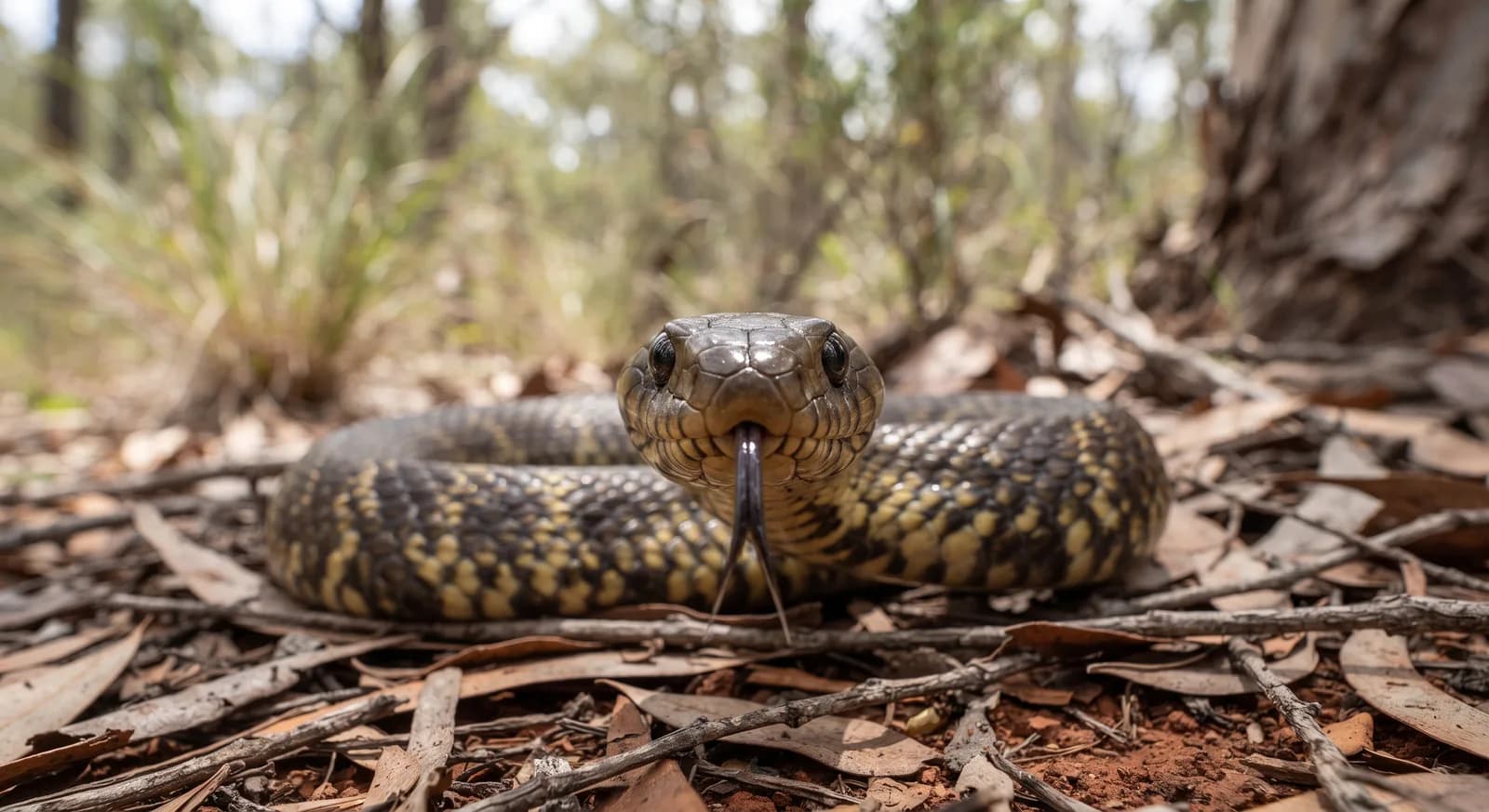
Mainland Island Snake (Notechis scutatus)

Reptiles · Squamata · Elapidae

Mainland Island Snake

Notechis scutatus

Least Concern

The species is abundant and widely distributed; it faces no significant short-term risk.

Spotted something wrong?

The tiger snake is one of the most venomous snakes in Australia, with pale crossbands on a dark ground in many populations. It lives in association with water and hunts mainly frogs. It is viviparous and can give birth to more than thirty young. The population of Chappell Island presents an extraordinary case of local adaptation tied to a single seasonal food source.

Weight

4 kg – 15 kg

Size

90 cm – 2.1 m

Life expectancy

15 years
Diet

Carnivore

Feeds mainly on other animals.

Activity

Diurnal

Active mainly during the day.

Social structure

Solitary

Lives and hunts alone, joining others only to breed.

Sighting difficulty

Easy

DesertFreshwaterGrasslandIslands
1countries25parks17same family

AI-generated images: illustrations, not photographs.

Fun facts

  • GeneralOne of the most dangerous snakes in Australia; it flattens its neck when threatened.
  • On Chappell Island, off Tasmania, the tiger snakes depend on the chicks of a single shearwater species, available only a few weeks a year: they have evolved disproportionately large heads in order to swallow them and spend the rest of the year practically fasting.
  • It is viviparous and a female can give birth to more than thirty young at once, an extraordinary litter size for a venomous snake.
  • Its colour varies enormously between populations, from almost black to banded yellow: the island and mainland forms were once described as separate species.

Life cycle and biology

Skeleton type
Vertebrate - internal bony skeleton (reptile)
Habitat and environment
Wetlands, riverbanks, damp grassland and coastal islands of southern Australia
Size at birth
About 20-25 cm at birth; it is viviparous
Sexual maturity
9.5 months
Gestation / incubation
3 months of gestation
Litter / clutch size
30 live young

Sources consulted: https://en.wikipedia.org/wiki/Tiger_snake

Where to find it

Best time: From September to April in southern Australia and Tasmania, by day, in marshes and along stream margins; at the height of summer it also hunts at dusk.

Loading map…

The pins mark the parks where its presence is documented.

Where to see it

Parks and dive sites where this species has been documented — showing 10 of 25.

Related species

Other species in the catalogue with the most in common with Mainland Island Snake — same habitat, park, country, tags or family.

Same taxonomic family
Shares a park
Shares a park

Keep exploring

Based on what we already know about mainland island snake.

Comments

Share an experience, a fun fact or a tip for seeing the mainland island snake.

Be the first to comment.

See full glossary
This page in other languages: Español · Deutsch · Français · Português · Italiano
See its range on the interactive map→
Blue MountainsAustralia
FreycinetAustralia
KosciuszkoAustralia
Grampians (Gariwerd)Australia
Tasmanian Wilderness (Cradle Mountain-Lake St Clair)Australia
Wilsons PromontoryAustralia
Royal National ParkAustralia
CoorongAustralia
Ku-ring-gai ChaseAustralia
Barrington TopsAustralia
See all 25 parks
Least Concern

Eastern Brown Snake

Pseudonaja textilis

Least Concern

Common Death Adder

Acanthophis antarcticus

Least Concern

Fierce Snake

Oxyuranus microlepidotus

Yellow-lipped Sea KraitLeast Concern

Yellow-lipped Sea Krait

Laticauda colubrina

Least Concern

Eastern Snake-necked Turtle

Chelodina longicollis

Least Concern

Common Bluetongue

Tiliqua scincoides

CountriesAustralia
ParksBlue MountainsAustralia
TagsCarnivore
Carnivore
Diurnal
Solitary
Reptile
Desert
Freshwater
Grassland
Islands
Australia