 Least Concern
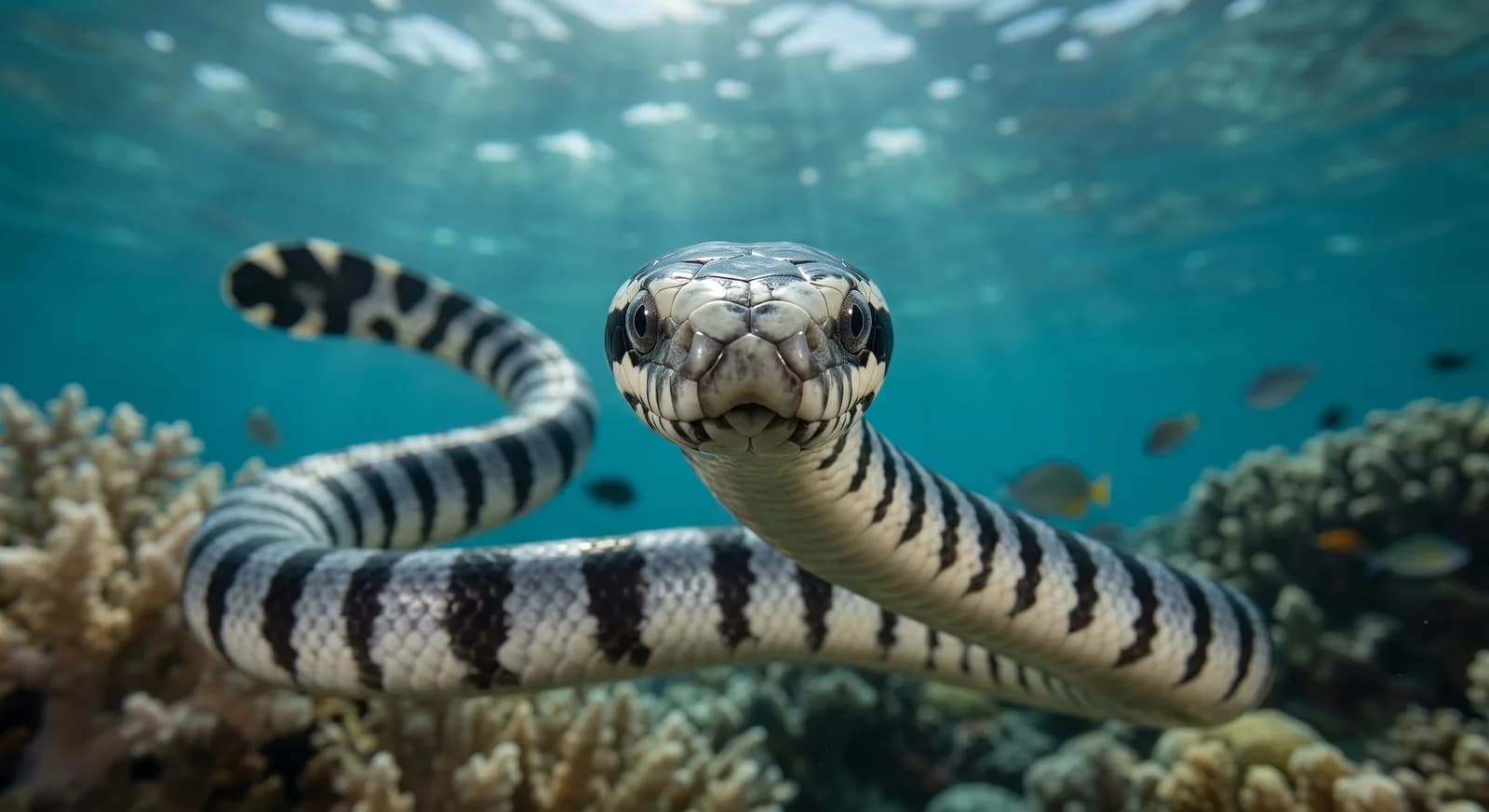
Yellow-lipped Sea Krait
Laticauda colubrina
10 countries21 parks94 dive sites
Species group · Reptiles
WAnimals has 26 species of snake, spread across 9 families (Acrochordidae, Colubridae, Elapidae, Homalopsidae, Hydrophiidae, Lamprophiidae, Typhlopidae, Viperidae, Xenopeltidae).
Each one has its own full profile. This group does not replace them: it brings them together.
No species documented in this group is genuinely at risk according to the IUCN, with the data available today.
Recorded in 143 countries. The ones with the most species in the group:
It is genuinely amphibious: it hunts eels on the reef but comes ashore to digest, shed its skin and lay its eggs, something the true sea snakes cannot do because they have lost their belly scales.
From
Its venom is several times more potent than a cobra's, but it is so docile and its mouth so small that fishermen in the Philippines and Fiji routinely handle it by hand.
From
It hunts in partnership with groupers and goatfish: the snake goes into the crevices of the reef and the fish wait outside for the prey that flee, an association documented between very different species.
From
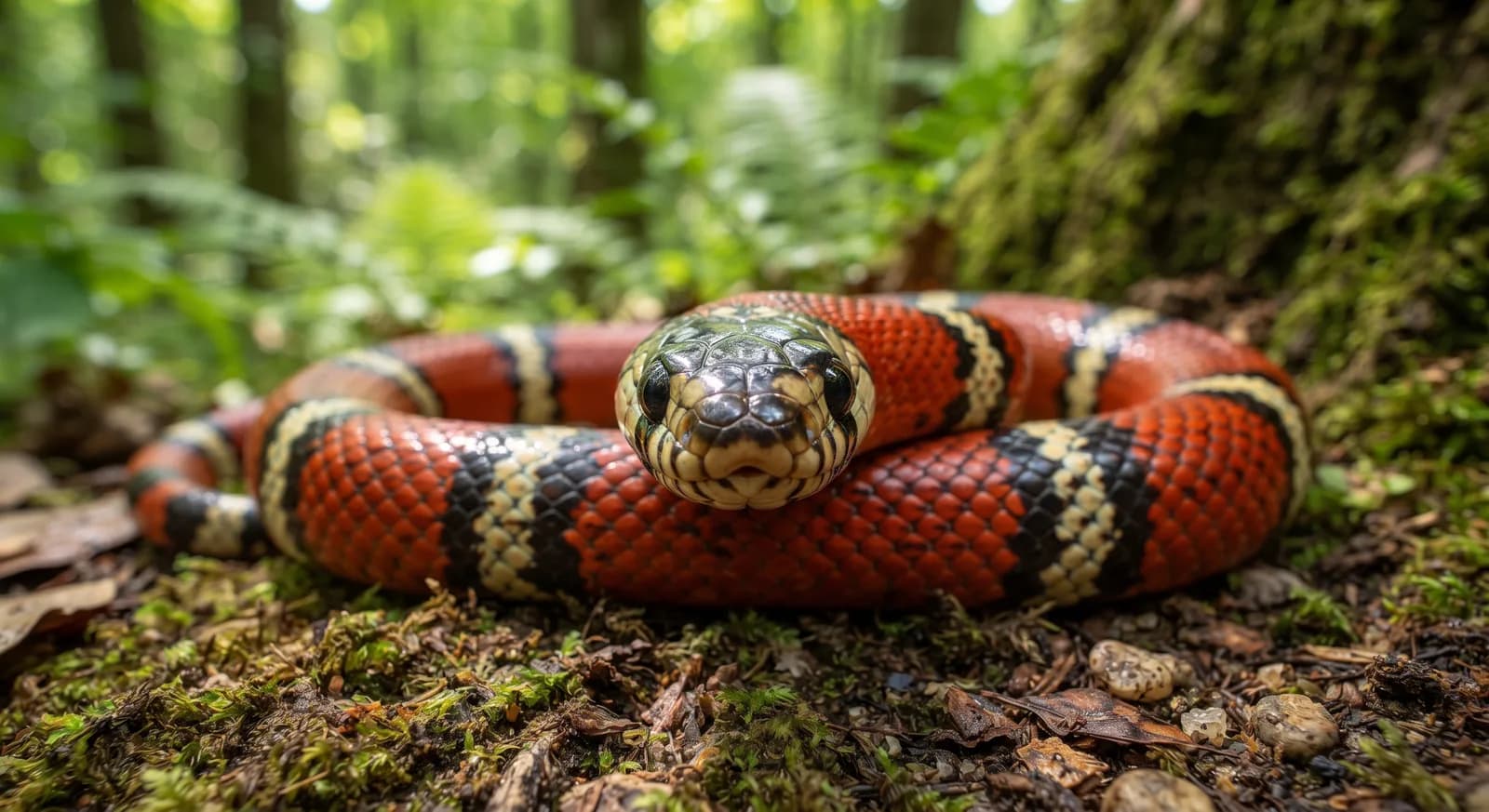
It copies the pattern of the coral snakes without being venomous; a popular vivarium animal.
From
Its bands of colour closely resemble those of the true venomous coral snakes, a case of defensive mimicry in an animal that is not venomous itself.
From
Its name comes from a false superstition: farmers found it in their barns and believed it was suckling from the cows' udders, when in fact it was hunting the mice the grain attracted. No snake can suckle.
From
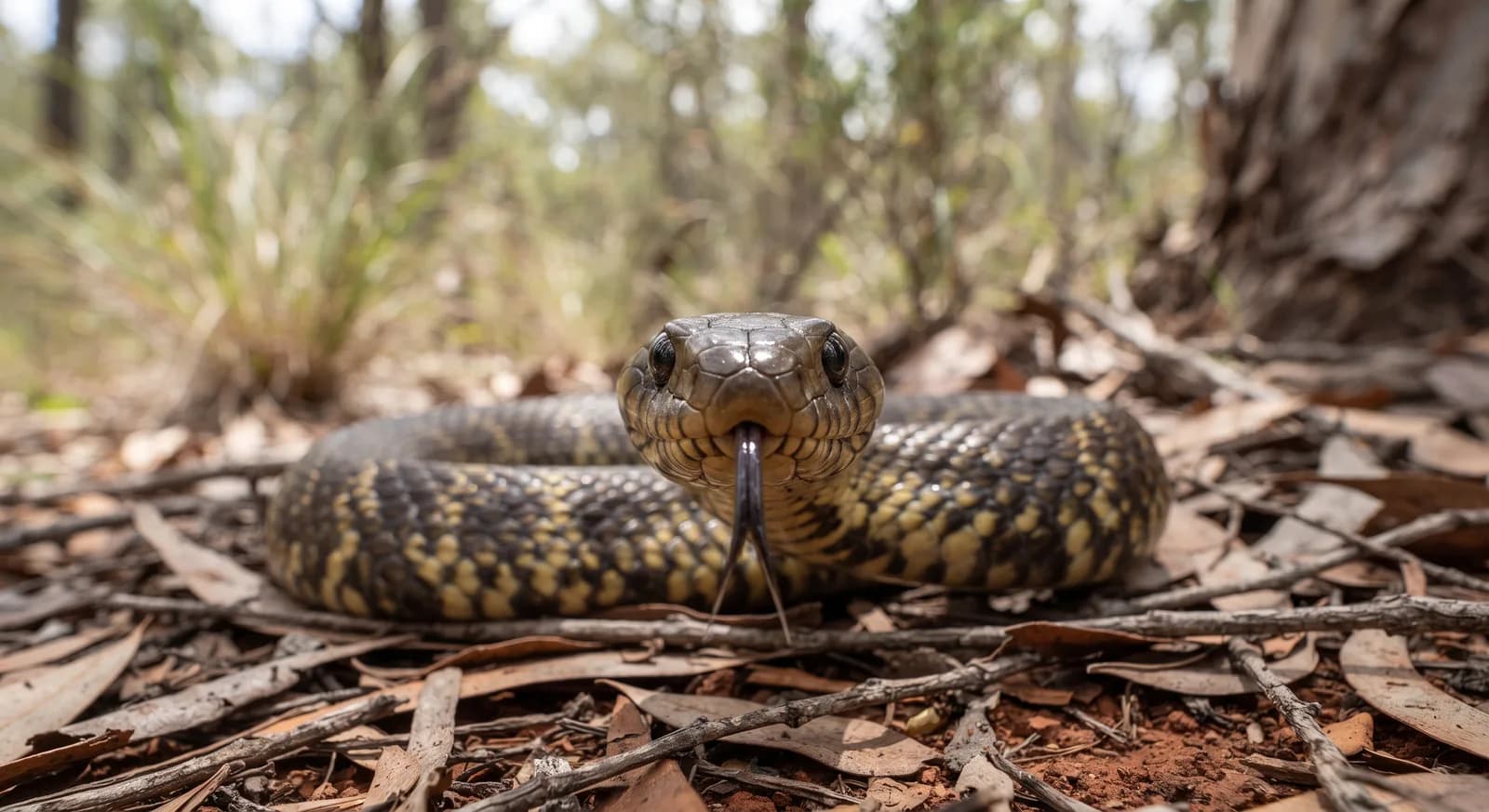
One of the most dangerous snakes in Australia; it flattens its neck when threatened.
·
Ranges calculated from the profiles that record the figure, not from all 26.
On Chappell Island, off Tasmania, the tiger snakes depend on the chicks of a single shearwater species, available only a few weeks a year: they have evolved disproportionately large heads in order to swallow them and spend the rest of the year practically fasting.