Skip to content
WAnimals
  • Map
  • Species
  • Parks
  • Diving
Log inCreate account
WAnimals

The guide for travellers and animal lovers: discover, plan and share your wild adventures around the world.

Discover wildlife

  • Species
  • Ecosystems
  • Glossary
  • Tags

Explore places

  • Map
  • Countries
  • Parks
  • Diving

Plan experiences

  • Guides

Learn

  • Blog

Resources

  • About us
  • How we build our profiles
  • Help centre
  • Contact
  • Install the app

Follow us

Account

  • Log in
  • Create account

© 2026 WAnimals. All rights reserved.

Terms of servicePrivacyCookiesLegal notice
MapSpeciesParksDiving
  1. Home
  2. Species
  3. Red Cornsnake

One of the 26 snakes on WAnimals

Reptiles · Squamata · Colubridae

Red Cornsnake

Pantherophis guttatus

Least Concern

The species is abundant and widely distributed; it faces no significant short-term risk.

Spotted something wrong?

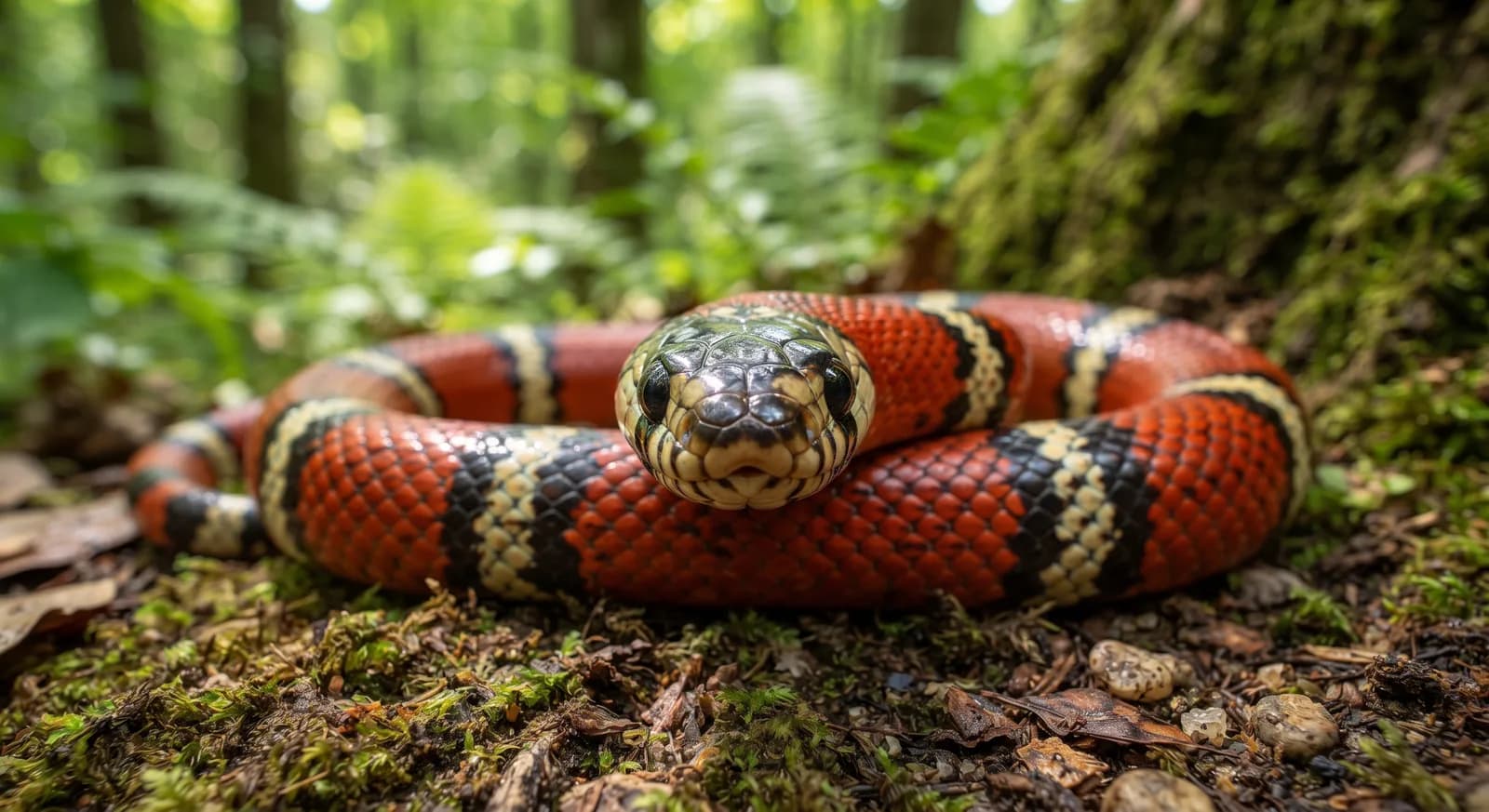
The red cornsnake is a snake of the family Colubridae. It is called the corn snake because of the pattern drawn on its belly, which recalls that of an ancestral cob of maize; it is a solitary snake and does not live in holes but out on the flat, and fields and grassland are the best places for it to find food, shelter and cover. They are popular in the pet trade, perhaps because they are smaller and more docile than other snake species and because they are not venomous.

Size

90 cm – 1.8 m

Life expectancy

23 years

Diet

Carnivore

Feeds mainly on other animals.

Activity

Crepuscular

Active mainly at dawn and dusk.

Social structure

Solitary

Lives and hunts alone, joining others only to breed.

Temperate forestGrassland
2countries8parks17same family

Fun facts

  • defensaAlthough it is not venomous, it can buzz the tip of its tail in dry leaves to imitate a rattlesnake and put a predator off.
  • Its name comes from the barns: it used to turn up in maize stores chasing mice, and some attribute the name to the pattern on its belly, chequered black and white like a cob of Indian corn.
  • It is frequently killed through confusion with the cottonmouth, a venomous pit viper of similar appearance sharing the same range: one of the commonest causes of death for the species.
  • It is one of the most widely bred reptiles in the world in captivity, and selection has produced dozens of colour varieties that do not exist in the wild.

Life cycle and biology

Skeleton type
Vertebrate - internal bony skeleton (reptile)
Habitat and environment
Farmland, open woodland, barns and rural areas of the south-eastern United States
Sexual maturity
2 years
Gestation / incubation
65 days of incubation
Litter / clutch size
14 eggs

Sources consulted: Wikipedia (es): Pantherophis guttatus

Where to find it

Loading map…

The pins mark the parks where its presence is documented.

Where to see it

Parks and dive sites where this species has been documented.

Related species

Other species in the catalogue with the most in common with Red Cornsnake — same habitat, park, country, tags or family.

Same taxonomic family

Keep exploring

Based on what we already know about red cornsnake.

Share an experience, a fun fact or a tip for seeing the red cornsnake.
See full glossary
This page in other languages: Español · Deutsch · Français · Português · Italiano
See its range on the interactive map→
EvergladesUnited States
Great Smoky MountainsUnited States
Mammoth CaveUnited States
CongareeUnited States
ShenandoahUnited States
BiscayneUnited States
Assateague IslandUnited States
Hot SpringsUnited States
Least Concern

Western Rat Snake

Pantherophis obsoletus

Least Concern

Common Kingsnake

Lampropeltis getula

Least Concern

Common Garter Snake

Thamnophis sirtalis

Eastern MilksnakeLeast Concern

Eastern Milksnake

Lampropeltis triangulum

Least Concern

Western Hognose Snake

Heterodon nasicus

Least Concern

Racer

Coluber constrictor

CountriesUnited States
ParksEvergladesUnited States
TagsCarnivore
Carnivore
Crepuscular
Solitary
Reptile
Temperate forest
Grassland
United States
Mexico