Skip to content
WAnimals
  • Map
  • Species
  • Parks
  • Diving
Log inCreate account
WAnimals

The guide for travellers and animal lovers: discover, plan and share your wild adventures around the world.

Discover wildlife

  • Species
  • Ecosystems
  • Glossary
  • Tags

Explore places

  • Map
  • Countries
  • Parks
  • Diving

Plan experiences

  • Guides

Learn

  • Blog

Resources

  • About us
  • How we build our profiles
  • Help centre
  • Contact
  • Install the app

Follow us

Account

  • Log in
  • Create account

© 2026 WAnimals. All rights reserved.

Terms of servicePrivacyCookiesLegal notice
MapSpeciesParksDiving
  1. Home
  2. Species
  3. Common Kingsnake

One of the 26 snakes on WAnimals

Reptiles · Squamata · Colubridae

Common Kingsnake

Lampropeltis getula

Least Concern

The species is abundant and widely distributed; it faces no significant short-term risk.

Spotted something wrong?

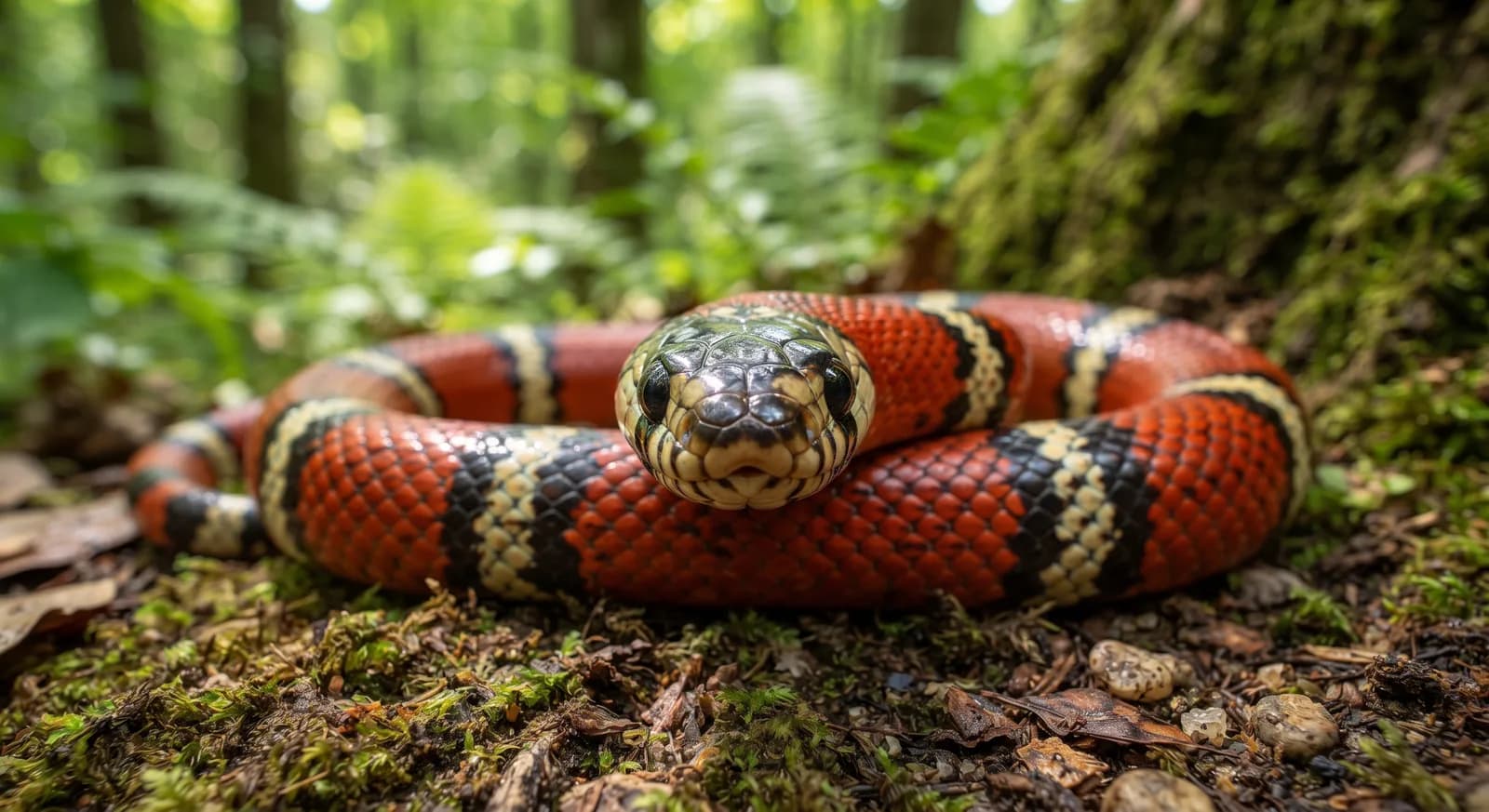
The common kingsnake is a harmless constrictor that owes its name to its diet: it eats other snakes, including rattlesnakes and cottonmouths, to whose venom it is resistant. That immunity makes it a top predator among the reptiles of its range and an ally of farmers in the south-eastern United States.

Weight

2 kg on average

Size

90 cm – 1.8 m

Life expectancy

25 years

Diet

Carnivore

Feeds mainly on other animals.

Activity

Diurnal

Active mainly during the day.

Social structure

Solitary

Lives and hunts alone, joining others only to breed.

Temperate forestFreshwaterGrassland
2countries20parks17same family

Fun facts

  • It is resistant to the venom of American pit vipers: it can take a rattlesnake bite and go on constricting until the snake is dead, thanks to blood proteins that neutralise the haemorrhagic toxins.
  • Rattlesnakes recognise it by smell and react with a specific defensive posture they use against no other predator: they raise the body into a loop and strike with it instead of biting.
  • Its presence on a piece of land reduces the abundance of venomous snakes, and in the south-eastern United States many farmers deliberately protect it for that reason.

Life cycle and biology

Skeleton type
Vertebrate - internal bony skeleton (reptile)
Habitat and environment
Woodland, grassland, marshes, farmland and scrub of the southern and eastern United States and Mexico
Sexual maturity
3 years
Gestation / incubation
2 months
Litter / clutch size
10 eggs

Sources consulted: Wikipedia (es): Lampropeltis getula

Where to find it

Loading map…

The pins mark the parks where its presence is documented.

Where to see it

Parks and dive sites where this species has been documented — showing 10 of 20.

Related species

Other species in the catalogue with the most in common with Common Kingsnake — same habitat, park, country, tags or family.

Same taxonomic family

Keep exploring

Based on what we already know about common kingsnake.

Share an experience, a fun fact or a tip for seeing the common kingsnake.
See full glossary
This page in other languages: Español · Deutsch · Français · Português · Italiano
See its range on the interactive map→
EvergladesUnited States
Great Smoky MountainsUnited States
Death ValleyUnited States
AcadiaUnited States
Big BendUnited States
Mammoth CaveUnited States
CongareeUnited States
BadlandsUnited States
Wind CaveUnited States
Joshua TreeUnited States
See all 20 parks
Least Concern

Red Cornsnake

Pantherophis guttatus

Least Concern

California Kingsnake

Lampropeltis californiae

Least Concern

Western Rat Snake

Pantherophis obsoletus

Least Concern

Common Garter Snake

Thamnophis sirtalis

Eastern MilksnakeLeast Concern

Eastern Milksnake

Lampropeltis triangulum

Least Concern

Western Hognose Snake

Heterodon nasicus

CountriesUnited States
ParksEvergladesUnited States
TagsCarnivore
Carnivore
Diurnal
Solitary
Reptile
Temperate forest
Freshwater
Grassland
United States
Mexico