Skip to content
WAnimals
  • Map
  • Species
  • Parks
  • Diving
Log inCreate account
WAnimals

The guide for travellers and animal lovers: discover, plan and share your wild adventures around the world.

Discover wildlife

  • Species
  • Ecosystems
  • Glossary
  • Tags

Explore places

  • Map
  • Countries
  • Parks
  • Diving

Plan experiences

  • Guides

Learn

  • Blog

Resources

  • About us
  • How we build our profiles
  • Help centre
  • Contact
  • Install the app

Follow us

Account

  • Log in
  • Create account

© 2026 WAnimals. All rights reserved.

Terms of servicePrivacyCookiesLegal notice
MapSpeciesParksDiving
  1. Home
  2. Species
  3. Western Rat Snake

One of the 26 snakes on WAnimals

Reptiles · Squamata · Colubridae

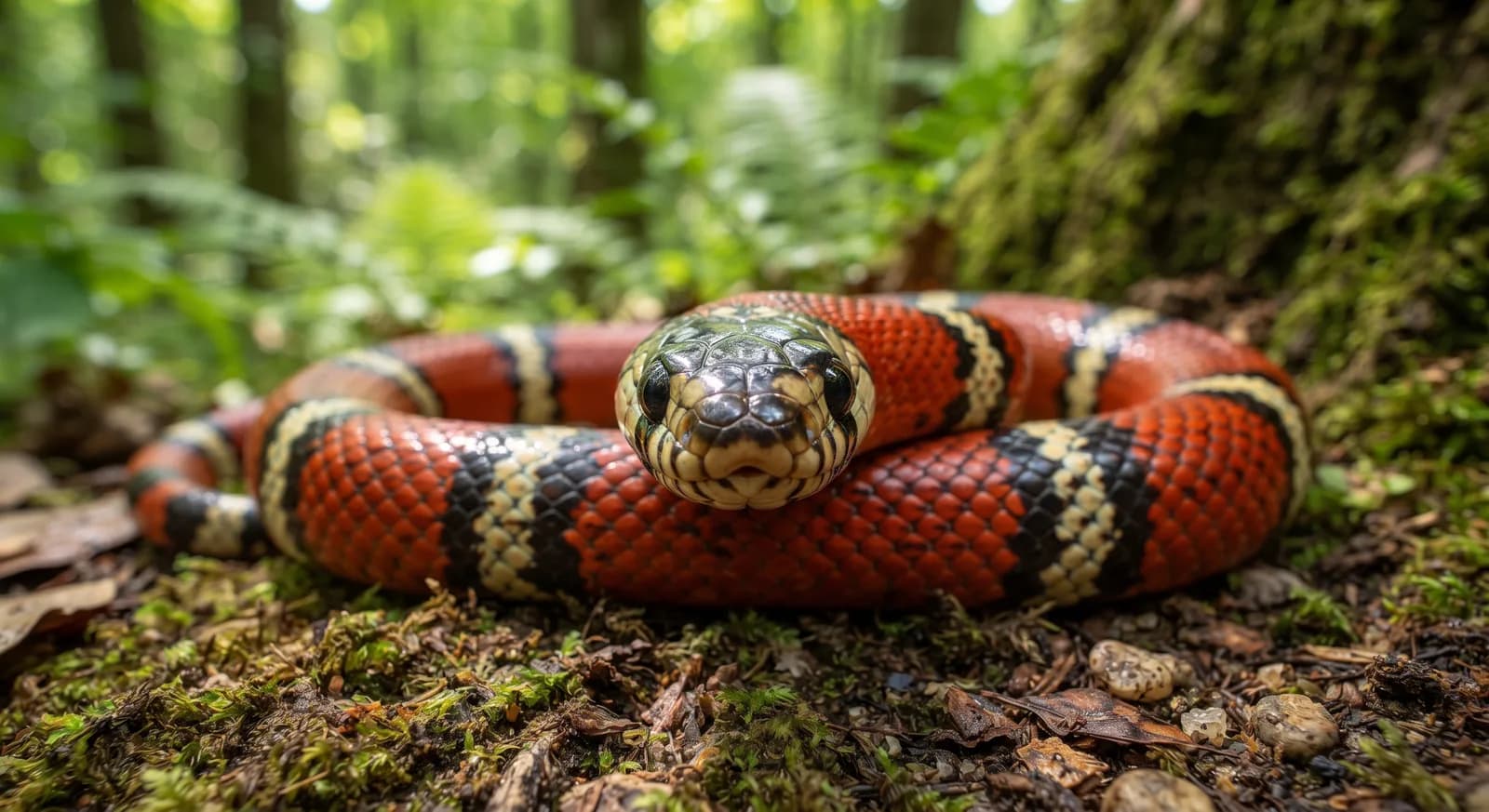
Western Rat Snake

Pantherophis obsoletus

Least Concern

The species is abundant and widely distributed; it faces no significant short-term risk.

Spotted something wrong?

The western rat snake is one of the largest snakes in North America and an outstanding climber: it goes up vertical branchless trunks by bracing its belly scales against irregularities in the bark. It hunts rodents, birds and eggs, and is a well-recognised ally of farmers for the pest control it provides in barns.

Size

1 m – 2.5 m

Life expectancy

25 years

Diet

Carnivore

Feeds mainly on other animals.

Activity

Diurnal

Active mainly during the day.

Social structure

Solitary

Lives and hunts alone, joining others only to breed.

Temperate forestGrassland
2countries23parks17same family

Fun facts

  • GeneralAn excellent climber; it goes up vertical trunks to raid birds' nests.
  • It climbs completely smooth vertical trunks: it folds its body concertina-fashion and presses its belly scales against irregularities in the bark, going up several metres with no branch to help.
  • It mimics a rattlesnake when threatened: it vibrates the tip of its tail against the leaf litter, producing a sound very like a rattle even though it has none.
  • It is a major predator of birds' nests, to the point that several conservation studies of woodland passerines identify it as the chief cause of breeding failure in some forests.

Life cycle and biology

Skeleton type
Vertebrate - internal bony skeleton (reptile)
Habitat and environment
Deciduous woodland, farmland, barns and rural country of eastern North America
Sexual maturity
4 years
Gestation / incubation
65 days of incubation
Litter / clutch size
14 eggs

Sources consulted: Wikipedia (es): Pantherophis obsoletus

Where to find it

Loading map…

The pins mark the parks where its presence is documented.

Where to see it

Parks and dive sites where this species has been documented — showing 10 of 23.

Related species

Other species in the catalogue with the most in common with Western Rat Snake — same habitat, park, country, tags or family.

Same taxonomic family

Keep exploring

Based on what we already know about western rat snake.

Share an experience, a fun fact or a tip for seeing the western rat snake.
See full glossary
This page in other languages: Español · Deutsch · Français · Português · Italiano
See its range on the interactive map→
EvergladesUnited States
Great Smoky MountainsUnited States
AcadiaUnited States
Mammoth CaveUnited States
Point PeleeCanada
VoyageursUnited States
Isle RoyaleUnited States
CongareeUnited States
BadlandsUnited States
Theodore RooseveltUnited States
See all 23 parks
Least Concern

Red Cornsnake

Pantherophis guttatus

Least Concern

Common Kingsnake

Lampropeltis getula

Least Concern

Common Garter Snake

Thamnophis sirtalis

Eastern MilksnakeLeast Concern

Eastern Milksnake

Lampropeltis triangulum

Least Concern

Western Hognose Snake

Heterodon nasicus

Least Concern

Racer

Coluber constrictor

CountriesUnited States
ParksEvergladesUnited States
TagsCarnivore
Carnivore
Diurnal
Solitary
Reptile
Temperate forest
Grassland
United States
Canada