Skip to content
WAnimals
  • Map
  • Species
  • Parks
  • Diving
Log inCreate account
WAnimals

The guide for travellers and animal lovers: discover, plan and share your wild adventures around the world.

Discover wildlife

  • Species
  • Ecosystems
  • Glossary
  • Tags

Explore places

  • Map
  • Countries
  • Parks
  • Diving

Plan experiences

  • Guides

Learn

  • Blog

Resources

  • About us
  • How we build our profiles
  • Help centre
  • Contact
  • Install the app

Follow us

Account

  • Log in
  • Create account

© 2026 WAnimals. All rights reserved.

Terms of servicePrivacyCookiesLegal notice
MapSpeciesParksDiving
  1. Home
  2. Species
  3. Eastern Brown Snake

One of the 26 snakes on WAnimals

Reptiles · Squamata · Elapidae

Eastern Brown Snake

Pseudonaja textilis

Least Concern

The species is abundant and widely distributed; it faces no significant short-term risk.

Spotted something wrong?

The eastern brown snake, better known simply as the brown snake, is an elapid native to Australia. It is the second most venomous land snake in the world according to recent analyses. Its figures: an LD50 of 0.15 mg/kg and a length of up to 2.4 m. That, combined with a range taking in the well-populated east coast of Australia, has resulted in fatalities. There is a subspecies in parts of New Guinea and adjacent islands.

Size

1.2 m – 2 m

Life expectancy

15 years

Diet

Carnivore

Feeds mainly on other animals.

Activity

Diurnal

Active mainly during the day.

Social structure

Solitary

Lives and hunts alone, joining others only to breed.

Temperate forestGrassland
3countries45parks17same family

Fun facts

  • It is responsible for most snakebite deaths in Australia, not because it is the most venomous but because it lives where people live: it thrives on farmland and the edges of towns, following the mice.
  • Its abundance depends directly on mouse plagues: in years when rodent numbers explode across the Australian wheat belt, the snakes multiply and accidents rise.
  • It can move at great speed and, cornered, rears up into an S-shape before striking, an unmistakable warning posture.

Life cycle and biology

Skeleton type
Vertebrate - internal bony skeleton (reptile)
Habitat and environment
Grassland, farmland, woodland edges and the outskirts of towns in eastern Australia
Sexual maturity
3 years
Gestation / incubation
75 days of incubation
Litter / clutch size
20 eggs

Sources consulted: Wikipedia (es): Pseudonaja textilis

Where to find it

Loading map…

The pins mark the parks where its presence is documented.

Where to see it

Parks and dive sites where this species has been documented — showing 10 of 45.

Related species

Other species in the catalogue with the most in common with Eastern Brown Snake — same habitat, park, country, tags or family.

Same taxonomic family

Keep exploring

Based on what we already know about eastern brown snake.
Share an experience, a fun fact or a tip for seeing the eastern brown snake.
See full glossary
This page in other languages: Español · Deutsch · Français · Português · Italiano
See its range on the interactive map→
KakaduAustralia
Uluru-Kata TjutaAustralia
DaintreeAustralia
Blue MountainsAustralia
K'gari (Fraser Island)Australia
Purnululu (Bungle Bungle)Australia
KosciuszkoAustralia
Nitmiluk (Katherine Gorge)Australia
LitchfieldAustralia
Grampians (Gariwerd)Australia
See all 45 parks
Least Concern

Common Death Adder

Acanthophis antarcticus

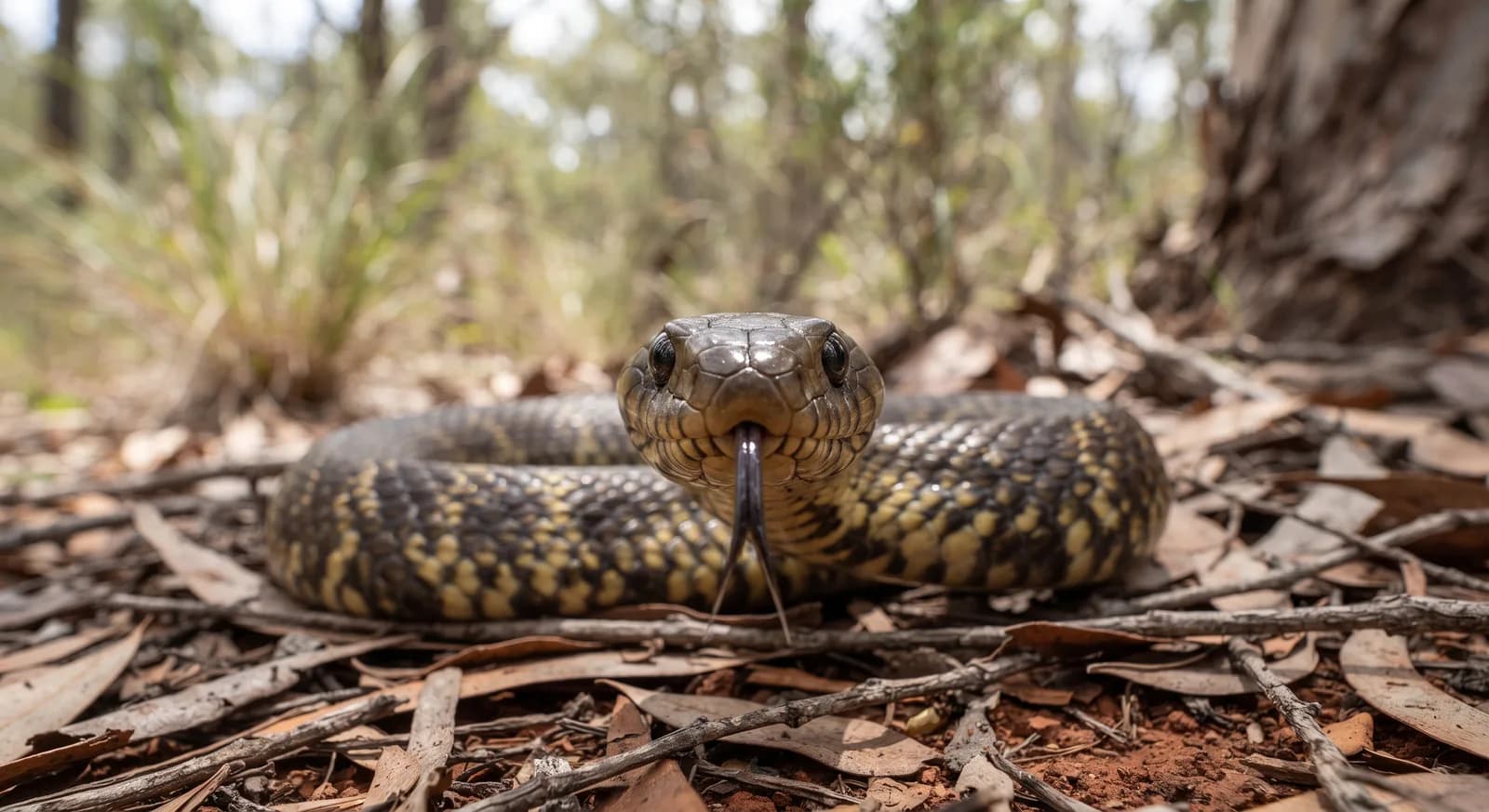
Tiger SnakeLeast Concern

Tiger Snake

Notechis scutatus

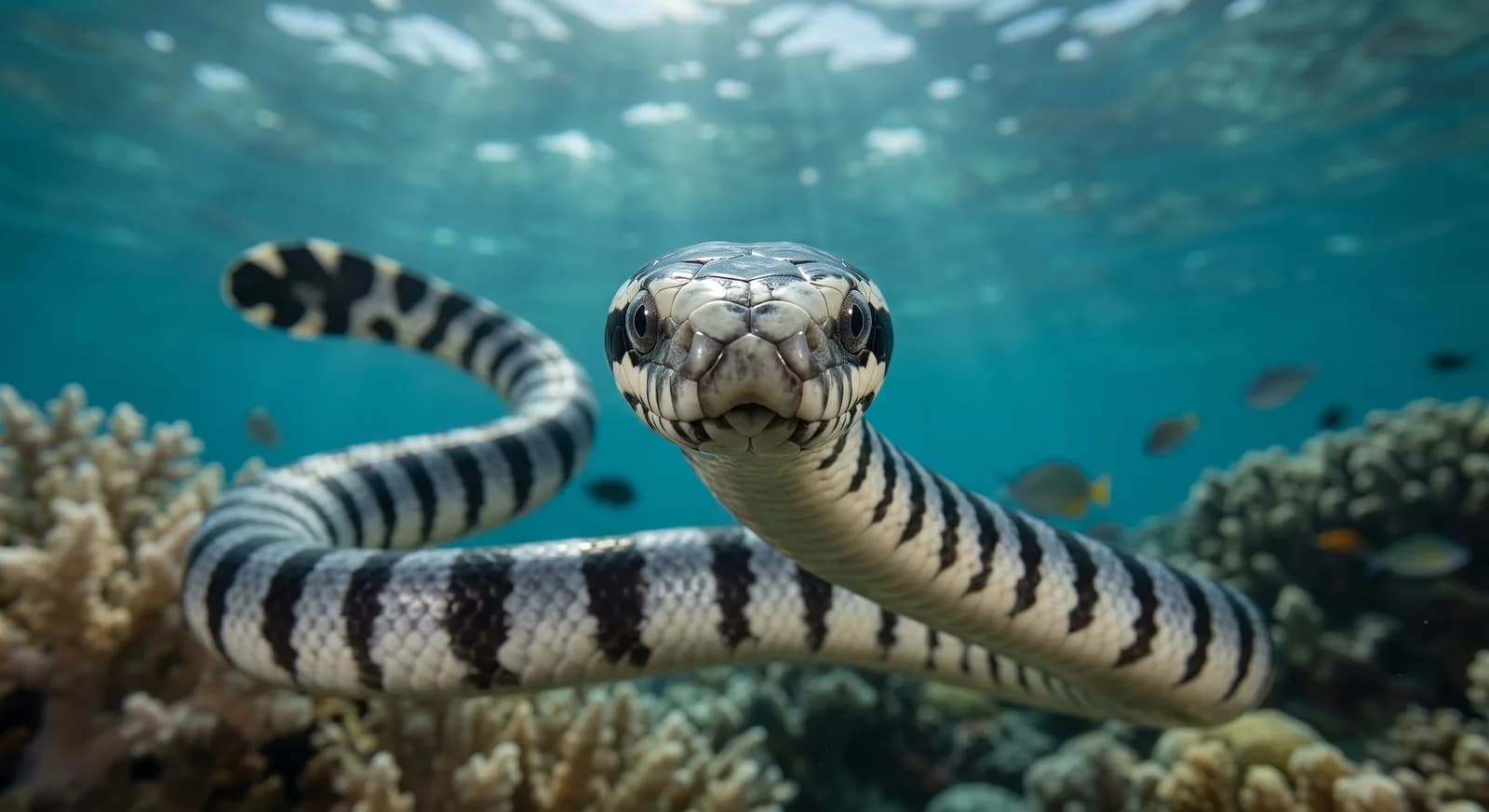
Yellow-lipped Sea KraitLeast Concern

Yellow-lipped Sea Krait

Laticauda colubrina

Least Concern

Banded Krait

Bungarus fasciatus

Least Concern

Fierce Snake

Oxyuranus microlepidotus

Monocled CobraLeast Concern

Monocled Cobra

Naja kaouthia

CountriesAustralia
ParksKakaduAustralia
TagsCarnivore
Carnivore
Diurnal
Solitary
Reptile
Temperate forest
Grassland
Australia
Indonesia
Papua New Guinea