One of the 3 kiwis on WAnimals
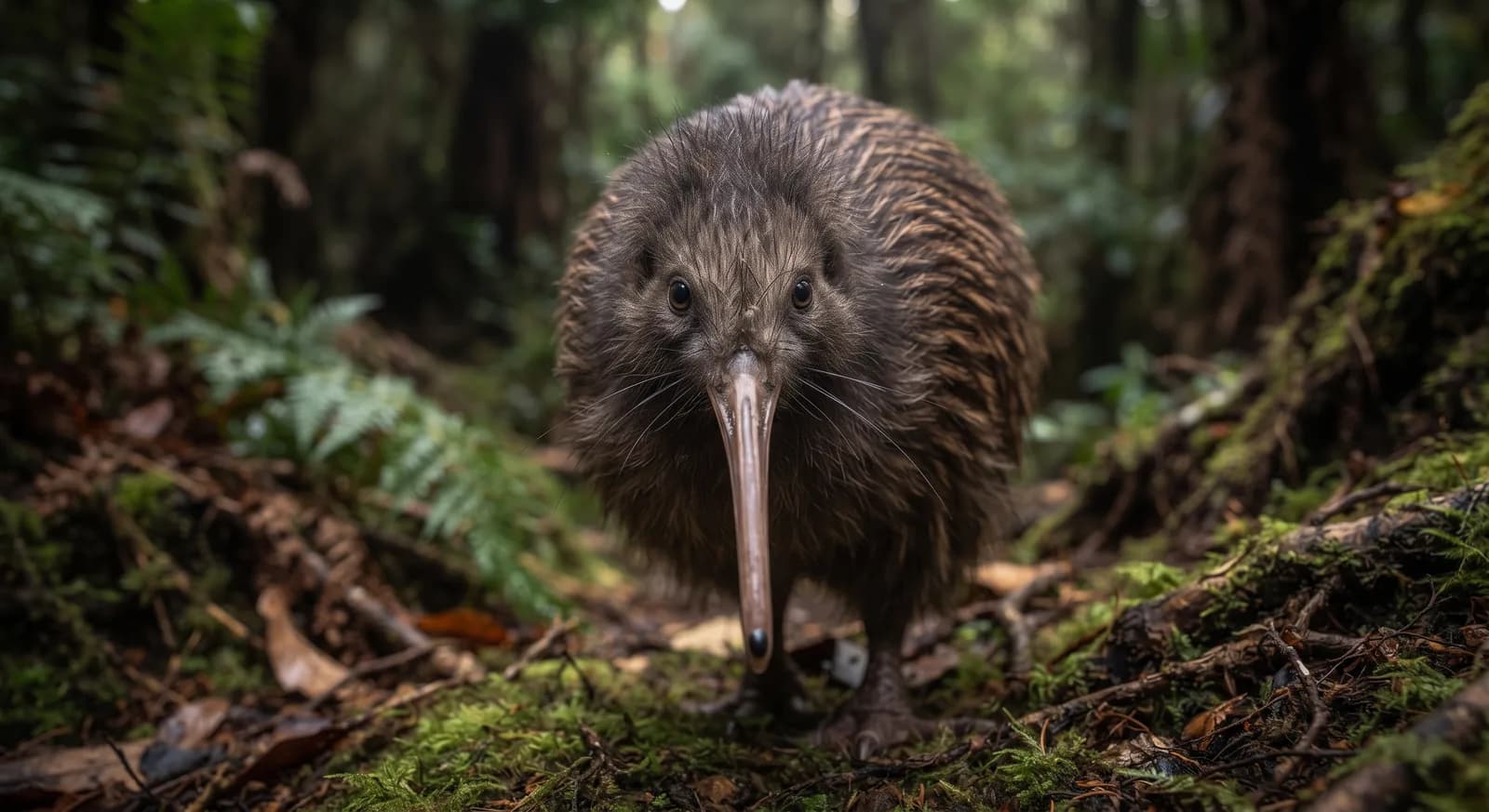
Birds · Apterygiformes · Apterygidae
Apteryx haastii
At high risk of extinction in the wild over the medium term.
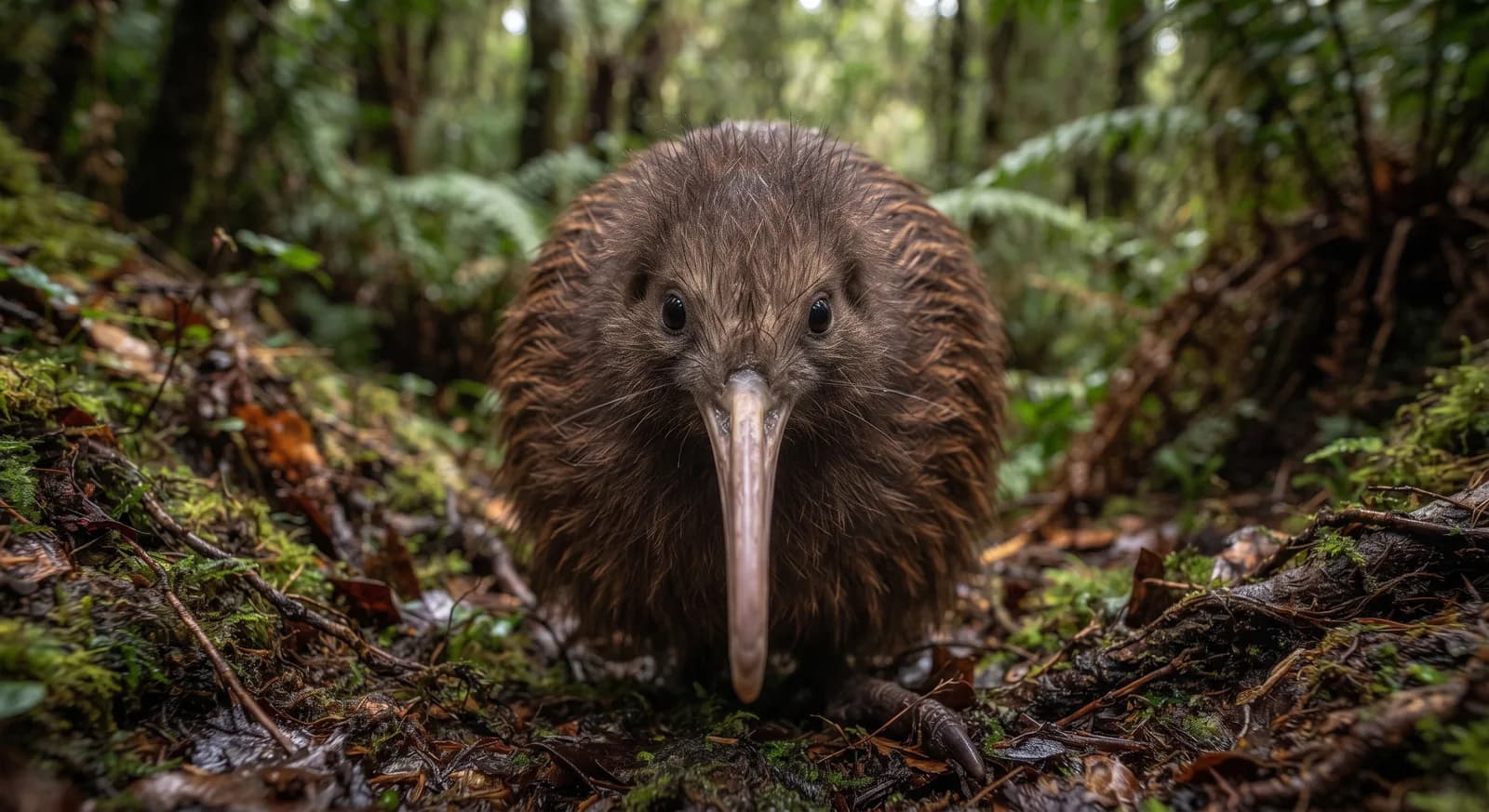
The great spotted kiwi, or roroa, is the largest of the kiwis, a flightless bird endemic to New Zealand with feathers that look like hair, wings reduced to stubs and a long bill with the nostrils at the tip. It is nocturnal and tracks invertebrates on the forest floor by smell, a sense all but redundant in other birds. Introduced stoats and dogs are its main threat.
Weight
1.8 kg – 3.5 kg
Size
45 cm – 50 cm
Life expectancy
40 years
Diet
Insectivore
Feeds mainly on insects and other invertebrates.
Activity
Nocturnal
Active mainly at night.
Social structure
In pairs
Usually lives in pairs, sometimes for life.
Estimated population
Around 16,000 individuals
AI-generated images: illustrations, not photographs.
Sources consulted: Wikipedia (es): Apteryx haastii
The pins mark the parks where its presence is documented.
Parks and dive sites where this species has been documented.
Other species in the catalogue with the most in common with Great Spotted Kiwi — same habitat, park, country, tags or family.
The great spotted kiwi is classified as vulnerable. Organisations such as the IUCN, WWF and the Wildlife Conservation Society work specifically on its conservation and that of its habitat; looking into their programmes is a good starting point if you want to get involved.
It's documented in 6 protected areas — one reason why protecting these places matters for its conservation.
Based on what we already know about great spotted kiwi.