Skip to content
WAnimals
  • Map
  • Species
  • Parks
  • Diving
Log inCreate account
WAnimals

The guide for travellers and animal lovers: discover, plan and share your wild adventures around the world.

Discover wildlife

  • Species
  • Ecosystems
  • Glossary
  • Tags

Explore places

  • Map
  • Countries
  • Parks
  • Diving

Plan experiences

  • Guides

Learn

  • Blog

Resources

  • About us
  • How we build our profiles
  • Help centre
  • Contact
  • Install the app

Follow us

Account

  • Log in
  • Create account

© 2026 WAnimals. All rights reserved.

Terms of servicePrivacyCookiesLegal notice
MapSpeciesParksDiving
  1. Home
  2. Species
  3. Species groups
  4. Kookaburras

Species group · Birds

Kookaburras

WAnimals has 2 species of kookaburra, in the family Alcedinidae.

2 species
1 family
4 countries
37 parks
Weight
284 g – 352 g
Length
38 cm – 47 cm
Lifespan
15 – 20 years

Ranges calculated from the profiles that record the figure, not from all 2.

All 2 species of kookaburras on WAnimals

Each one has its own full profile. This group does not replace them: it brings them together.

Conservation status

2 Least Concern

No species documented in this group is genuinely at risk according to the IUCN, with the data available today.

Where they live

Recorded in 4 countries. The ones with the most species in the group:

Where to see them

Did you know…?

  • Its call, like human laughter, traditionally marks dawn and dusk, and family groups sing it together to defend their territory.

    From

  • Its collective laughter at dawn is a territorial marker, not an expression of merriment: the whole group performs it in chorus and neighbouring groups answer, forming a chain that runs through the forest.

    From

  • It is the largest kingfisher in the world and almost never fishes: it hunts reptiles, insects and rodents on land, and is famous for killing venomous snakes by dropping them from the air.

    From

  • It lives in cooperative family groups, where young birds from earlier broods help their parents feed the new chicks before striking out on their own.

    From

  • Its call is not the clean laughter of the laughing kookaburra but a harsh, broken howling that Australians describe as the barking of a run-over dog: far less musical and a good deal more unsettling.

    From

  • It frequently nests inside arboreal termite mounds: it digs a chamber in the live termite nest, and the termites seal the wound around it and give the chicks a stable temperature.

    From

Ecosystems

·

Laughing KookaburraLeast Concern

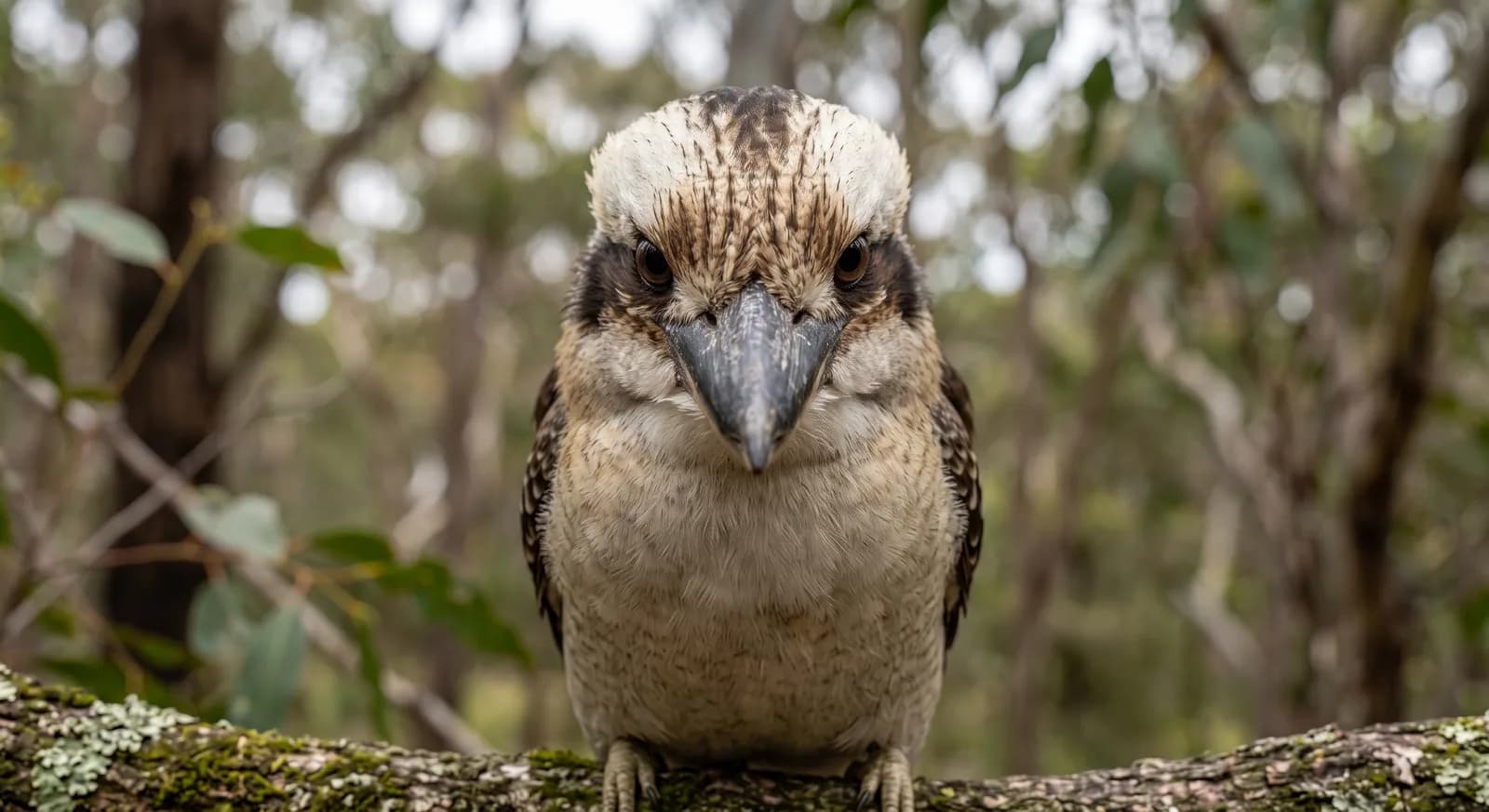
Laughing Kookaburra

Dacelo novaeguineae

3 countries26 parks
Blue-winged KookaburraLeast Concern

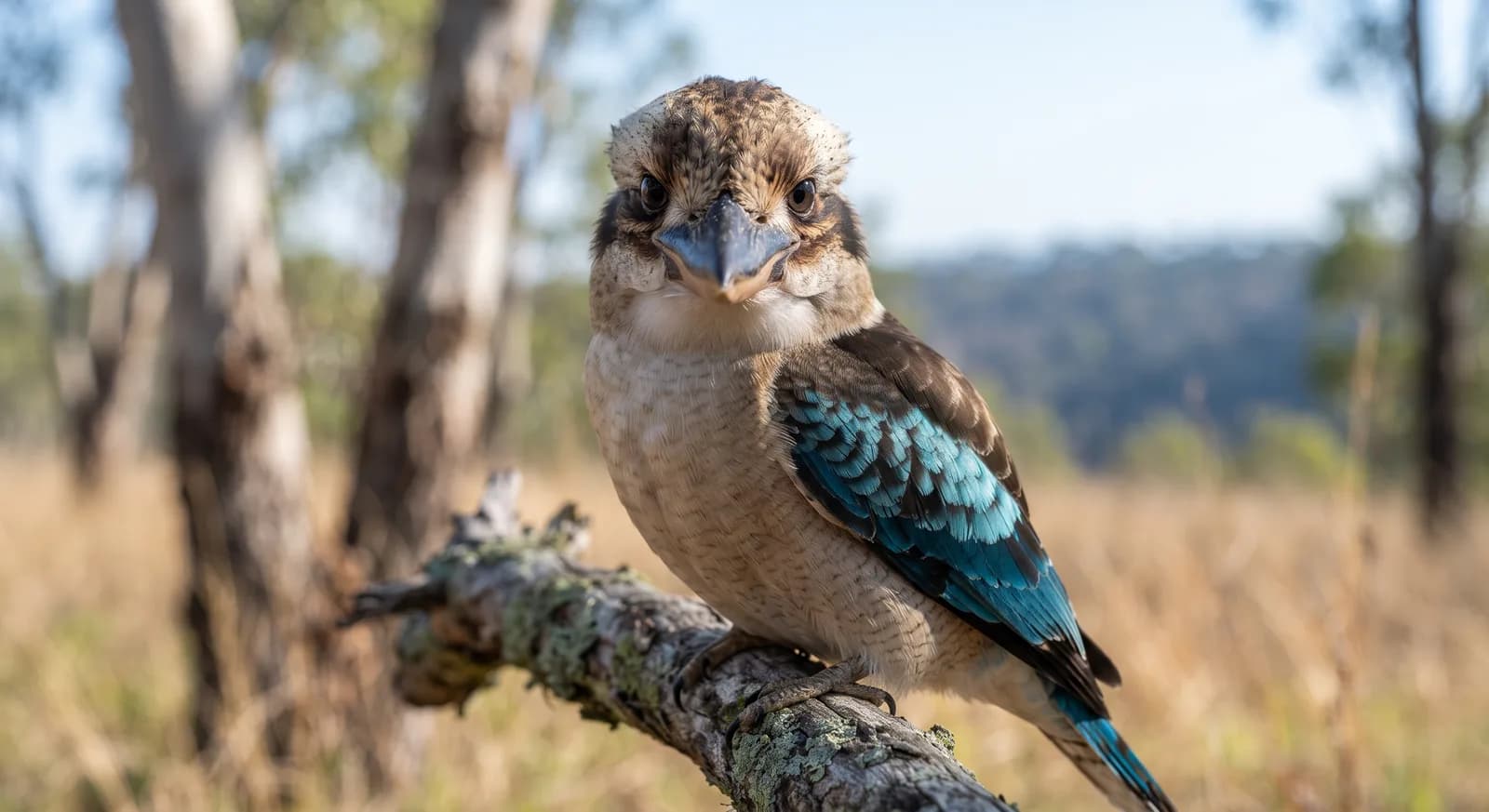
Blue-winged Kookaburra

Dacelo leachii

3 countries12 parks
Australia2
Papua New Guinea2
Indonesia1
New Zealand1
Daintree2 species
Barrington Tops1 species
Blue Mountains1 species
Booderee1 species
Boodjamulla (Lawn Hill)1 species
Border Ranges1 species
Carnarvon Gorge1 species
Croajingolong1 species
Dorrigo1 species
Egmont/Taranaki1 species
Eungella1 species
Flinders Chase1 species
Laughing Kookaburra
Laughing Kookaburra
Laughing Kookaburra
Blue-winged Kookaburra
Temperate forest2
Grassland1
Savanna1
See every species group
Explore the species one by one
This page in other languages: Español · Deutsch · Français · Português · Italiano