Skip to content
WAnimals
  • Map
  • Species
  • Parks
  • Diving
Log inCreate account
WAnimals

The guide for travellers and animal lovers: discover, plan and share your wild adventures around the world.

Discover wildlife

  • Species
  • Ecosystems
  • Glossary
  • Tags

Explore places

  • Map
  • Countries
  • Parks
  • Diving

Plan experiences

  • Guides

Learn

  • Blog

Resources

  • About us
  • How we build our profiles
  • Help centre
  • Contact
  • Install the app

Follow us

Account

  • Log in
  • Create account

© 2026 WAnimals. All rights reserved.

Terms of servicePrivacyCookiesLegal notice
MapSpeciesParksDiving
  1. Home
  2. Species
  3. Laughing Kookaburra

One of the 2 kookaburras on WAnimals
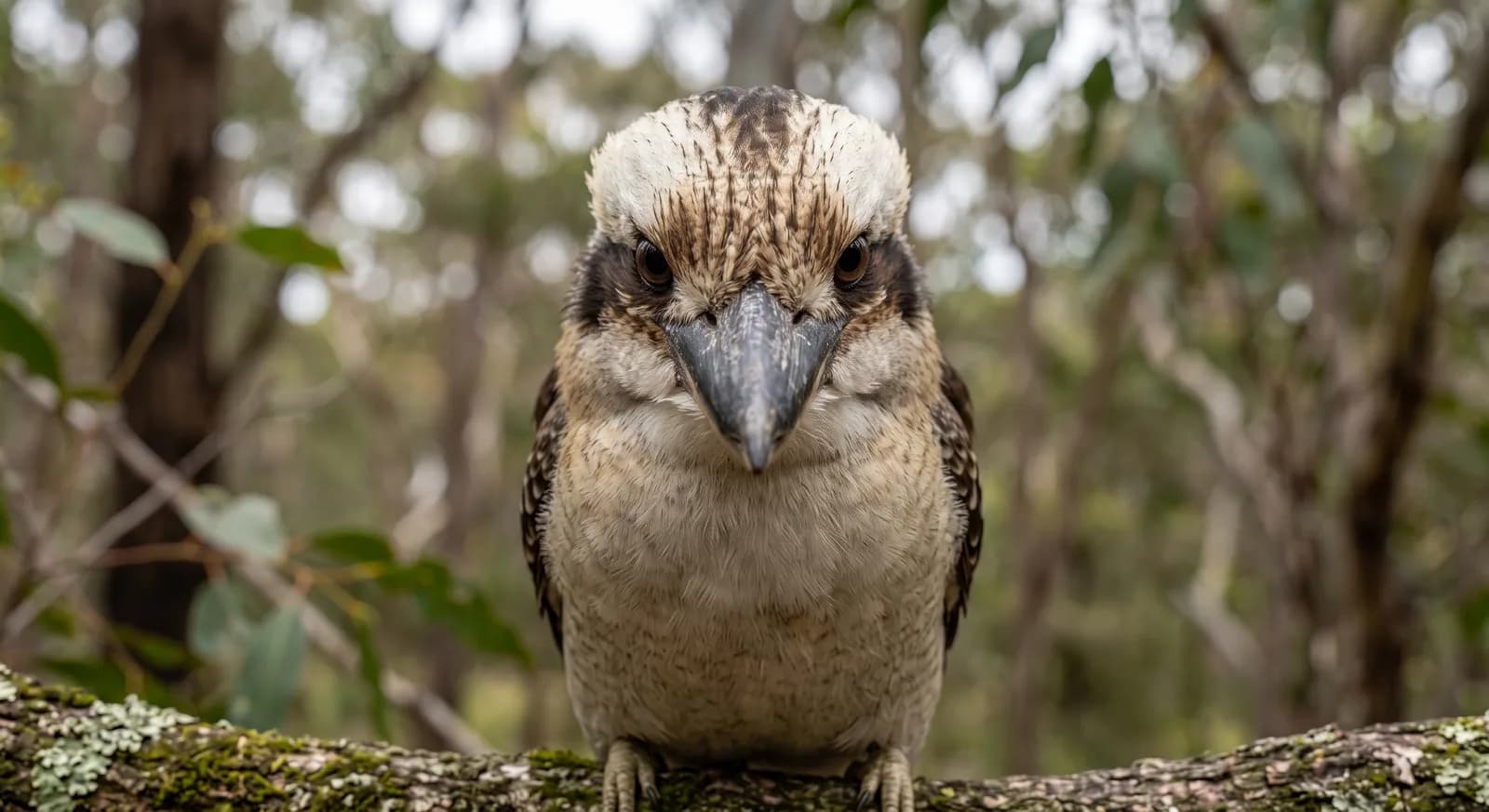
Laughing Kookaburra (Dacelo novaeguineae)

Birds · Coraciiformes · Alcedinidae

Laughing Kookaburra

Dacelo novaeguineae

Least Concern

The species is abundant and widely distributed; it faces no significant short-term risk.

Spotted something wrong?

The laughing kookaburra is the largest kingfisher in the world and one of the most recognisable birds in Australia for its laugh: a crescendo of cackling that family groups perform in chorus at dawn and dusk to mark their territory. It does not fish: it hunts snakes, lizards, insects and rodents from a perch, and beats its prey against the branch before swallowing it. It lives in family groups with cooperative breeding.

Weight

307 g – 352 g

Size

39 cm – 47 cm

Life expectancy

20 years
Diet

Carnivore

Feeds mainly on other animals.

Activity

Diurnal

Active mainly during the day.

Temperate forestGrassland
3countries26parks4same family

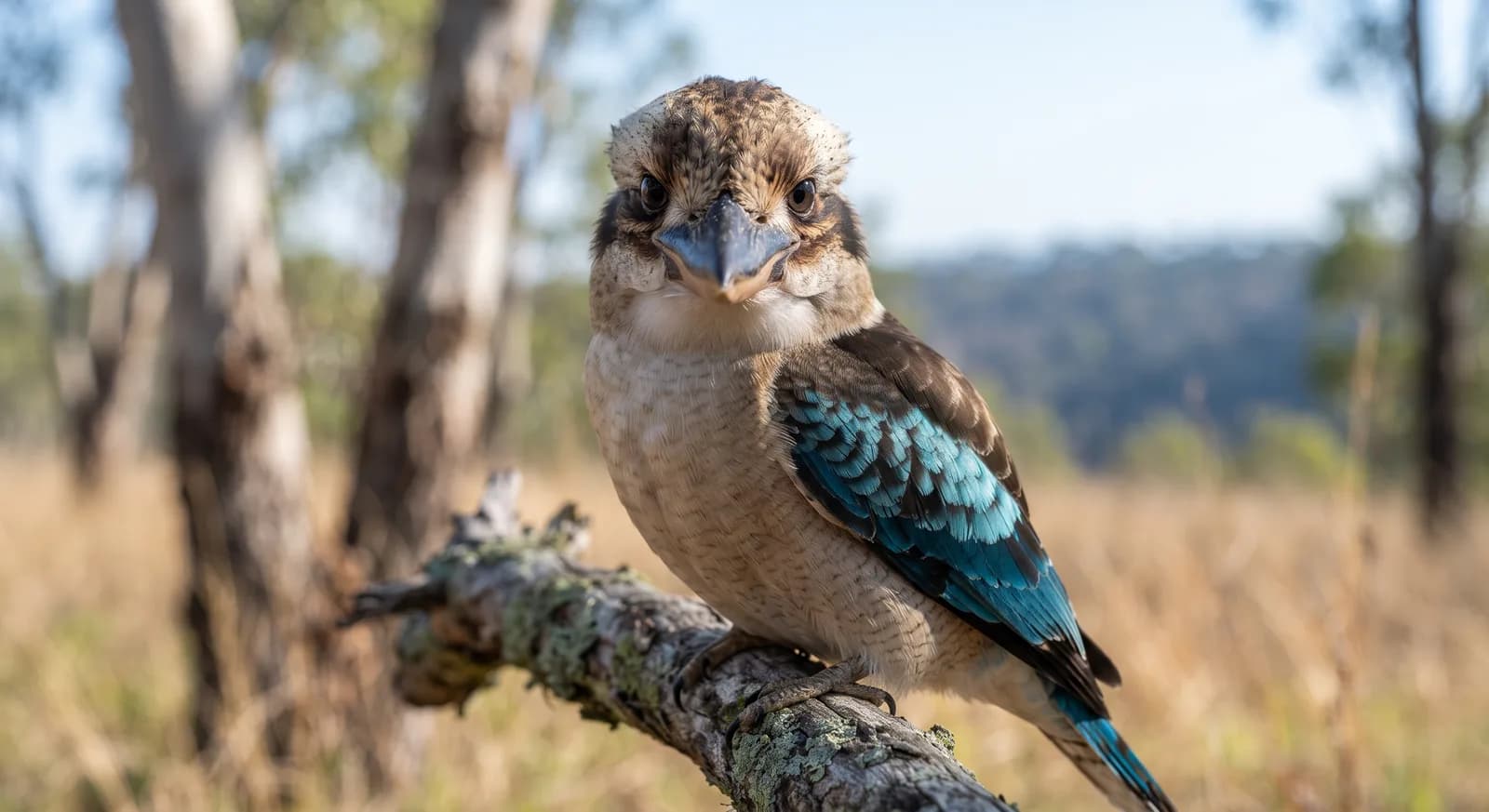
AI-generated images: illustrations, not photographs.

Fun facts

  • comunicaciónIts call, like human laughter, traditionally marks dawn and dusk, and family groups sing it together to defend their territory.
  • Its collective laughter at dawn is a territorial marker, not an expression of merriment: the whole group performs it in chorus and neighbouring groups answer, forming a chain that runs through the forest.
  • It is the largest kingfisher in the world and almost never fishes: it hunts reptiles, insects and rodents on land, and is famous for killing venomous snakes by dropping them from the air.
  • Its laugh was used as a jungle sound in dozens of Hollywood films set in Africa and Amazonia, where the species does not occur.

Life cycle and biology

Skeleton type
Vertebrate - internal bony skeleton (bird)
Habitat and environment
Eucalypt woodland, wooded savannah, parks and gardens of eastern and south-western Australia
Sexual maturity
12 months
Gestation / incubation
25 days
Litter / clutch size
3 eggs

Sources consulted: Wikipedia (es): Dacelo novaeguineae

Where to find it

Loading map…

The pins mark the parks where its presence is documented.

Where to see it

Parks and dive sites where this species has been documented — showing 10 of 26.

Related species

Other species in the catalogue with the most in common with Laughing Kookaburra — same habitat, park, country, tags or family.

Same taxonomic family
Shares a park
Shares a park
Shares a park
Shares a park
Shares a park

Keep exploring

Based on what we already know about laughing kookaburra.

Share an experience, a fun fact or a tip for seeing the laughing kookaburra.
See full glossary
This page in other languages: Español · Deutsch · Français · Português · Italiano
See its range on the interactive map→
DaintreeAustralia
Blue MountainsAustralia
K'gari (Fraser Island)Australia
FreycinetAustralia
KosciuszkoAustralia
Grampians (Gariwerd)Australia
Wilsons PromontoryAustralia
Royal National ParkAustralia
LamingtonAustralia
Egmont/TaranakiNew Zealand
See all 26 parks
Blue-winged KookaburraLeast Concern

Blue-winged Kookaburra

Dacelo leachii

Least Concern

Sulphur-crested Cockatoo

Cacatua galerita

Least Concern

Eastern Brown Snake

Pseudonaja textilis

Least Concern

Superb Fairywren

Malurus cyaneus

Least Concern

Australian Magpie

Cracticus tibicen

Least Concern

Tawny Frogmouth

Podargus strigoides

CountriesAustralia
ParksDaintreeAustralia
TagsCarnivore
Carnivore
Diurnal
Bird
Temperate forest
Grassland
Australia
New Zealand
Papua New Guinea