Skip to content
WAnimals
  • Map
  • Species
  • Parks
  • Diving
Log inCreate account
WAnimals

The guide for travellers and animal lovers: discover, plan and share your wild adventures around the world.

Discover wildlife

  • Species
  • Ecosystems
  • Glossary
  • Tags

Explore places

  • Map
  • Countries
  • Parks
  • Diving

Plan experiences

  • Guides

Learn

  • Blog

Resources

  • About us
  • How we build our profiles
  • Help centre
  • Contact
  • Install the app

Follow us

Account

  • Log in
  • Create account

© 2026 WAnimals. All rights reserved.

Terms of servicePrivacyCookiesLegal notice
MapSpeciesParksDiving
  1. Home
  2. Species
  3. Lesser Rhea

One of the 2 rheas on WAnimals

Birds · Rheiformes · Rheidae

Lesser Rhea

Rhea pennata

Near Threatened

It could become threatened in the near future if current threats go unchecked.

Spotted something wrong?

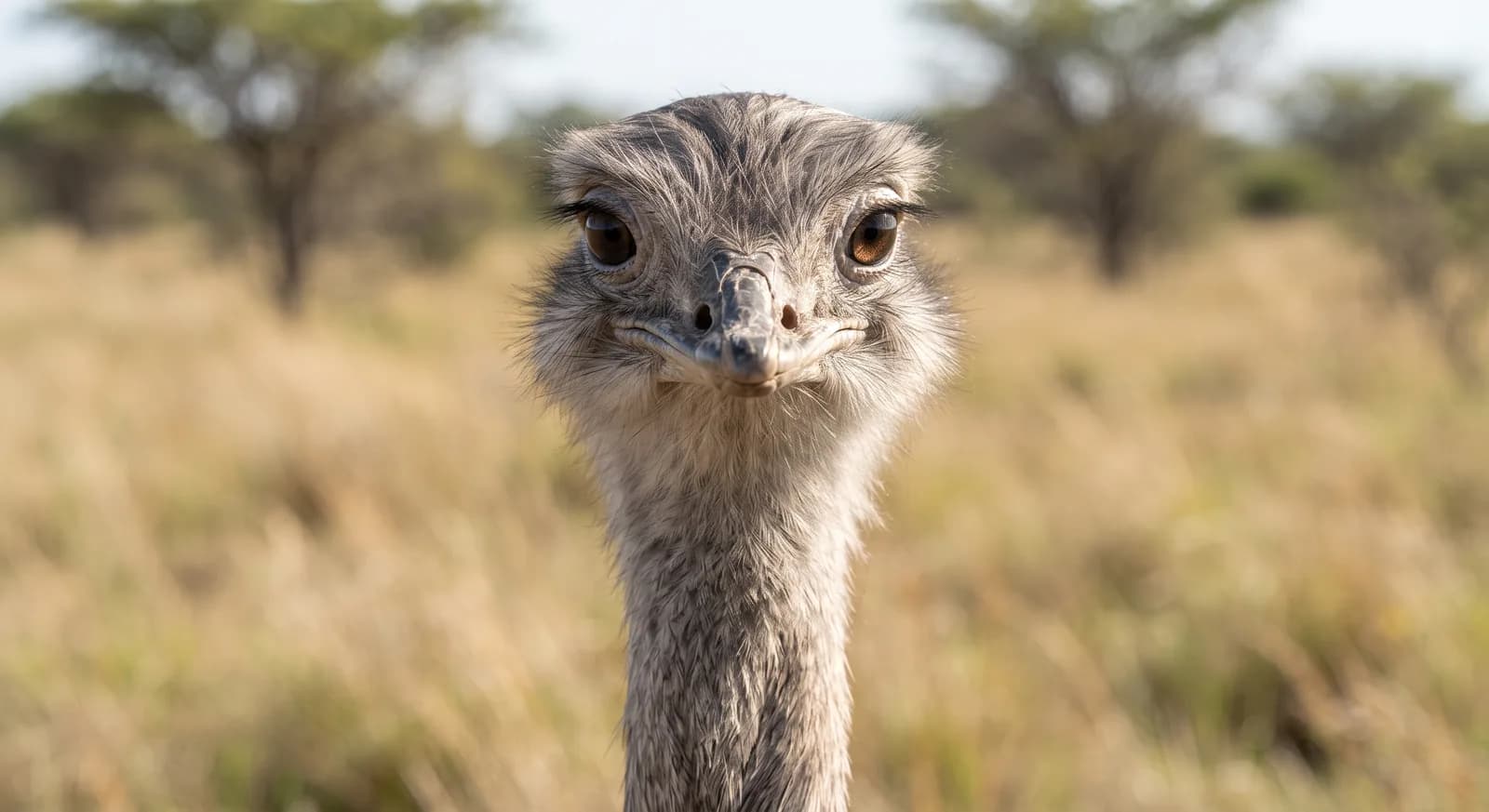
The lesser rhea, also known as Darwin's rhea, and locally as choique or suri, is a rheiform bird of the family Rheidae native to the southern Andean region of South America and to Patagonia. It is a large flightless bird, the smaller of the two living rhea species. It is found on the Andean altiplano of Peru and Bolivia, the northern Andean part of Argentina and Chile, and in Patagonia.

Weight

15 kg – 29 kg

Size

90 cm – 1 m

Life expectancy

20 years

Diet

Omnivore

Combines animal and plant food depending on availability.

Activity

Diurnal

Active mainly during the day.

Social structure

Herd

Lives in large groups as a strategy against predators.

DesertMountainGrassland
4countries15parks1same family

Fun facts

  • The male does everything: he scrapes the nest, incubates the eggs laid by several different females in the same hollow for forty days, and then raises the brood, which can number more than twenty chicks, on his own.
  • Its eggs were a staple food for the Tehuelche and Mapuche peoples of Patagonia, and the shells turn up frequently at archaeological sites across the steppe.

Life cycle and biology

Skeleton type
Vertebrate - internal bony skeleton (bird)
Habitat and environment
Patagonian steppe, arid scrub and high Andean puna of Argentina, Chile, Bolivia and Peru
Birth weight
Precocial: born covered in down and leaves the nest within a few hours
Size at birth
Precocial: born covered in down and leaves the nest within a few hours
Sexual maturity
3 years
Gestation / incubation
40 days of incubation
Litter / clutch size
20 eggs

Sources consulted: Wikipedia (es): Rhea pennata

Where to find it

Best time: All year round on the Patagonian steppe and the Andean altiplano, by day; between October and December the males incubate and lead the broods.

Loading map…

The pins mark the parks where its presence is documented.

Where to see it

Parks and dive sites where this species has been documented — showing 10 of 15.

Related species

Other species in the catalogue with the most in common with Lesser Rhea — same habitat, park, country, tags or family.

Same taxonomic family
Shares a park
Shares a park
Shares a park
Shares a park
Shares a park

Keep exploring

Based on what we already know about lesser rhea.

Share an experience, a fun fact or a tip for seeing the lesser rhea.
See full glossary
This page in other languages: Español · Deutsch · Français · Português · Italiano
See its range on the interactive map→
Nahuel HuapiArgentina
Los GlaciaresArgentina
Tierra del FuegoArgentina
Torres del PaineChile
LaucaChile
Patagonia (Patagonia National Park)Chile
Eduardo AvaroaBolivia
SajamaBolivia
Perito Moreno (Santa Cruz)Argentina
LanínArgentina
See all 15 parks
Greater RheaNear Threatened

Greater Rhea

Rhea americana

Near Threatened

Pichi

Zaedyus pichiy

Patagonian MaraNear Threatened

Patagonian Mara

Dolichotis patagonum

GuanacoLeast Concern

Guanaco

Lama guanicoe

Least Concern

Giant Hummingbird

Patagona gigas

Least Concern

Collared Trogon

Trogon collaris

CountriesArgentina
ParksNahuel HuapiArgentina
TagsOmnivore
Omnivore
Diurnal
In herds
Near Threatened
Bird
Desert
Mountain
Grassland
Argentina
Chile
Bolivia
Peru