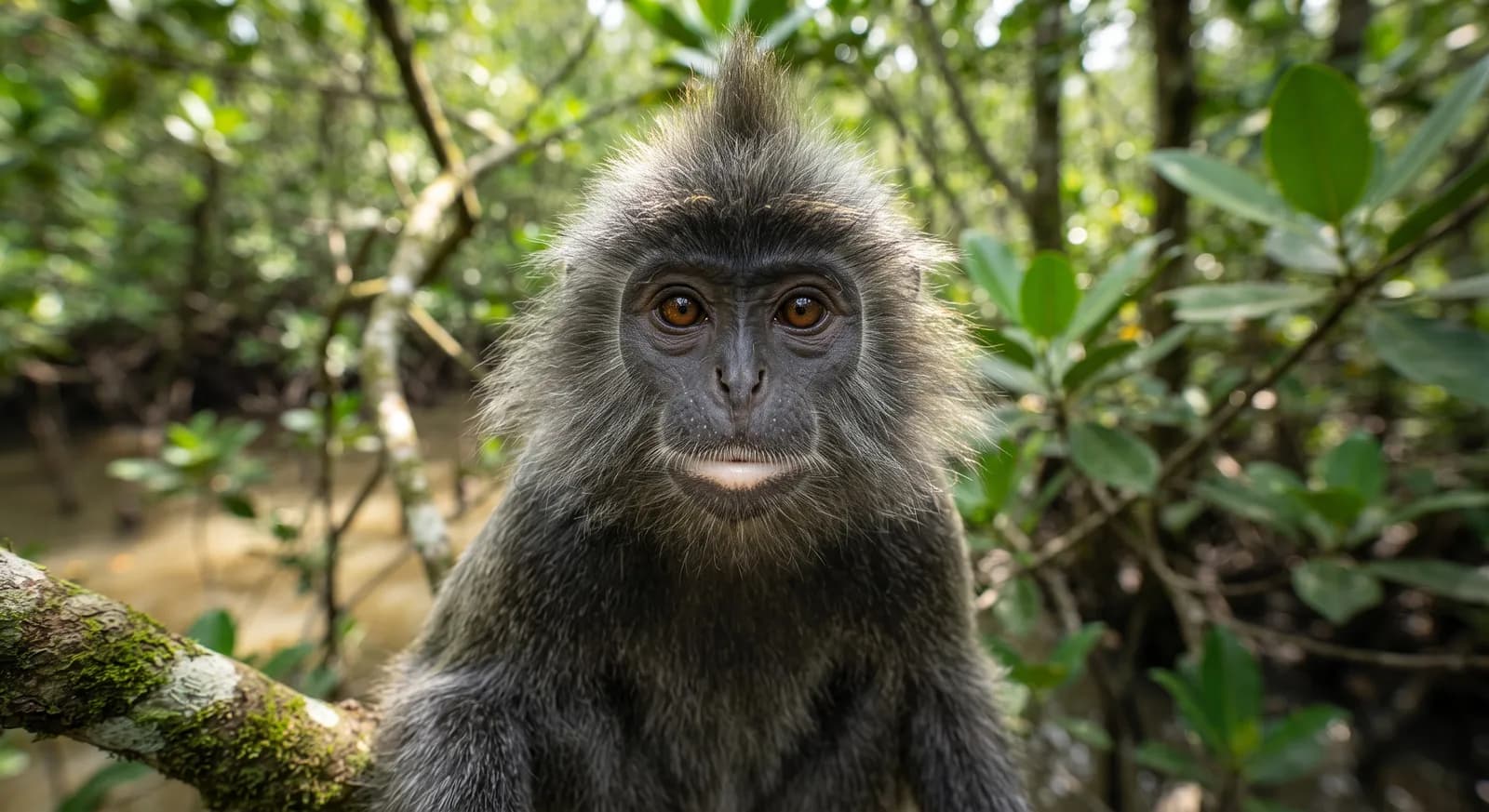
One of the 18 monkeys on WAnimals
Mammals · Primates · Cercopithecidae
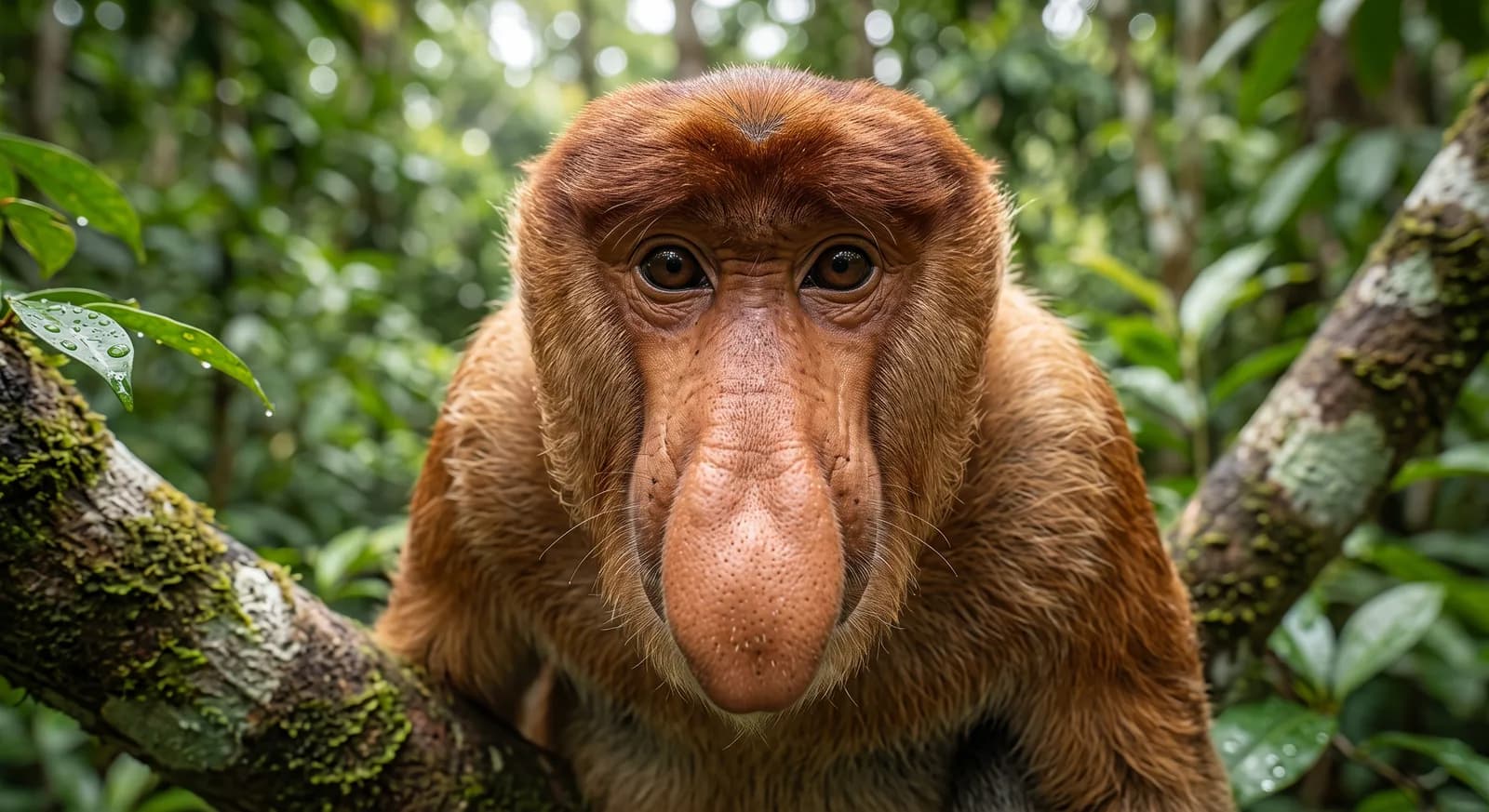
Nasalis larvatus
At very high risk of extinction in the wild in the near future.
Males grow the largest nose relative to body size of any primate, which works as a resonating chamber to amplify their calls.
Weight
7 kg – 22 kg
Size
52 cm – 72 cm
Life expectancy
15 years
Diet
Herbivore
Feeds mainly on plants.
Activity
Diurnal
Active mainly during the day.
Social structure
Family group
Lives in small family groups with close bonds.
AI-generated images: illustrations, not photographs.
Sources consulted: IVIS · AnAge (genomics.senescence.info) · Dimensions.com · Biology Dictionary · Britannica · Animalia.bio · Animal Diversity Web · EBSCO Research Starters · PMC (vocal identity nose study)
The pins mark the parks where its presence is documented.
Parks and dive sites where this species has been documented.
Other species in the catalogue with the most in common with Proboscis Monkey — same habitat, park, country, tags or family.
The proboscis monkey is classified as endangered. Organisations such as the IUCN, WWF and the Wildlife Conservation Society work specifically on its conservation and that of its habitat; looking into their programmes is a good starting point if you want to get involved.
It's documented in 5 protected areas — one reason why protecting these places matters for its conservation.
Based on what we already know about proboscis monkey.