 Endangered
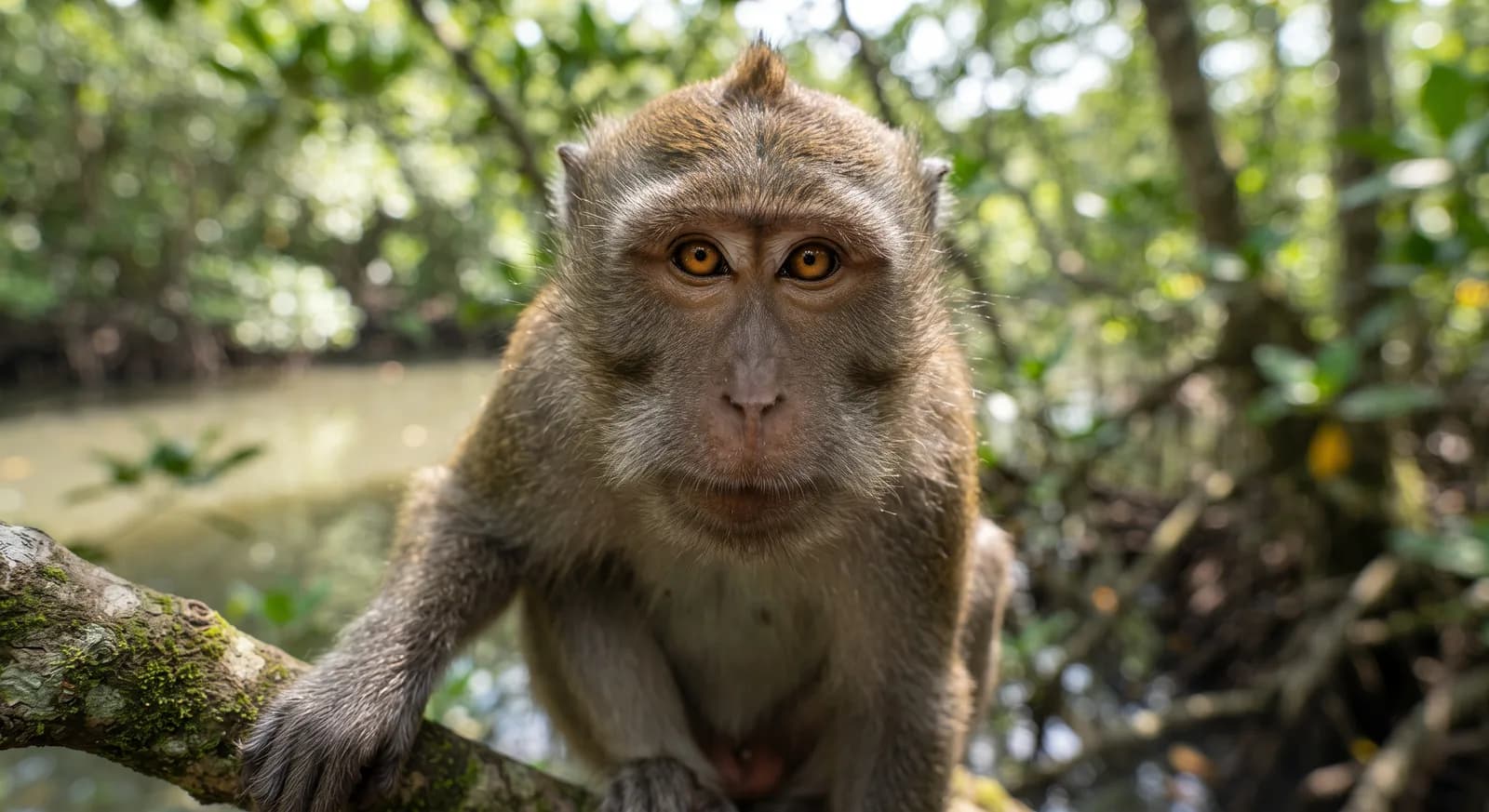
Long-tailed Macaque
Macaca fascicularis
One of the 6 macaques on WAnimals
Mammals · Primates · Cercopithecidae
Macaca nemestrina
At very high risk of extinction in the wild in the near future.
The southern pig-tailed macaque owes its name to a short, sparsely haired tail that it carries arched upright, similar to a pig's. It is robust, terrestrial and lives in large groups with marked hierarchies. It eats fruit, seeds, fungi and invertebrates, and on plantations it consumes large numbers of rats, which gives it a little-recognised role in pest control. The conversion of rainforest into oil palm is the main cause of its decline.
Weight
5 kg – 15 kg
Size
47 cm – 60 cm
Life expectancy
26 years
Diet
Herbivore
Feeds mainly on plants.
Activity
Diurnal
Active mainly during the day.
Social structure
Herd
Lives in large groups as a strategy against predators.
Sources consulted: Wikipedia (en): Southern pig-tailed macaque
Best time: All year round in Sumatra, Borneo and the Malay Peninsula, by day, mostly on the forest floor and along plantation edges.
Parks and dive sites where this species has been documented — showing 10 of 33.
Other species in the catalogue with the most in common with Southern Pig-tailed Macaque — same habitat, park, country, tags or family.
The southern pig-tailed macaque is classified as endangered. Organisations such as the IUCN, WWF and the Wildlife Conservation Society work specifically on its conservation and that of its habitat; looking into their programmes is a good starting point if you want to get involved.
It's documented in 8 protected areas — one reason why protecting these places matters for its conservation.
Based on what we already know about southern pig-tailed macaque.
The pins mark the parks where its presence is documented.